Choose a Clear Focus for Your Lidong Poster
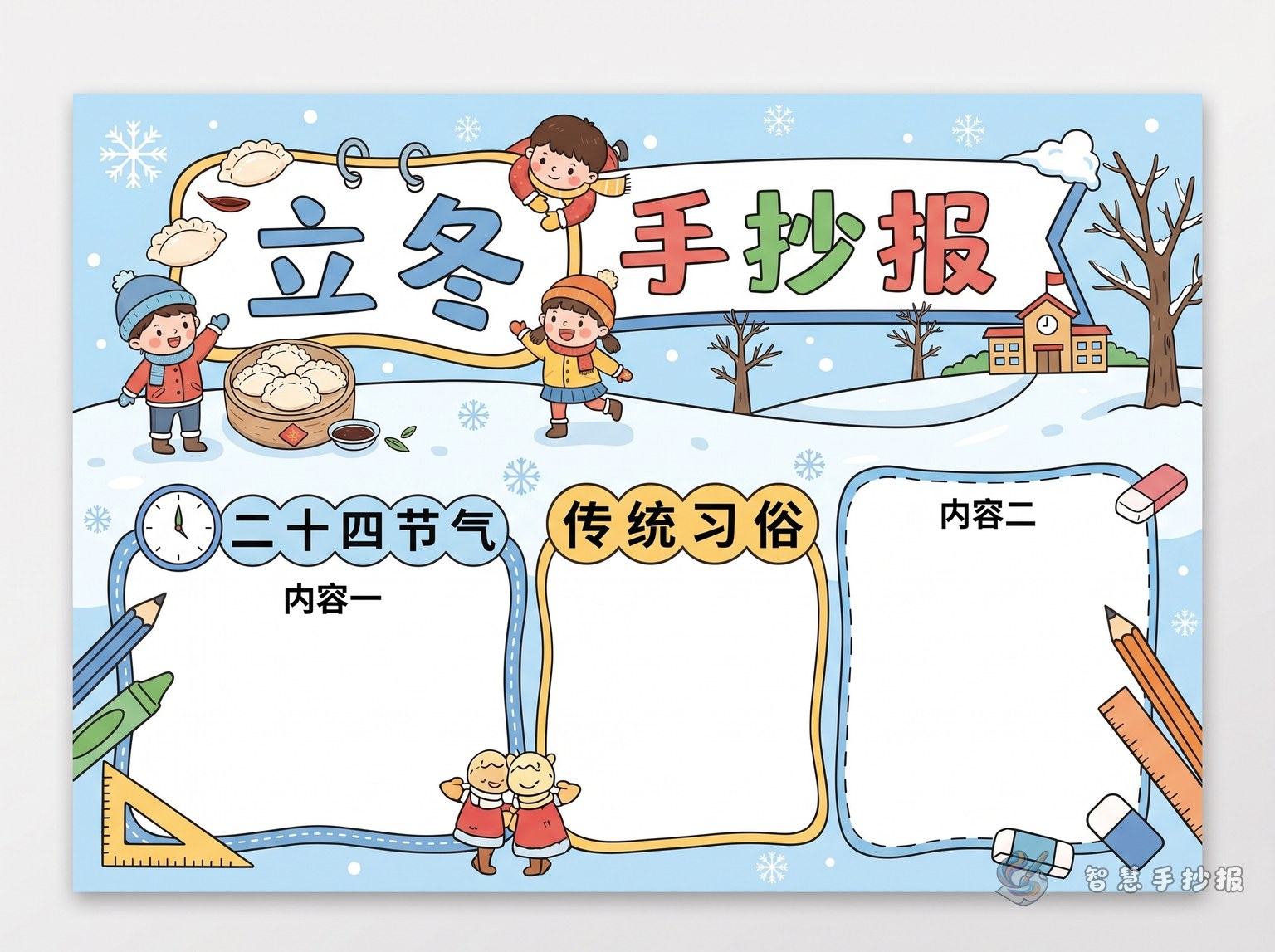
If you are making a handwritten newspaper about Lidong traditional customs, a simple and effective theme is “How people welcome winter at Lidong.” You do not need to include too much information. Just focus on a few easy points such as welcoming winter, seasonal nourishing foods, eating dumplings, the end of autumn farm activities, and staying warm. This makes the poster both meaningful and easy to read for children.
Your title can be “Lidong Traditional Customs,” “What Happens at Lidong,” or “How People Welcome Winter.” Around the title, you can draw leaves, scarves, steaming soup, dumplings, pumpkins, or winter hats to create a seasonal feeling.
An Easy Layout: Four Sections Work Best
For a neat and child-friendly poster, divide the page into four small sections.
- Section 1: What Is Lidong — briefly explain that Lidong is one of the twenty-four solar terms and marks the beginning of winter.
- Section 2: Traditional Customs — introduce welcoming winter, nourishing the body, and eating dumplings.
- Section 3: Seasonal Facts — mention colder weather, shorter days, and the need to wear warm clothes.
- Section 4: My Thoughts on Lidong — add a short personal reflection in one or two small paragraphs.
If you still have space, you can also add a box for seasonal sayings or winter foods to enrich the page.
Ready-to-Use Writing Materials
About Lidong
Lidong is the nineteenth of the twenty-four solar terms. “Li” means beginning, and “Dong” means winter. When Lidong arrives, the weather becomes colder, and nature moves into a time of rest and storage. Lidong is not only an important seasonal turning point, but also a time when people express their hopes for health, warmth, and peace through traditional customs.
Traditional Customs
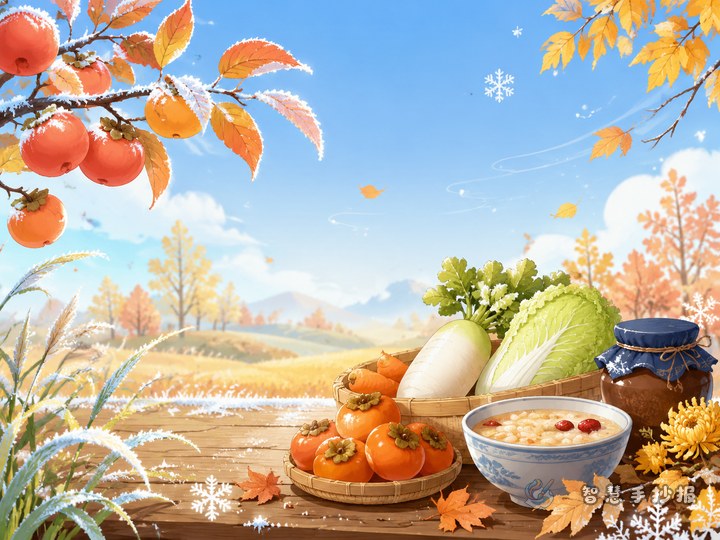
In some places, people have the custom of welcoming winter at Lidong. Long ago, this solar term was taken seriously as an important start of the winter season. There is also the idea of “nourishing the body for winter,” so families often prepare warm and nutritious food to build strength for the cold days ahead.
In many northern areas, eating dumplings at Lidong is a well-known custom. Hot dumplings represent warmth and togetherness. In some southern places, people may eat meat dishes, sticky rice, or nourishing soups. Customs vary from place to place, but all of them show people’s care for winter life and family health.
Short Sentences for the Poster
- Lidong comes, the weather turns cold, and warm clothes become important.
- A bowl of hot soup brings warmth to winter days.
- Solar terms carry culture, and customs carry warmth.
- At Lidong, we say goodbye to autumn and welcome winter.
Design Ideas That Make the Poster Look Better
A practical layout is a large title at the top, two columns in the middle, and a short ending at the bottom. Put the customs and seasonal facts in the middle sections, then add a reflection or seasonal saying at the bottom. This structure looks balanced and is easy for primary school students to complete.
For colors, try orange, brown, dark red, and light blue to show the feeling of late autumn turning into winter. Decorative borders can include leaves, snowflakes, gloves, scarves, and cups of hot tea. Do not draw too many decorations, so there is still enough room for writing.
Keep each text block short and clear. Important words such as “welcoming winter,” “winter nourishment,” “dumplings,” and “keeping warm” can be highlighted with colored pens.
A Simple Ending for Students
Your ending does not need to be long. You can write something like this: Lidong brings not only colder weather, but also rich traditional culture. Through this handwritten newspaper, I learned about Lidong customs and felt the charm of Chinese seasonal traditions.
If you want more title ideas, border designs, or ready-made layout inspiration, you can continue your poster in the Zhihui Shouchaobao WeChat mini program.