A Fresh Angle: How Did Books Exist Before Printing?
Many handwritten newspapers about ancient printing jump straight to woodblock and movable type. Try the opposite approach and ask first: before printing appeared, how did people get a book to read?
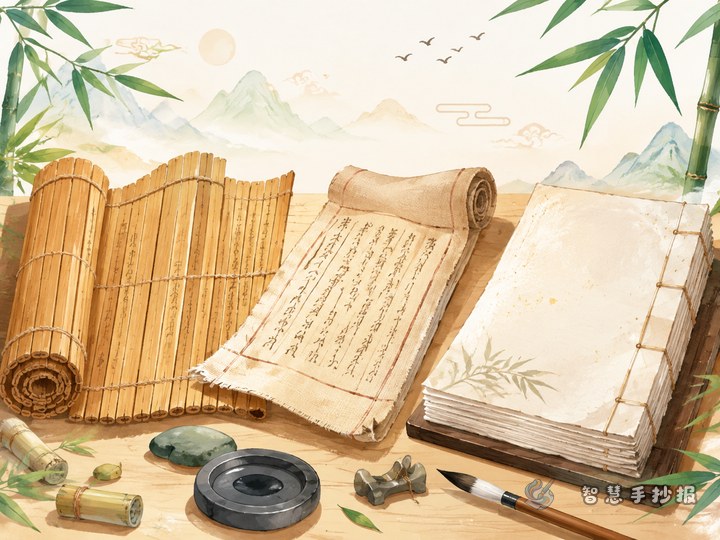
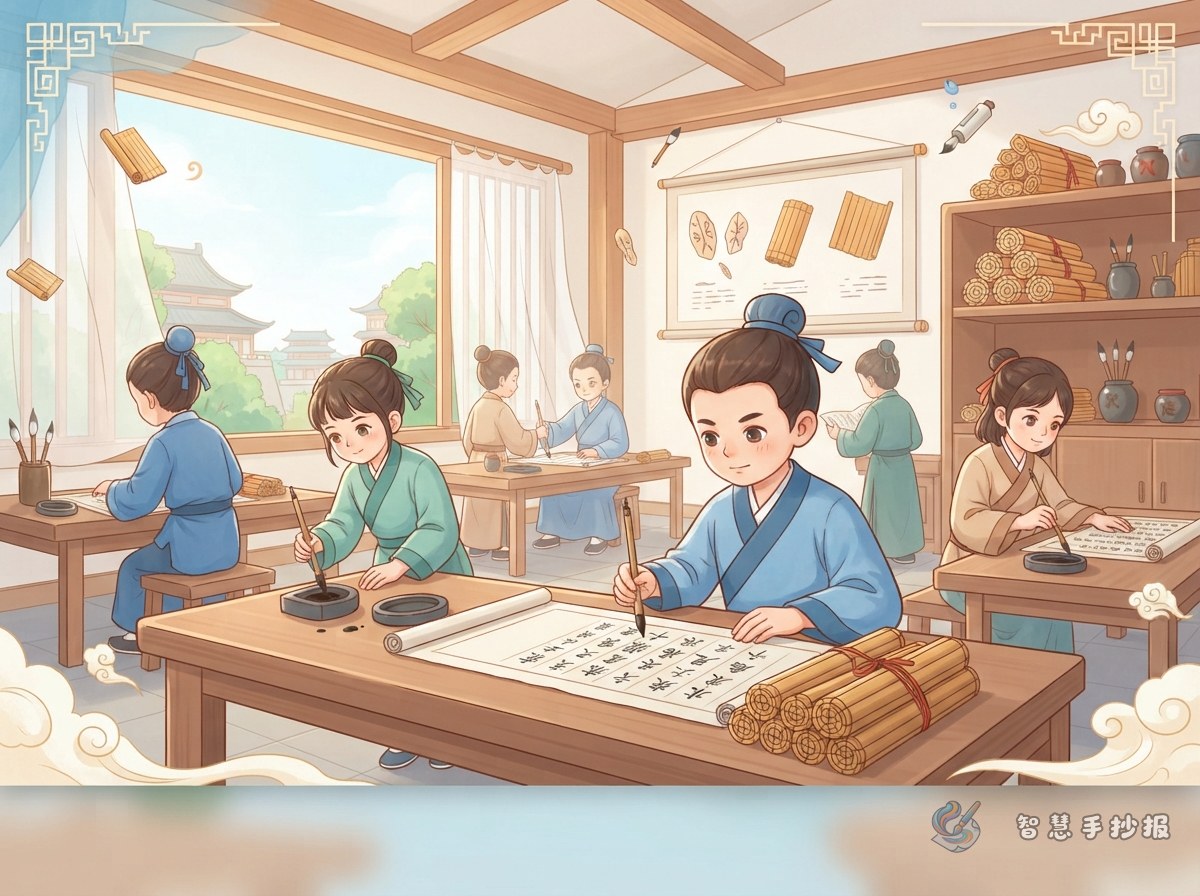
The answer is the manuscript, written one character at a time and then bound into a scroll or a book. The people who did this work were copyists, known in some periods as hired scribes, while those who copied sacred texts in temples were often called scripture scribes. They were the key figures who kept books alive before printing existed.
Three Columns That Give the Page Real Content
Column One: What a Copyist Actually Did
Explain that a copyist prepared paper, brush and ink, then followed a master copy line by line. After finishing, the text still had to be checked. A missing character could mean copying the whole page again. The writing had to be neat, so a single book often took a very long time.
Column Two: Why a Paper Shortage Became a Famous Story
There is a well-known Chinese idiom about paper becoming expensive in the capital because so many people were copying a popular piece of writing. Put that story on the page: it shows both how common hand copying was and how eagerly people wanted good writing.
Column Three: Manuscript vs. Printed Book
- Quantity: a manuscript produced one copy at a time; a printed edition could produce many.
- Speed: copying depended on a human hand; printing used a carved block again and again.
- Mistakes: copyists could skip a line or drop a character, while a finished printing block stayed the same.
- Cost: manuscripts took so much time that few families owned books; printed copies made books easier to buy and read.
Drawing the Scene: Make Copying Visible
You do not need machines to make this topic look right. People and paper are enough.
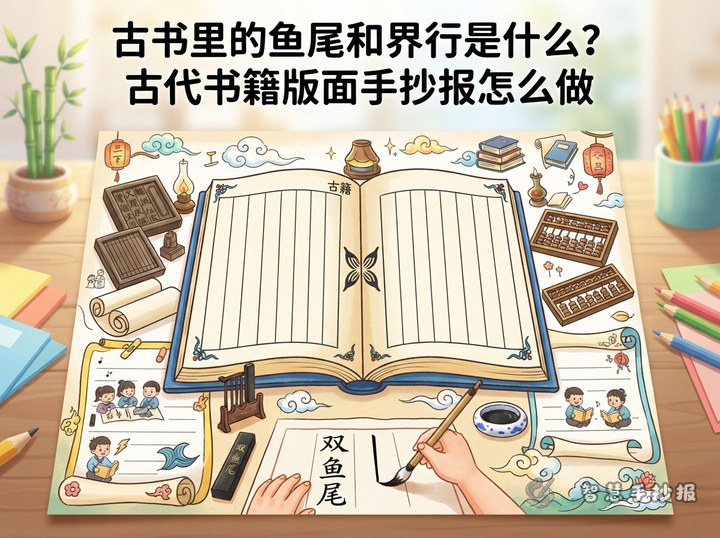
- On the left, draw an unrolled scroll with a few small lines of text, showing the finished work.
- In the middle, draw a person bent over a desk with an oil lamp and a brush rest, suggesting long hours of writing.
- On the right, draw a neat stack of pages to contrast with the scroll on the left, turning copying into a finished book.
- Put the main title in large letters at the top, with a subtitle such as “the story before printing”.
Short Lines You Can Copy Straight Onto the Page
- Before printing, every book was a handwritten edition.
- What copyists wrote down was more than words; it was a path that kept knowledge alive.
- Because copying was slow and costly, people kept looking for a faster way to make books.
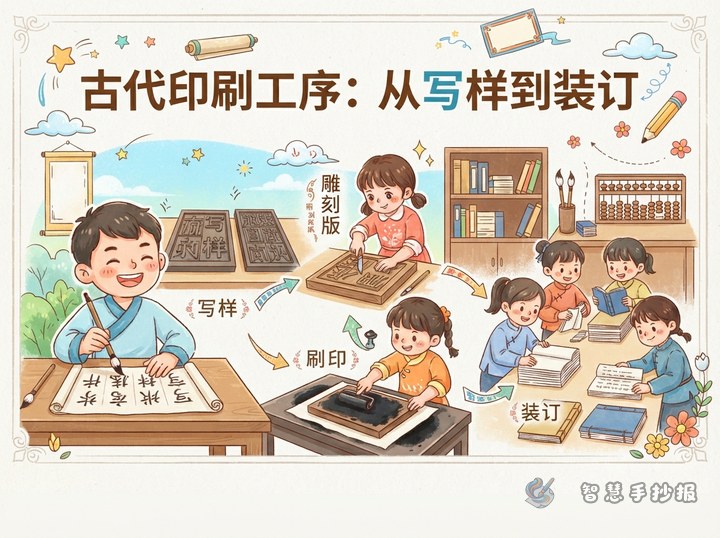
- From hand copying to woodblock printing and then movable type, books gradually reached more hands.
Layout Order and Final Touches
- Decide the title and subtitle first, then divide the page into three columns before you start writing.
- Arrange copyists, manuscripts and printing from left to right so the logic flows naturally.
- Leave a little white space between blocks and separate them with a simple border or scroll line so the page does not feel crowded.
- Finish with a short summary in the lower right corner, for example: printing turned books from treasures of the few into friends of many.
If you would like to try more layouts, fonts and column combinations, open the WeChat mini program “智慧手抄报”, pick a template you like and keep building the page until it is finished.