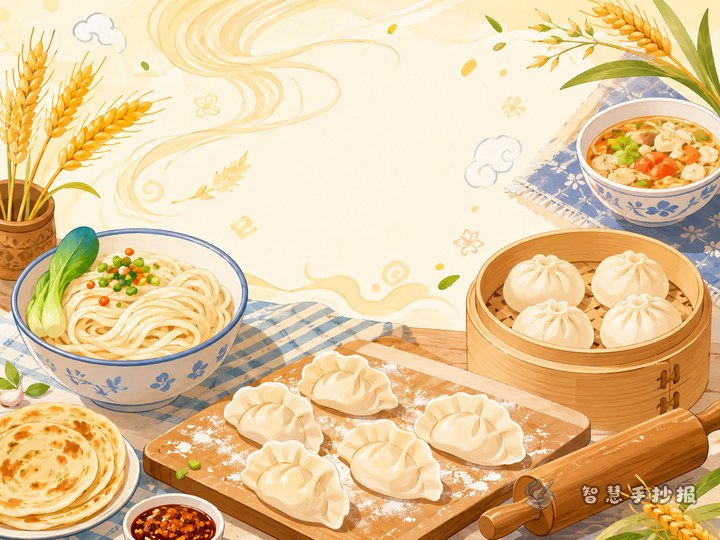

Start with a small idea: food names tell a local story
Many students begin a hometown food newspaper with recipes or famous dishes, but that can make the page look like everyone else's. Try a different angle: dialect names for food. The same snack may have one name at home, another name at a neighbor's house, and a third name at the market. That difference is exactly what makes a place feel local.
Before drawing, make a short list of five to eight foods you have eaten or seen. Write down the dialect name and the standard name. Keep the topic narrow, such as breakfast foods, street snacks, or everyday home dishes.
Four content blocks for your newspaper
A mini dialect food dictionary
Use a simple pattern: dialect name, standard meaning, and one short explanation. For example:
- A local word for steamed bun or flatbread: explain what it usually means in your area.
- A local word for rice cake: mention when people usually eat it.
- Different names for dumpling soup: show how one food can have several regional names.
One food, several names
Pick one food and draw a comparison box. On the left, write how your family says it. On the right, write the standard name. In the middle, add when people eat it. This gives readers a clear picture without too much text.
Short stories behind the names
Do not invent a history. Write a real moment instead: how a grandparent calls everyone to eat, how a market seller shouts the name, or the first time you heard a different word for the same food. Two or three sentences are enough.
A dialect menu
Turn the dialect words into a small menu. Put the dialect name first and add the standard meaning in brackets. For example: “One bowl of ___ (local name for a noodle dish).” This makes the page fun to read and easy to understand.
Layout ideas that keep words and pictures clear
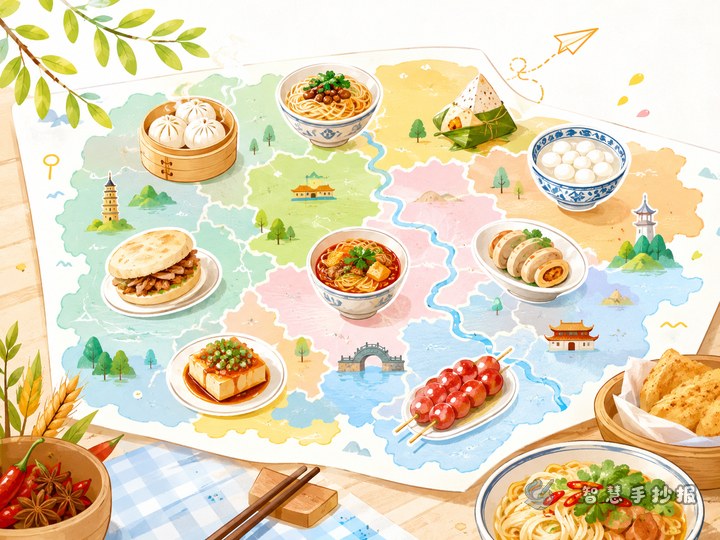
Try a central picture with four content areas around it. The center can be a bowl of food, a steamer basket, or a simple map of your area. Put dialect names in speech bubbles, tags, or menu signs. Use smaller text for the standard explanations.
- Leave enough room for the main title, such as “Local Flavors: A Dialect Food Page.”
- Place only three or four items in each content block.
- Use two colors to separate dialect names from standard explanations.
- Draw simple food shapes, chopsticks, steamers, or market stalls without filling every space.
Sample sentences to make dialect names vivid
You can write: “My grandmother always calls this rice cake ___. Whenever it comes out of the steamer, she stands by the stove and tells me to eat it while it is hot. Later, at school, I heard a classmate call it ‘rice cake’ and realized we were talking about the same food.” This includes both the dialect name and a real scene.
Add a short line in a corner: “Dialect food names are like a local password—one word and you know where the flavor comes from.” It helps tie the whole page together.
Before you start
Check dialect names with older family members. If you are not sure how to write a word, use pinyin or a pronunciation note instead of inventing a character. Always add the standard food name so classmates and teachers can follow. If you want a tidier layout and clearer headings, open Smart Handwritten Newspaper in WeChat Mini Program, choose a layout, and fill in your collected dialect food content.