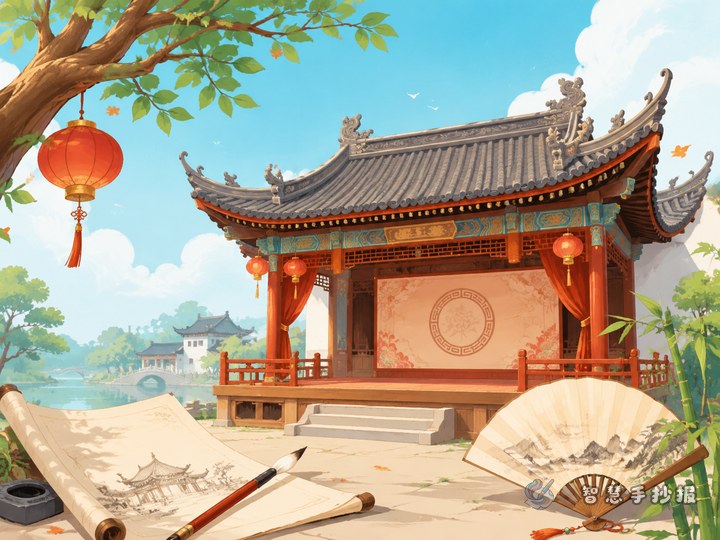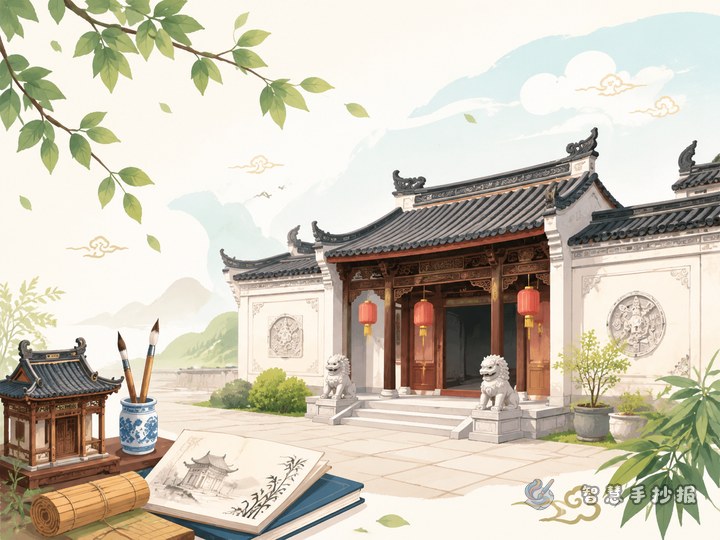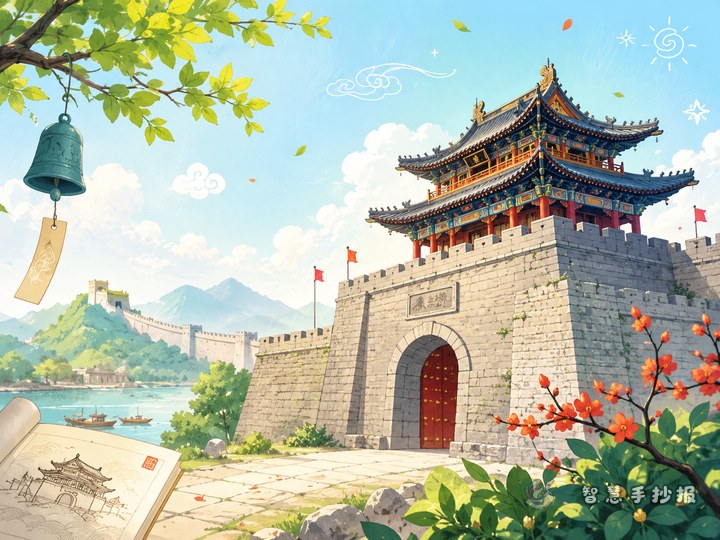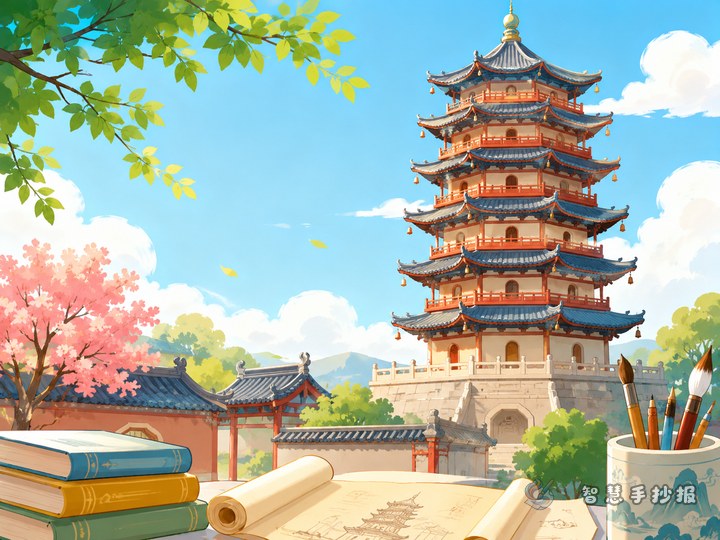
Choose a clear theme: why a paifang feels like a cultural gateway
Make a traditional Chinese paifang the main subject of the handwritten newspaper and organize the content around three questions: What is it? What is it used for? Why does its form look so distinctive? A paifang is often found near streets, gardens, temples, or memorial sites. Besides marking a place and adding decoration, it can express respect, remembrance, and good wishes. A suitable title is “Discovering the Traditional Chinese Paifang,” with the subtitle “Stories in the Gateway, Craftsmanship Beneath the Eaves.”
Four sections that connect architecture with culture
- Paifang profile: Briefly introduce its columns, horizontal beams, brackets, roof eaves, and other parts. Its form is usually tall, balanced, and richly layered.
- Read the structure: Draw a simple diagram and label the columns, plaque, roof eaves, and decorative patterns so readers can learn while looking.
- Good wishes in the patterns: Explain that clouds, lotus flowers, bats, dragons, and phoenixes may suggest good fortune, purity, dignity, or happiness.
- Architecture observation: Add a short prompt such as “Look closely at the symmetry and the curves of the flying eaves,” encouraging classmates to notice traditional beauty.
Text material you can copy into the project
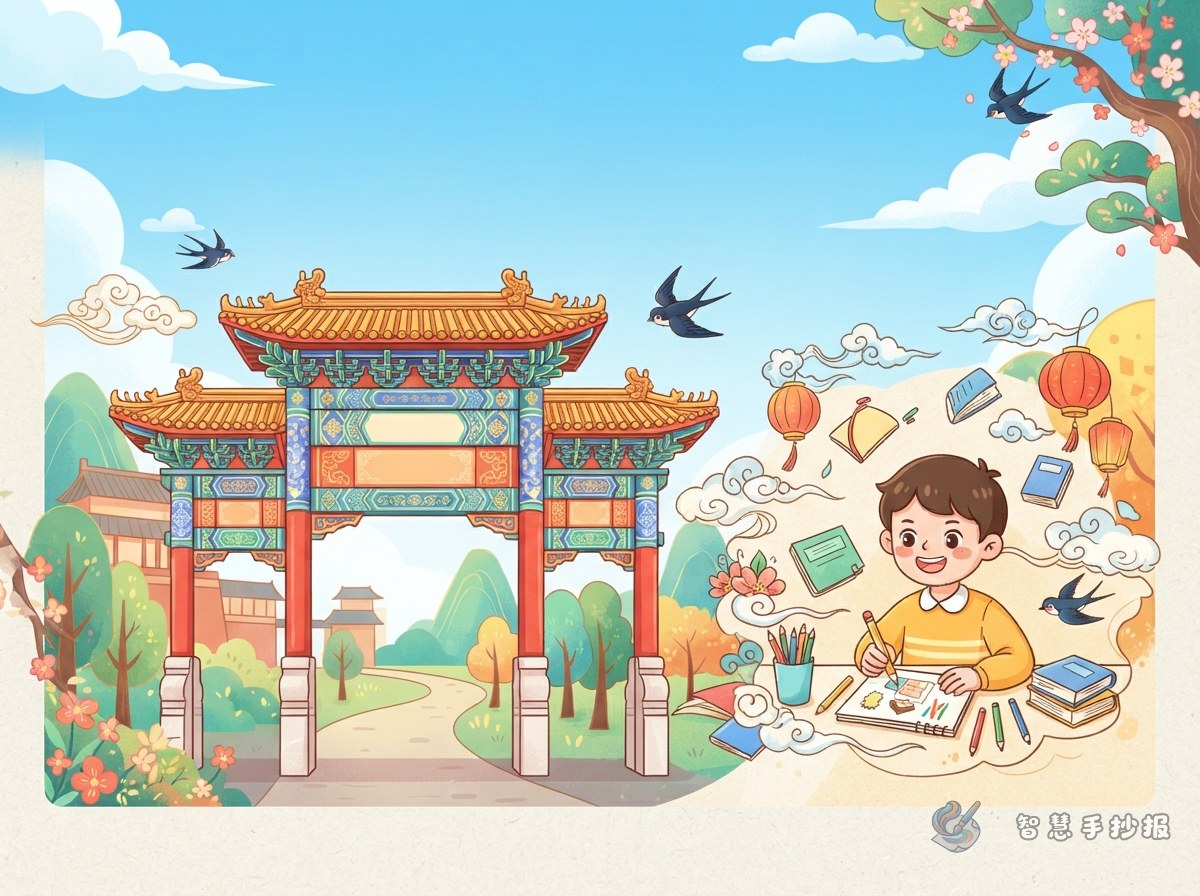
A paifang is a highly recognizable type of traditional Chinese gateway structure. It is not always a door that people walk through, but it often acts as a striking cultural landmark for an important street, garden, temple, or memorial place. Its beauty comes from its symmetrical structure, graceful eaves, and detailed decoration. It also shows how ancient craftspeople valued proportion, color, and small details.
For the ending, you may write: “A paifang connects roads, and it also connects the past with the present. Understanding its form and patterns helps us appreciate order, beauty, and good wishes in traditional Chinese architecture.”
Turn the layout into a cultural path through a paifang
For a vertical page, draw a simplified paifang at the top as the title background. Leave the main paifang in the center, place “structure notes” and “pattern meanings” on both sides, and design a small path at the bottom for the observation notes and conclusion. Arranging the title along the horizontal beam can make the page feel unified.
Use vermilion, blue-green, warm cream, and dark gray to create a traditional architectural mood without making the page too heavy. First use a pencil to establish the central axis, then draw the symmetrical columns and eaves, and finally add cloud patterns, floral details, and small lanterns. Leave enough blank space for writing so that decorations do not cover the key information.
Three practical reminders
- Because a paifang has many details, use a “large main shape, fewer details” approach and make the outline clear first.
- Do not crowd all the information together. Keep each section to one or two short paragraphs and highlight key words with colored pens or bold headings.
- After sketching, check whether the writing is neat and the sections are easy to read before adding borders and small decorations. If you want to organize the layout more quickly, continue making it in the WeChat mini program “智慧手抄报.”