Build the page around the idea of a rising structure
The most recognizable quality of a pagoda is its stacked upward form. Before filling the page with facts, decide on a clear angle such as “The Beauty of Ancient Pagodas” or “Pagodas That Tell Stories.” A focused theme helps the handwritten newspaper feel organized rather than scattered.
Your main title can be simple, such as “Pagoda Architecture” or “Exploring Ancient Chinese Pagodas,” with a short subtitle that explains the focus of the page.
Sections you can use right away
What does a pagoda look like?
This section can describe the appearance in easy language suitable for younger students.
- It often has many levels stacked one above another.
- The eaves are clearly visible from each floor.
- It may be built with brick, wood, or stone.
- The overall shape looks steady, elegant, and classical.
What is a pagoda used for?
To avoid making the page too flat, explain both practical and cultural roles.
- Some pagodas served as landmarks visible from far away.
- Some are connected with religious or cultural traditions.
- Some became important scenic symbols in a city.
- They also help people understand ancient building skills.
Famous pagodas to mention
You do not need a long list. Choose one or two examples and write a short note about each one, focusing on name, special feature, and your impression.
- One pagoda may be known for its many levels and balanced design.
- Another may be remembered for its long history and preserved structure.
Short writing materials that make the page richer
If the page still feels empty, add a few elegant lines that match the topic.
- A pagoda rises layer by layer, carrying old wisdom toward the sky.
- Under flying eaves lives not only architecture, but also beauty from the past.
- An ancient pagoda stands quietly, yet it holds many stories.
- Looking at a pagoda means seeing both height and history.
You can end with a simple reflection such as: Traditional Chinese pagodas are not only beautiful buildings, but also meaningful symbols of culture and history.
Let the layout show the idea of levels
This theme works especially well with a vertical composition. Imagine the page as a tower from top to bottom.
- Place the main title at the top like the tip of the tower.
- Use three or four horizontal sections for features, uses, examples, and reflection.
- Add clouds, eaves, or window frames on the sides.
- Put a concluding sentence near the bottom to keep the page visually steady.
If you prefer a different structure, try a symmetrical layout with text on both sides and a pagoda outline in the middle as the visual center.
Colors and decorations that fit the theme
A handwritten newspaper about traditional Chinese architecture looks better with calm, coordinated colors. Three main colors are usually enough.
- Red for the title and highlights.
- Gray for brick or tile-like borders.
- Brown for a wooden architectural feeling.
- Golden yellow for small bright accents.
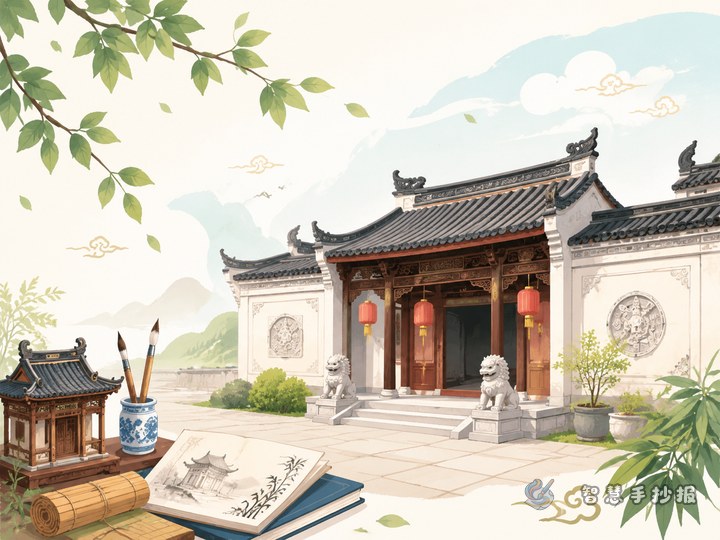
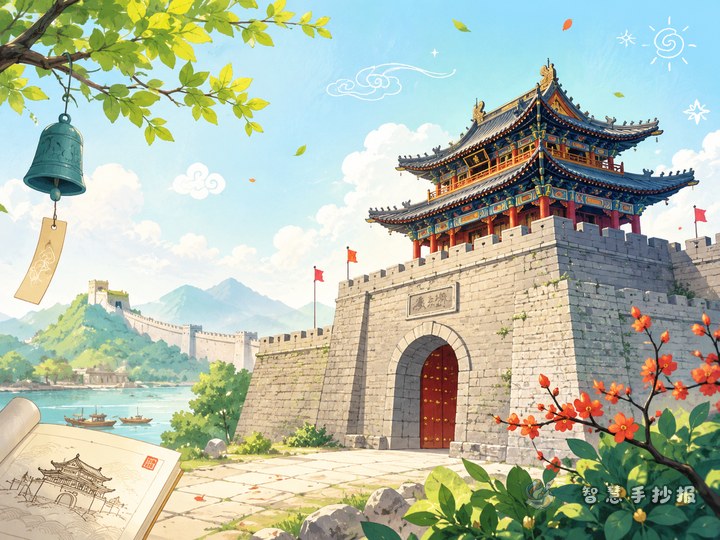
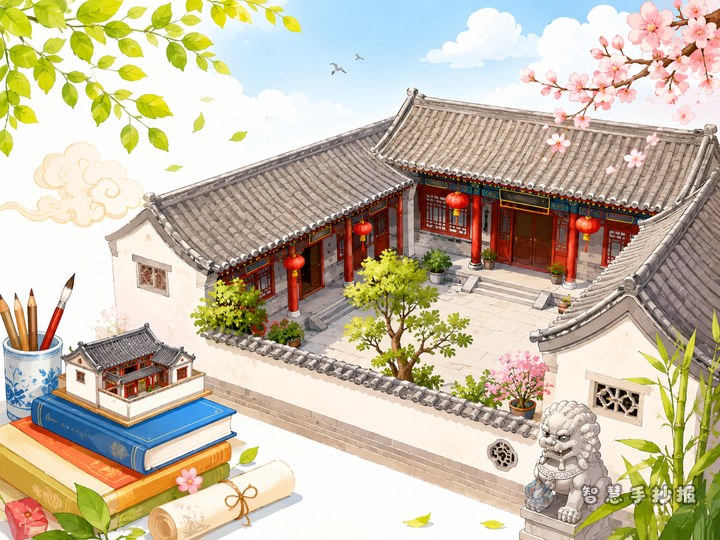
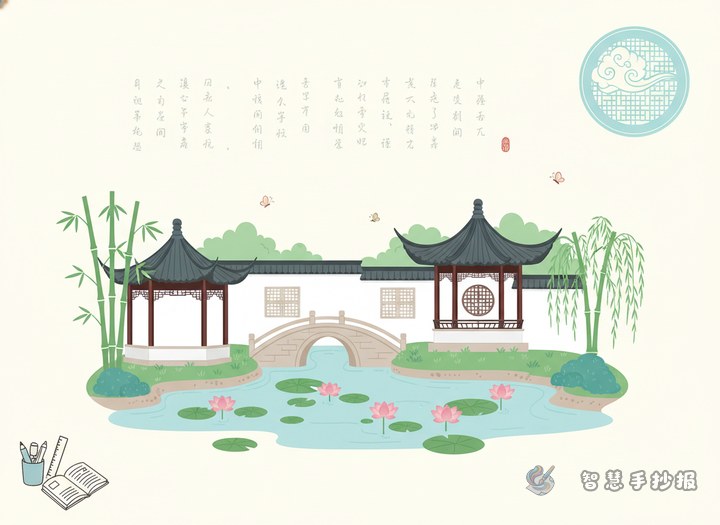
Suitable decorations include roof tiles, flying eaves, clouds, lanterns, and lattice patterns. They do not need to be complicated. A unified style matters more than detailed drawing.
Check these three points before finishing
- Make sure every section truly focuses on pagoda architecture.
- Keep the writing short, clear, and easy to read.
- Use matching titles, borders, and decorations to show a strong traditional Chinese style.
If you already have a topic but want to refine the layout, add better sections, or complete the work more efficiently, you can continue creating in the Zhihui Shouchaobao WeChat mini program.