Make the headline about connection, not just description
To create a strong handwritten newspaper on ethnic unity and cultural exchange, the key is not listing many groups or facts. The better approach is to show interaction, respect, and shared appreciation. A title such as “Culture in Conversation,” “Unity Through Exchange,” or “Sharing Traditions, Building Friendship” makes the page feel warm and active.
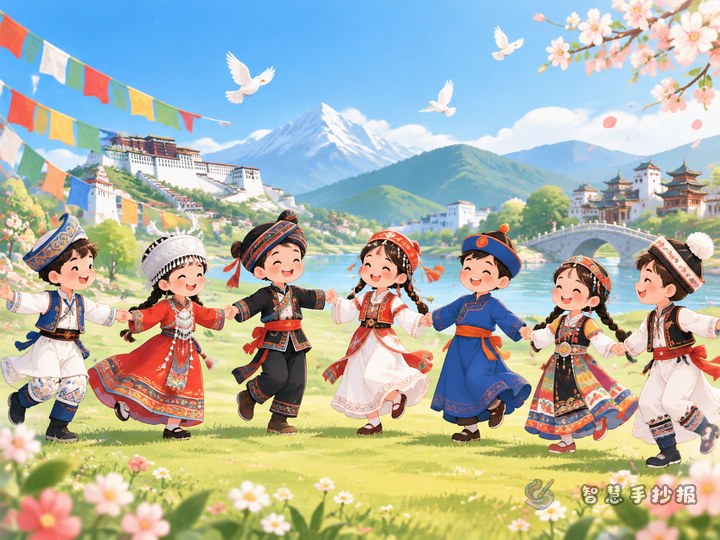
For elementary students, it helps to focus on topics they can easily understand: clothing, festivals, food, greetings, music, dance, and respectful behavior. These are simple to write and easy to organize on the page.
A practical four-section layout
- Culture Meet-Up: Briefly introduce different traditions in clothing, music, or dance, and emphasize mutual appreciation.
- Festival Spotlight: Pick two or three festivals and describe the celebration in a few short lines.
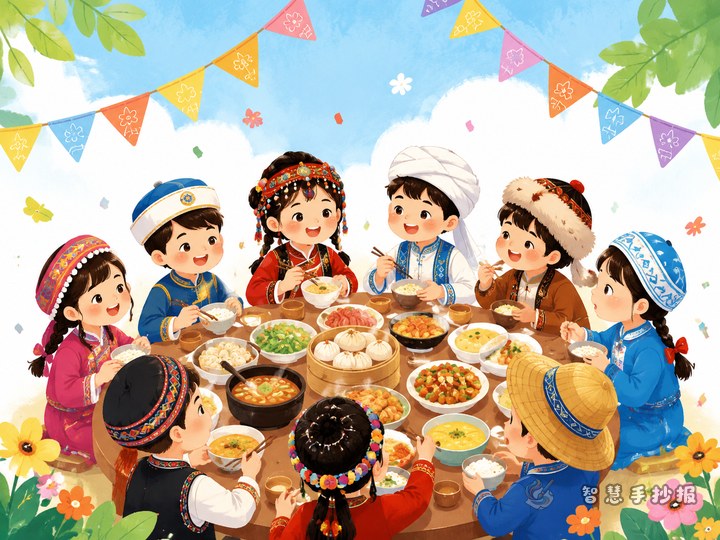
- Food Sharing Corner: Introduce several traditional foods and explain how sharing food helps people understand one another.
- Unity in Action: Write simple actions such as respecting customs, being friendly, listening carefully, and helping each other.
This structure gives the poster both cultural content and a clear message about unity, which works well for school assignments and class displays.
Short text students can adapt
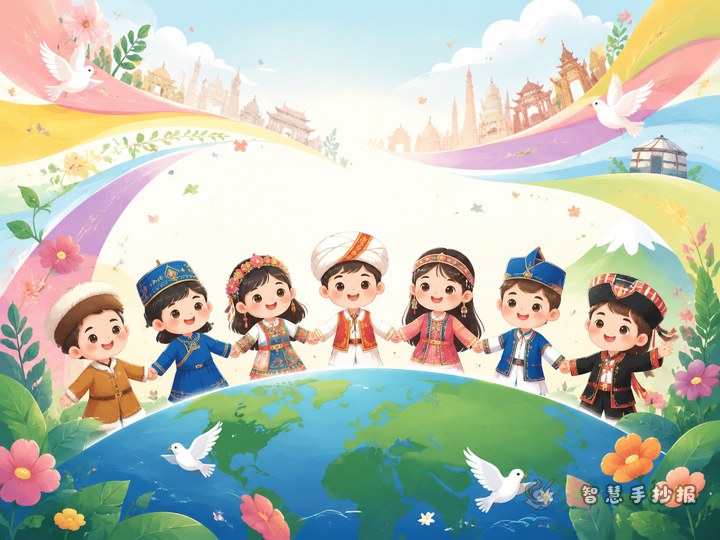
Ethnic unity is not only a slogan. It grows when people learn through communication and show respect in everyday life. Different ethnic groups may have different languages, clothes, festivals, and customs, but everyone values friendship, community, and a shared home. By learning more about each other, we discover the beauty of cultural diversity.
Cultural exchange is like a bridge that connects hearts. A greeting, a shared activity, or a conversation can help students understand kindness, respect, and inclusion. When we appreciate different traditions and treat one another warmly, the flower of unity can grow in our classrooms and communities.
Try a circular layout or a cultural connection map
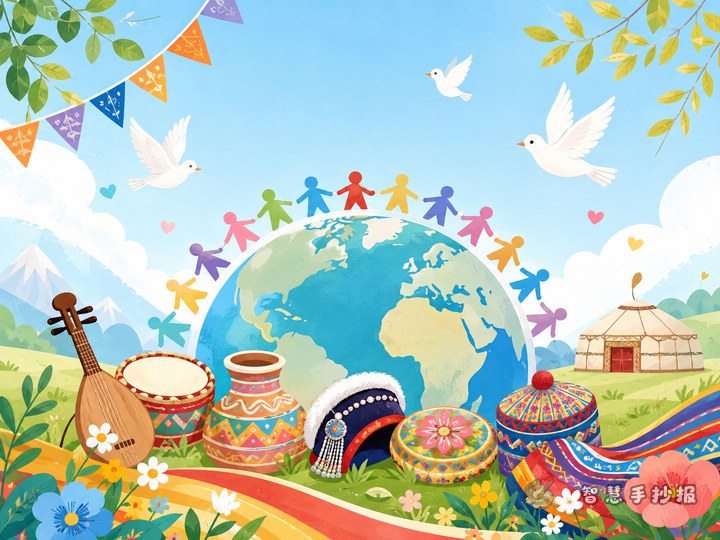
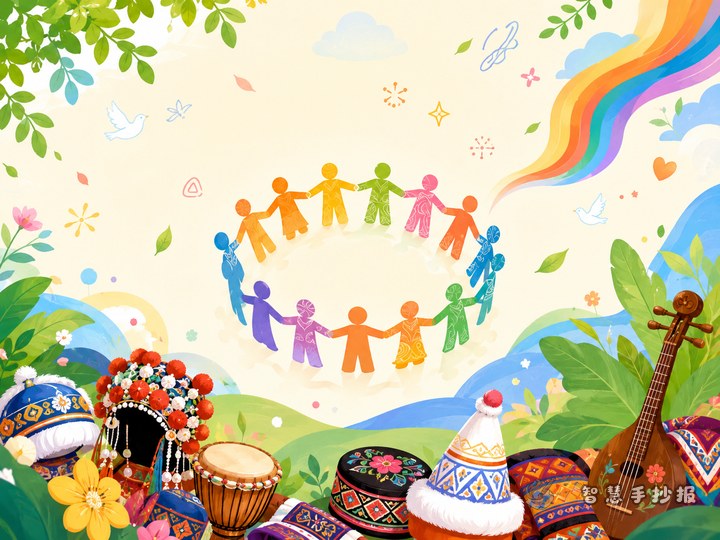
If you want the page to look more creative than a standard box layout, place the title in the center and build a circular design around it. The middle can say “Ethnic Unity,” and the outer rings can include “Festivals,” “Food,” “Clothing,” “Music,” and “Good Manners.” This keeps the topic focused and visually balanced.
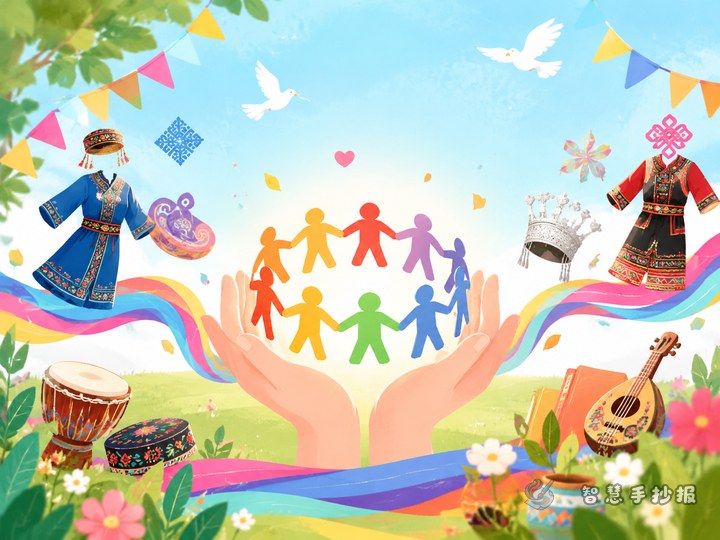
Another option is a “connection map” layout. Put a central image like joined hands, colorful ribbons, or pomegranate seeds in the middle, then extend small content areas outward. This creates a clear reading path and gives the page a lively feeling.
Decorations that match the theme
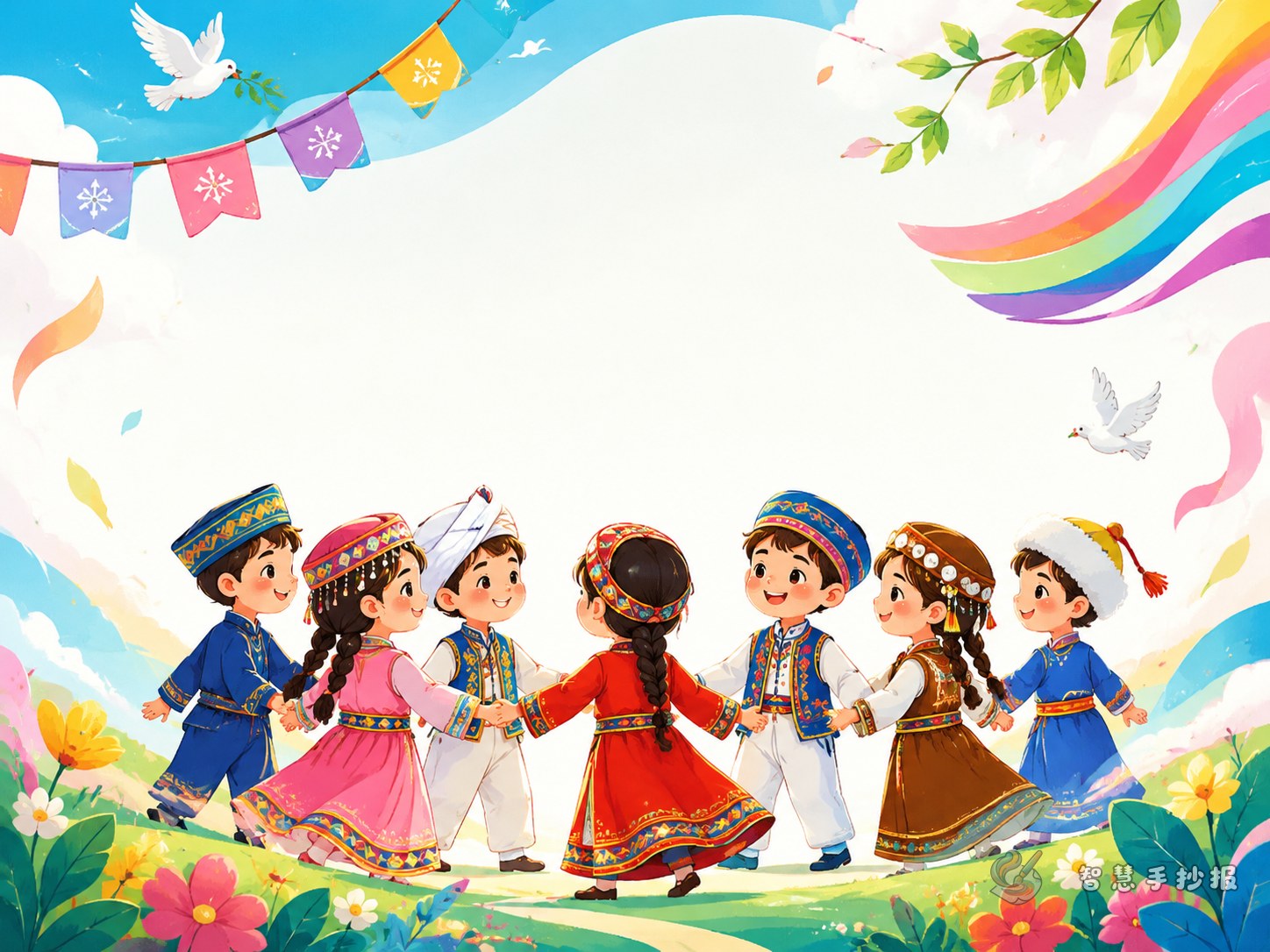
- Use ribbons, geometric patterns, joined hands, knots, or pomegranate seed symbols to suggest unity.
- Add simple border designs inspired by traditional patterns.
- Small illustrations of musical instruments, dance poses, festival items, or food icons can make the page more vivid.
- Use bold, colorful lettering for the title so it stands out clearly.
Keep decorations supportive rather than overwhelming. A little white space between sections will make the whole page easier to read.
A quick checklist before finishing
- Does the title clearly reflect both ethnic unity and cultural exchange?
- Does the content include both culture and the meaning of unity?
- Are the sections balanced, without one area too crowded or too empty?
- Are the colors consistent and the key phrases highlighted well?
- Did you include a simple message about respect and friendship?
If you already have your topic and sections in mind, you can also continue organizing your layout in the Zhihui Shouchao Bao WeChat mini program to make the final handwritten newspaper more complete and polished.