Why the Forbidden City is a strong handwritten newspaper theme
If you want a topic that clearly shows the beauty of traditional Chinese architecture and is easy to organize on paper, the Forbidden City is an excellent choice. Its red walls, yellow roofs, and rich architectural details make it ideal for students to write about appearance, layout, and cultural meaning. Compared with a broad topic on ancient buildings, a Forbidden City theme feels more focused and visually consistent.
This kind of page works well for school projects on traditional culture, architecture, history, or campus displays. Possible titles include The Beauty of Traditional Architecture in the Forbidden City, Exploring Ancient Architecture Through the Forbidden City, or What I See in Forbidden City Architecture.
Useful section ideas for the page
You do not need to fill the page with too much writing. A few well-chosen sections usually look better and read more clearly.
- Quick Facts: Introduce the Forbidden City as a famous and large traditional architectural complex in China.
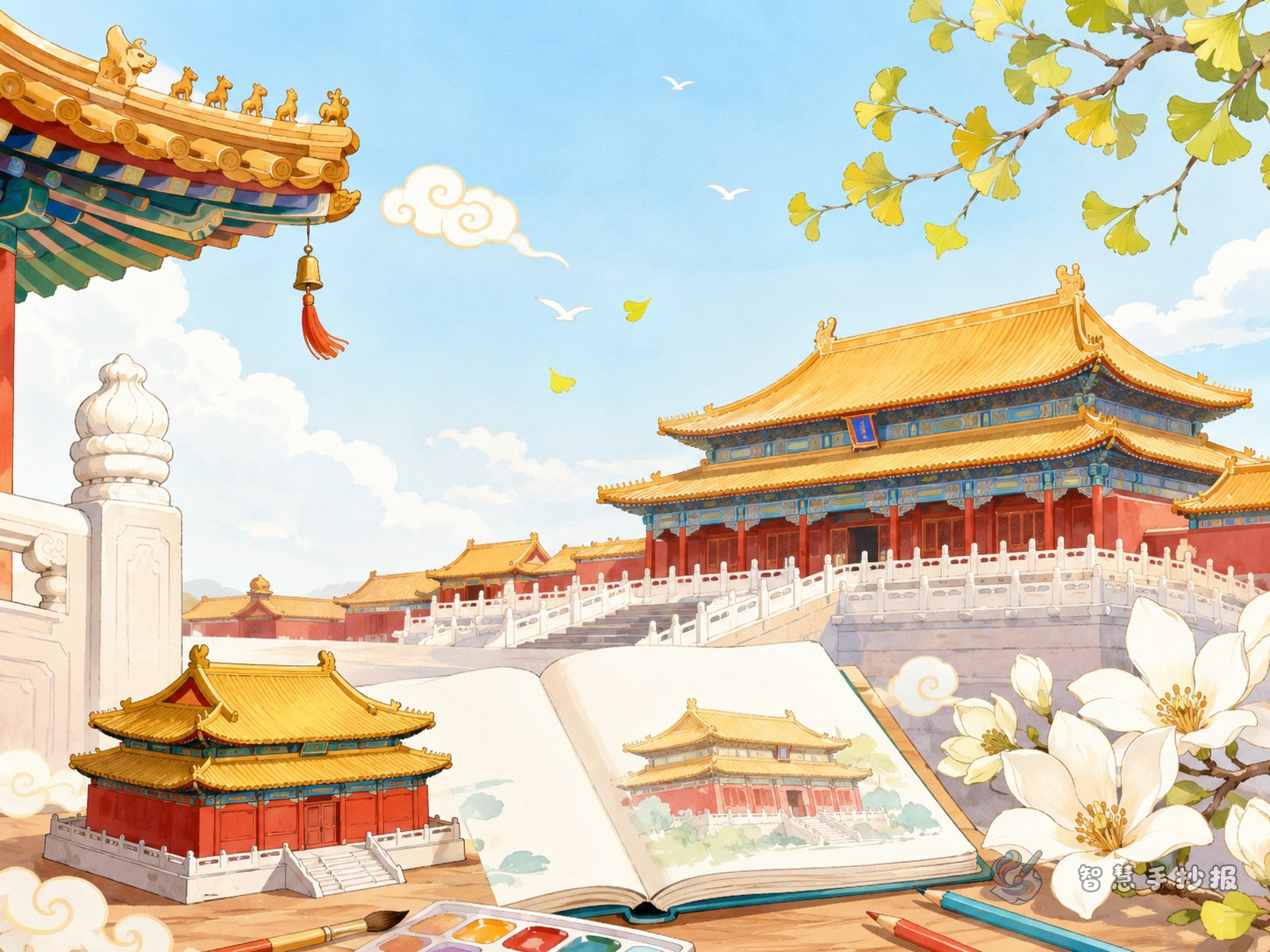
- Architectural Features: Write about red walls, yellow glazed tiles, upturned eaves, symmetrical planning, and layered platforms.
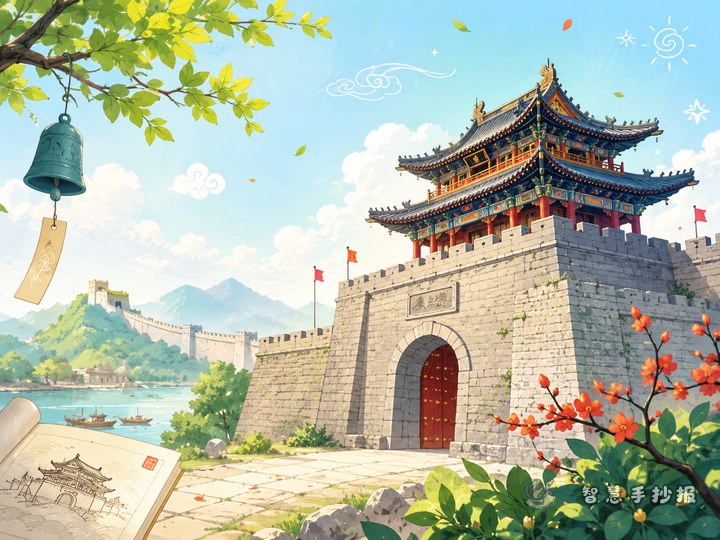
- Famous Buildings: Choose the Hall of Supreme Harmony, Hall of Central Harmony, Hall of Preserving Harmony, Meridian Gate, or corner towers.
- Cultural Meanings: Explain ideas behind colors, numbers, ceremonial order, and the central axis.
- Protecting Ancient Buildings: Encourage respect for cultural heritage and responsible visits.
If you have more space, add a small section called My Favorite Architectural Detail and write a few personal observations to make the page feel more like a student creation.
Ready-to-use writing material
Short introduction
The Forbidden City is an important symbol of traditional Chinese architecture. Its grand halls, orderly layout, and refined details show the wisdom of ancient builders and artists. By learning about the Forbidden City, we can better appreciate the charm of Chinese architectural culture.
Architecture notes
- The buildings follow a central axis and symmetrical arrangement, creating a solemn and balanced effect.
- The red walls and yellow roofs give the palace a bright and dignified appearance.
- Upturned eaves make the rooftops more graceful and layered.
- Dougong brackets, stone platforms, and palace gates reveal the skill of traditional craftsmen.
Heritage protection note
Ancient buildings are important witnesses to Chinese culture. We should begin with understanding and respect, visit in a civilized way, avoid causing damage, and help pass on the beauty of traditional architecture.
Do not limit the page to one front-view palace drawing
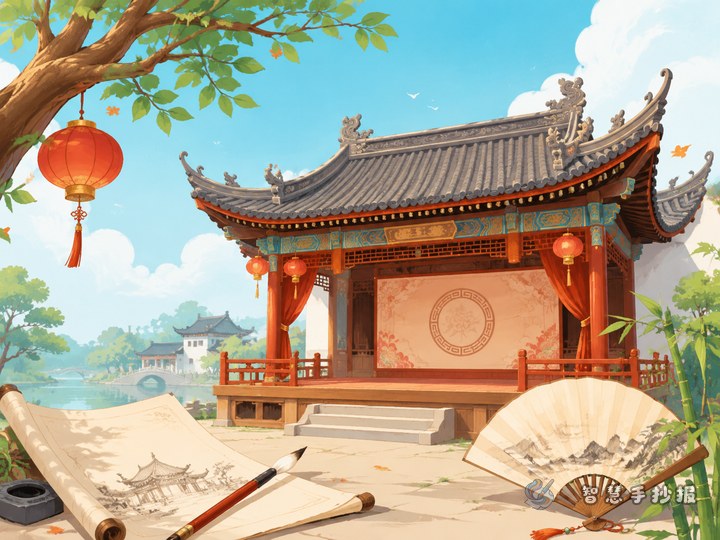
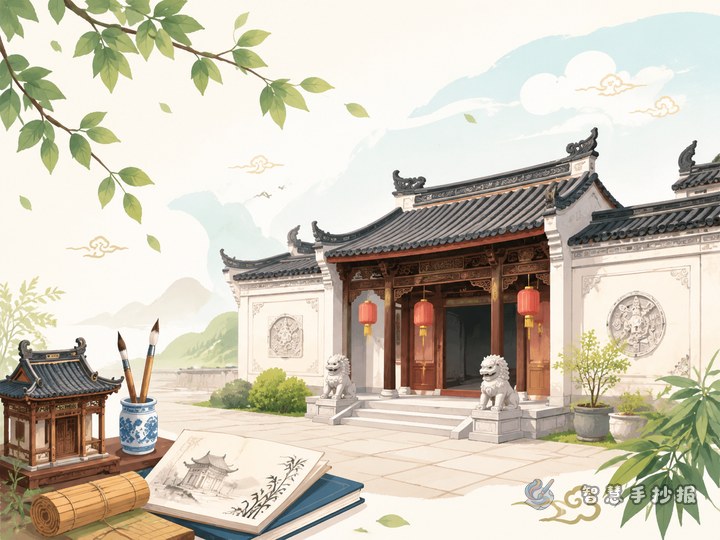
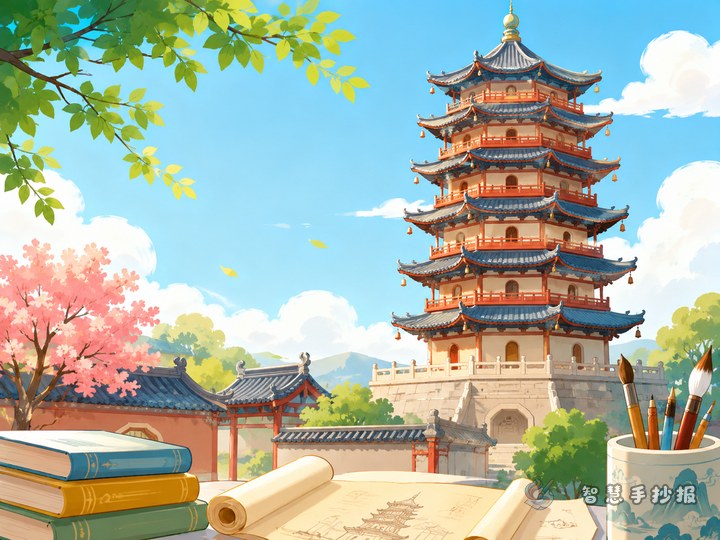
Many students only draw one large hall in the center, which can make the page look repetitive. It is often better to break traditional architectural elements into smaller decorative parts.
- Use palace walls, lattice patterns, or tile lines as borders.
- Draw lanterns, clouds, stone lions, or palace gates in the corners.
- Add roofline silhouettes around the title to make it stand out.
- Separate text sections with scroll, fan, or tile-inspired shapes.
This approach still shows the spirit of traditional Chinese architecture even without a complicated full scene.
How to make one page look balanced and clear
A practical layout is a centered title with three or four content areas. Place the main title at the top center and use red or dark brown for emphasis. Put quick facts and architectural features on one side, famous buildings on the other, and cultural meaning plus preservation at the bottom.
- Keep the main title short and eye-catching.
- Avoid overly dense text. Two to four short paragraphs per section are enough.
- Highlight key words such as upturned eaves, dougong, and central axis.
- Leave some blank space so both text and drawings can breathe.
If you want to refine the layout, try different title styles, or polish the page more efficiently, you can continue creating in the WeChat mini program by Zhihui Shouchaobao.