Start with a clear purpose for the page
Many students try to put every fact they find onto a Great Wall handwritten newspaper. The result is often crowded and hard to read. A better method is to decide what the page should say first. The Great Wall is both a famous historic site and a major piece of ancient architecture, so your content can focus on structure, history, spirit, and protection.
If the work is for classroom display, make the information clear and simple. If it is for a competition, you can add more creative sections and stronger visual design.
A practical section plan that is easy to use
Section 1: Great Wall at a glance
Use a short introduction to explain what the Great Wall is. You can say that it is an important ancient defensive project in China, built along mountains and known as one of the most representative historic structures in the country. This section works well under the title.
Section 2: What does the Great Wall look like?
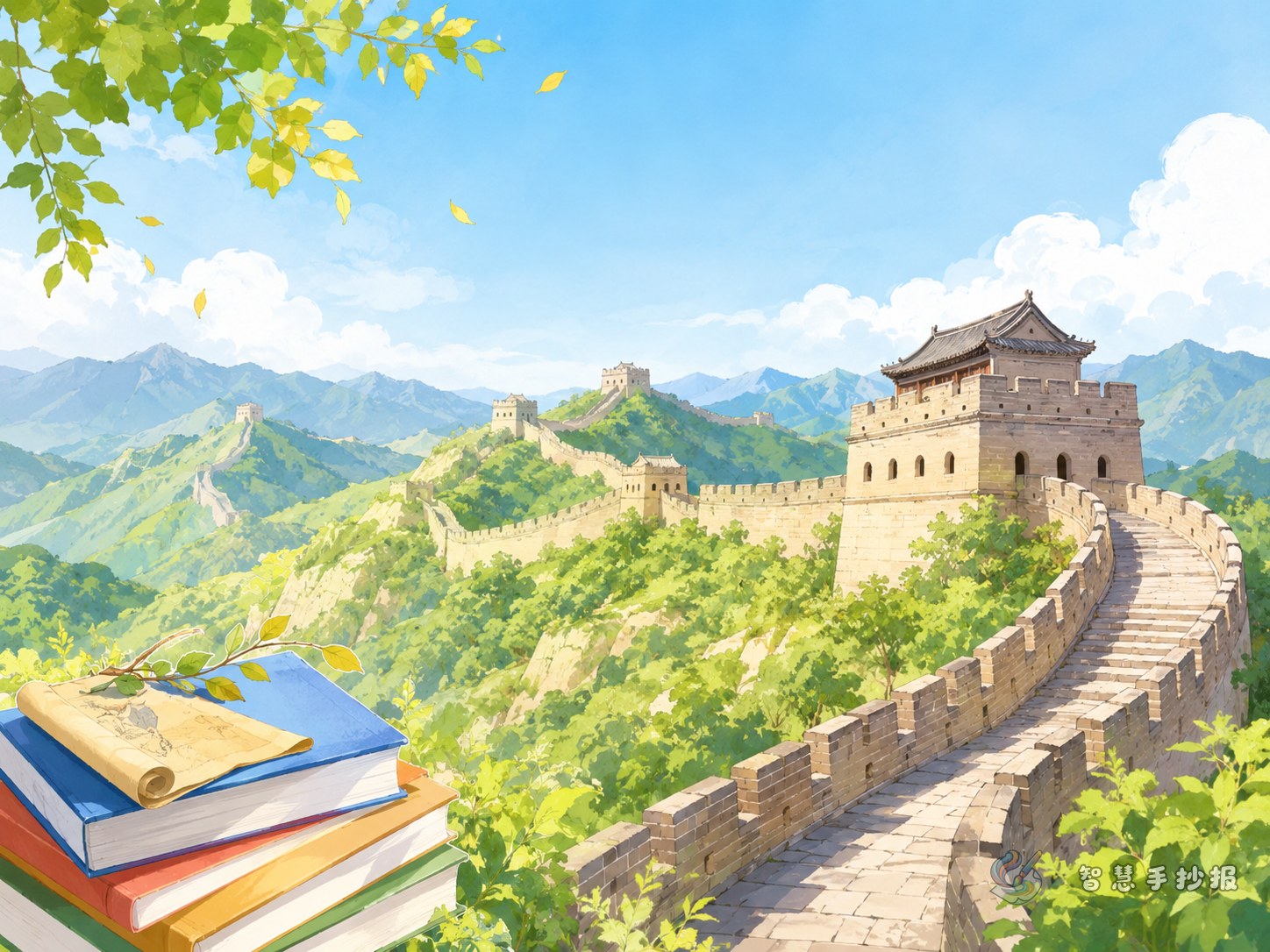
Describe features such as the wall, watchtowers, beacon towers, and passes. You can mention that it follows the shape of the mountains and shows the wisdom of ancient builders.
Section 3: Why was it important?
This section can explain its defensive role and how beacon towers were used to send signals. It helps the page go beyond tourism facts and show the real value of the structure.
Section 4: Stories and famous lines
Add one or two short stories, poems, or memorable lines about the Great Wall. Keep this part brief so the layout stays clean.
Section 5: Protecting heritage starts with us
This is a strong finishing section. Write simple points such as not carving on walls, not littering, visiting politely, and learning history before visiting ancient sites.
Ready-to-use writing materials
- Theme line: The Great Wall winds across the mountains like a giant dragon and carries a long history.
- Architecture line: Its walls, towers, and beacon stations form a remarkable ancient building system.
- History line: The Great Wall is not only a defense project but also a symbol of perseverance.
- Protection line: Protecting the Great Wall means protecting precious cultural memory.
These short lines are easy to copy into different sections and work well for younger students.
Two layout ideas that look lively
Mountain path layout
Put the title at the top and draw a winding wall line through the page to connect the sections. Each block can look like a small watchtower area. This gives the page movement.
Center illustration layout
Draw a watchtower or a short wall section in the middle, then place text sections around it. This style is good when you want a neat and balanced design.
Try colors such as brick red, earthy yellow, gray blue, and green for a traditional but bright result.
Details that can improve the final work
- Use a question-style title such as “Why is the Great Wall so admired?” to catch attention.
- Keep each section close in length so the page feels balanced.
- Do not overuse decorations. Focus on wall lines, mountain shapes, flags, and clouds.
- End with a personal sentence like “I want to be a young protector of heritage sites.”
Once your text and section plan are ready, you can continue polishing the layout, colors, and overall look in the Smart Handwritten Newspaper WeChat mini program.