Start with a theme that is easy to organize
A “Poems and Idioms” handwritten newspaper works well because it connects ancient poetry with idiom learning on one page. Instead of collecting random materials, choose 4 to 6 familiar poems and match them with idioms related to scenery, feelings, or imagery. This makes the whole page feel connected and meaningful.
- Spring poems + scenery idioms
- Farewell poems + emotion idioms
- Landscape poems + artistic mood idioms
- One poem matched with two idioms
A clear layout makes the page easier to read
This topic looks better when it is divided into small connected sections instead of copying long full poems everywhere. A center title with content blocks around it is a practical layout for students.
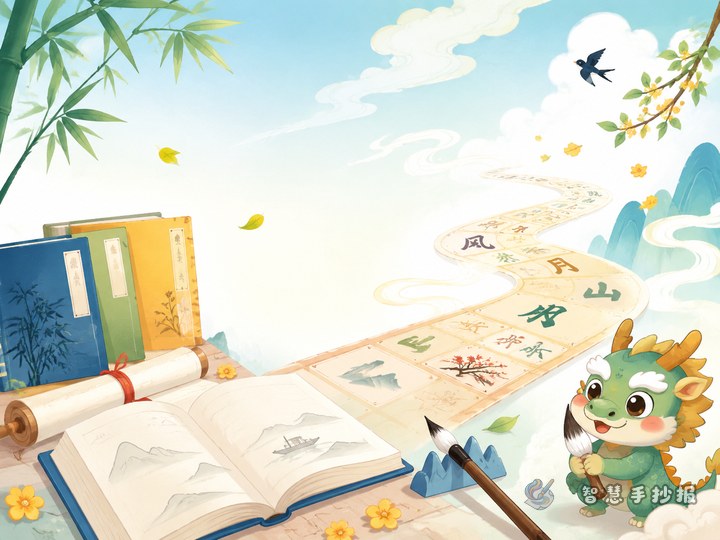
- Title area: Use a heading such as “Idioms Hidden in Poems” or “The Beauty of Idioms in Ancient Poetry.” Add scrolls, brushes, or cloud patterns.
- Poem window: Pick up to four familiar poems and copy only key lines if space is limited.
- Idiom cards: For each idiom, write the meaning and one simple usage note.
- My discovery: Add one or two short reflections about what you see or feel in the poem.
If you want a neater design, make each group into a small card with the poem line on top, the idiom below, and the explanation beside it.
Ready-to-use material ideas
Spring and new life
- Poem line: Spring slumber knows no dawn; everywhere I hear birds singing.
- Matching idioms: full of birds and flowers, full of vitality
- Note: This pair shows the lively energy of spring morning.
Distance and grandeur
- Poem line: The sun beyond the mountains glows; the Yellow River flows into the sea.
- Matching idioms: majestic and boundless, rushing forward like a torrent
- Note: A good choice for a landscape section with a grand feeling.
Friendship and farewell
- Poem line: Though Peach Blossom Pool is a thousand feet deep, it is not as deep as Wang Lun’s friendship.
- Matching idioms: deep affection, reluctant to part
- Note: This helps connect poetic feeling with common idiom learning.
Effort and progress
- Poem line: To enjoy a grander sight, climb to a greater height.
- Matching idioms: keep working harder, strive for better
- Note: This is perfect for a positive and encouraging corner.
Small sections that make the work more interesting
Besides poems and idioms, you can add a few creative mini sections to make the page richer.
- Idiom corner: Explain one idiom and give a simple sentence.
- Match them up: Show which poem line matches which idiom.
- My favorite poem line: Write two or three sentences about why you like it.
- Common mistakes: Remind readers not to misspell poet names, dynasties, or idioms.
This makes the handwritten newspaper feel more like a student’s own organized learning work rather than a copied reference page.
Colors, drawings, and writing tips
Since this is a traditional culture topic, soft blue, dark green, cream, or red are good main colors. Avoid too many fluorescent colors. Decorations such as plum blossoms, bamboo, mountains, scrolls, and seal-style borders can create a classic Chinese aesthetic. Write the main title larger, keep poem lines in neat rows, and place idioms in small colored boxes so the key points stand out clearly.
If you are short on time, finish the basic version first with a title, four content blocks, and a simple border. If you want more ideas for layout and finishing touches, you can continue exploring in the Zhihui Shouchaobao WeChat mini program.