Why this topic works well for a handwritten newspaper
Many students fill a Chinese culture newspaper with random poems or idioms, but the page can look scattered. A topic like “Stories Hidden in Chinese Radicals” gives everything one strong thread.
When students look at radicals such as water, wood, mouth, or heart, they can connect form, meaning, vocabulary, idioms, and poetry on the same page. That makes the newspaper feel thoughtful and easy to understand.
A page layout that feels organized
This topic works well with a four-block layout or a center-title layout.
- Main title: Stories Hidden in Chinese Radicals.
- Top left: Radical Corner, explaining what the radical usually means.
- Top right: Idiom Box, with two to four related idioms.
- Bottom left: Poetry Notes, with short classical lines that include key characters.
- Bottom right: My Discoveries, where the student adds personal observations.
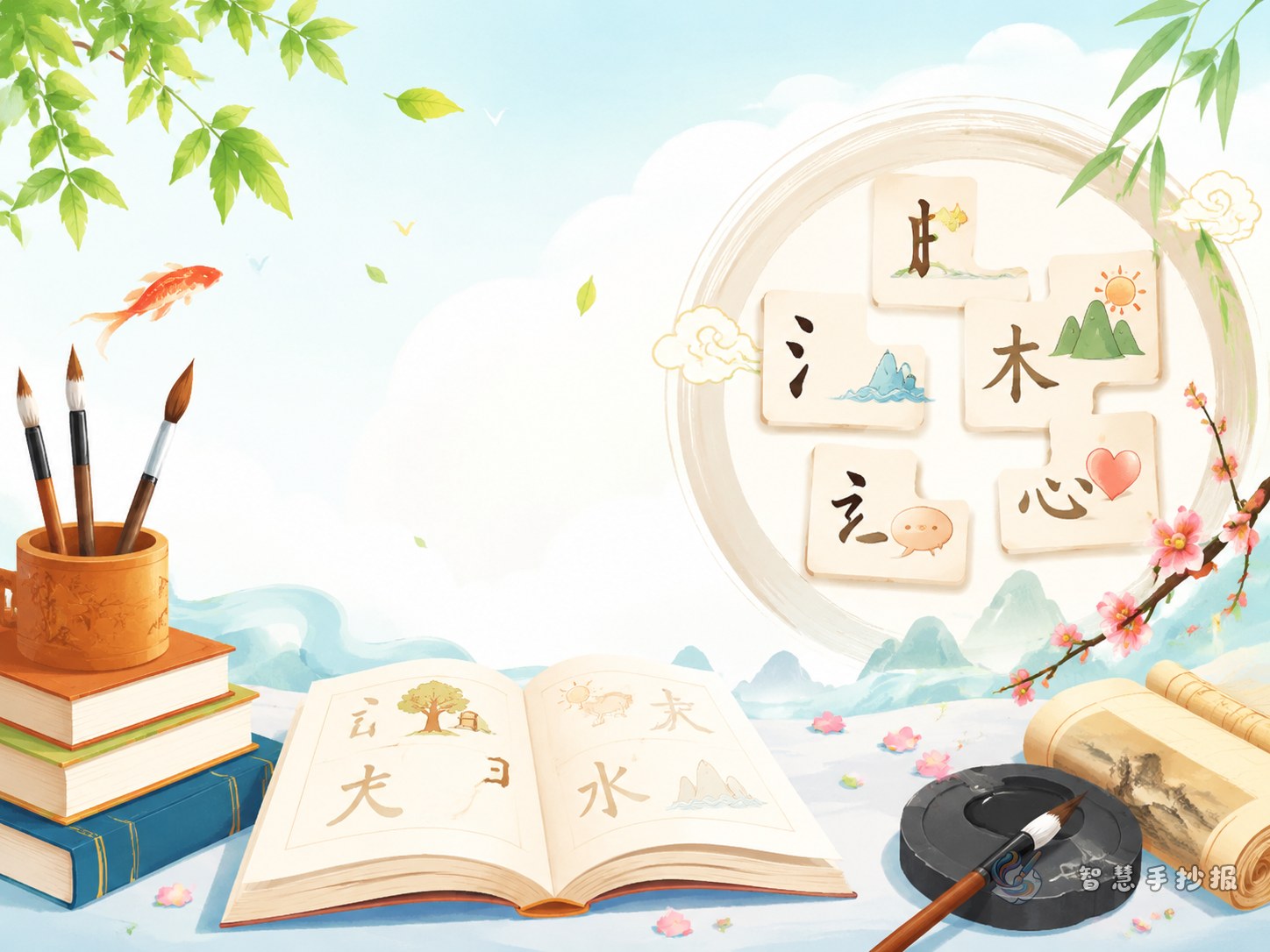
Small decorations such as scrolls, leaves, water drops, or seals can make the page lively without making it crowded.
Ready-to-use content ideas
Radical notes
Wood: often related to trees, plants, or wooden objects.
Water: often related to rivers, lakes, seas, or flowing water.
Mouth: often related to speaking, calling, or sounds.
Heart: often related to feelings, thoughts, or inner states.
Idiom ideas
- For wood: idioms about trees, growth, or firmness.
- For water: idioms about persistence, beauty, or smooth progress.
- For mouth: idioms about speech and expression.
- For heart: idioms about focus, kindness, or understanding.
Poetry ideas
- Choose lines about springs, rivers, trees, or moonlit nature scenes.
- Highlight one or two key characters that match the radical theme.
- Add a short note explaining why the line fits the section.
It is better to choose a few good examples than to fill the page with too much text.
How to make the content feel personal
A good handwritten newspaper should not look like pure copying. Add one or two sentences of your own after each section.
- Observation: Characters with the water radical are often linked to movement or liquid.
- Comparison: Characters with the wood radical can describe both plants and daily objects.
- Memory tip: Guess the meaning from the radical first, then remember the full character.
- Reflection: Radicals help us discover that Chinese characters carry stories inside them.
These short comments make the page look more complete and thoughtful.
Color and decoration ideas
You do not need complicated drawings. Simple colors can already create a strong cultural feeling.
- Wood theme: green and brown, with leaves or branches.
- Water theme: blue and cyan, with drops or waves.
- Mouth theme: orange and light red, with speech bubbles.
- Heart theme: pink and purple, with bookmark or heart shapes.
Use a larger title, slightly bigger section headings, and soft outlines around important words. If you want to finish the design more quickly, you can also organize your text first and continue the layout in the Smart Handwritten Newspaper WeChat mini program.
A simple completion plan for students
- Choose one main radical.
- Prepare two or three items for each section.
- Draw the title and large frames first.
- Write the text, then add decorations last.
This approach keeps the page focused and helps students show knowledge of Chinese characters, idioms, and poetry in one neat handwritten newspaper.