Start with One Clear Theme
The easiest way to make a Chinese poetry handwritten newspaper look good is not to fill it with too many poems. Instead, choose one clear theme first. Good choices include spring poems, farewell poems, moon poems, patriotic poetry, or my three favorite ancient poems. A focused topic makes the page easier to organize and much more attractive.
For younger students, it is best to choose poems they already know from class. Familiar poems are easier to copy, explain, and decorate, and they help the final work feel natural rather than crowded.
Section Ideas You Can Use Right Away
You do not need too many sections. Four or five blocks are enough for a complete and balanced page.
- Main title area: Write a title such as “The Beauty of the Four Seasons in Ancient Poetry” or “Growing Up with Poems.”
- Classic poem section: Copy 2 to 4 short poems in full.
- Famous lines corner: List 5 to 8 beautiful and memorable lines.
- Poet profile: Add one or two simple sentences about poets like Li Bai, Du Fu, Wang Wei, or Bai Juyi.
- My thoughts: Write which line or poem you like best and why.
If there is extra space, you can also add a tiny knowledge box, such as what rhyme means in ancient poetry or the difference between short poem forms.
How to Choose Good Text Materials
When selecting content, follow four simple rules: keep it short, familiar, beautiful, and easy to understand. Very long poems are usually not ideal for a standard school handwritten newspaper. These directions work especially well:
- Seasonal poems, such as spring or winter poems.
- Homesickness lines and moon-related poems.
- Encouraging or motivational lines.
- Friendship and farewell poems.
- Patriotic poetry with strong emotions.
Lower grades should focus on shorter five-character or seven-character poems. Older students can add one or two simple appreciation sentences to show understanding.
Layout Tips for a Neat and Elegant Page
Chinese poetry themes look best with a calm and graceful style. Place the title at the top center, then arrange the main text in sections below or on both sides. Decorations like scrolls, bookmarks, branches, clouds, and small seals can create a traditional feeling.
- Horizontal layout: good for longer titles and shorter poem blocks.
- Center layout: place the title in the middle and divide the content into left and right sections.
- Card-style layout: turn each part into a small framed block for a lively page.
Soft colors such as light blue, pale green, beige, and light pink work very well. Avoid using too many dark colors. A little blank space can make the whole page look cleaner and more elegant.
Small Details That Make the Page Better
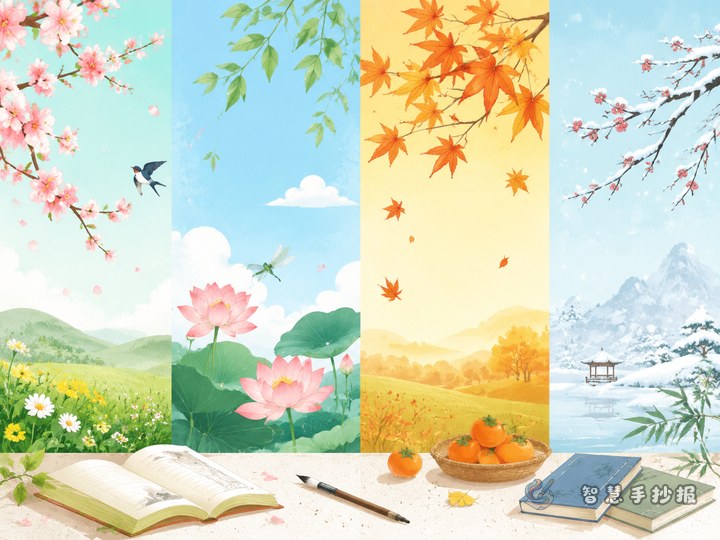
You can make the newspaper more vivid by adding simple drawings that match the poem. For spring poems, draw swallows, flowers, and willow branches. For moon poems, add a moon, stars, and distant mountains. For farewell themes, include a boat, a road, or flowing water. These decorations support the poetic mood without taking over the page.
Write the main title larger than the body text, keep the handwriting neat, and use colored pens only for emphasis. Too many colors may make the layout messy. If you want more ideas or ready-to-organize inspiration, you can continue through the Smart Handwritten Newspaper WeChat mini program.
A Simple Finished Example
If you are not sure how to begin, try this ready-made plan: use the title “Spring in Ancient Poetry,” place Spring Dawn and Village Dwelling on the left, a famous lines section on the right, and at the bottom add “My Favorite Line” plus a small poet profile. Decorate the page with flowers, grass, and birds for a fresh and natural result.
The key is not to add as much as possible. A successful poetry handwritten newspaper has a clear topic, readable content, and a comfortable layout. First choose the theme, then select the poems, and finally arrange the sections.