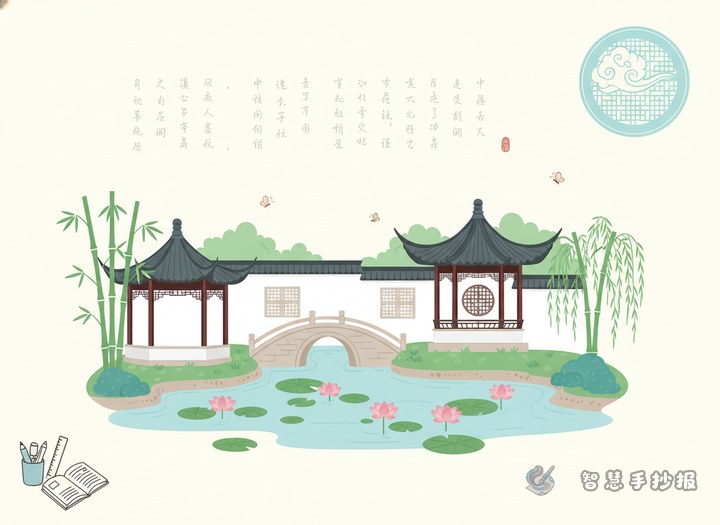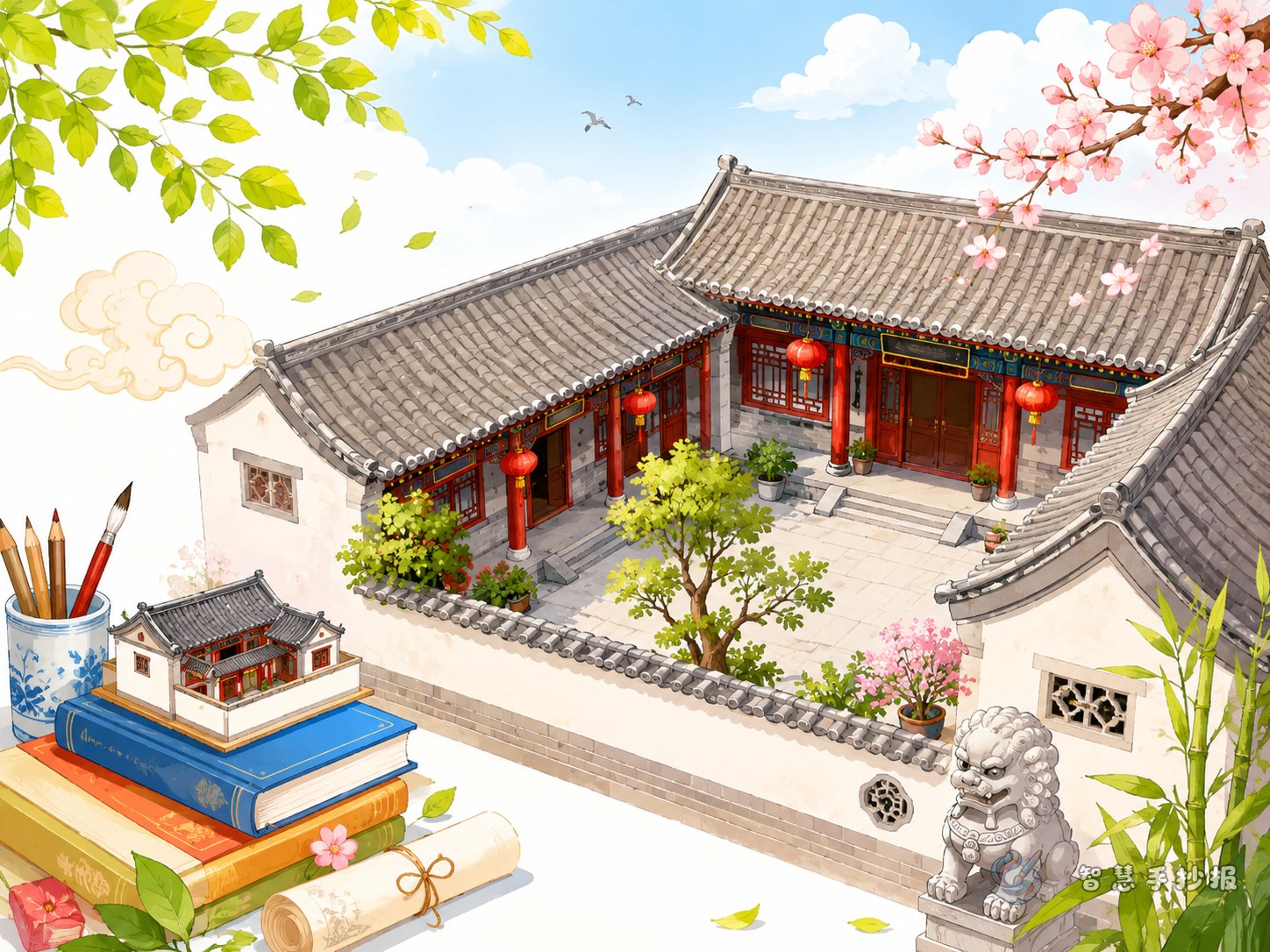
Start by narrowing the big topic to siheyuan
Traditional Chinese architecture is a wide subject, so a handwritten newspaper can feel scattered if the topic is too broad. Focusing on siheyuan, the traditional courtyard house, makes the page easier to organize and more suitable for students. It offers both clear building structure and a strong sense of daily life.
You can choose a title like “Inside a Siheyuan,” “The Beauty of a Chinese Courtyard,” or “Traditional Life in a Siheyuan” to give the page a clear center.
Writing ideas that make the content feel rich
1. What is a siheyuan?
Write a short introduction: a siheyuan is a traditional Chinese residence where buildings are arranged on four sides around a central courtyard. It is especially common in northern China and is known for its orderly and balanced layout.
2. How is the courtyard arranged?
- Main hall: usually the most important building, often facing south.
- Side rooms: built on the left and right sides of the courtyard.
- Front building: placed near the entrance area to complete the enclosure.
- Gate and screen wall: useful in daily life and meaningful in traditional design.
This section works well as a “mini building map” with short labels.
3. Which details show architectural beauty?
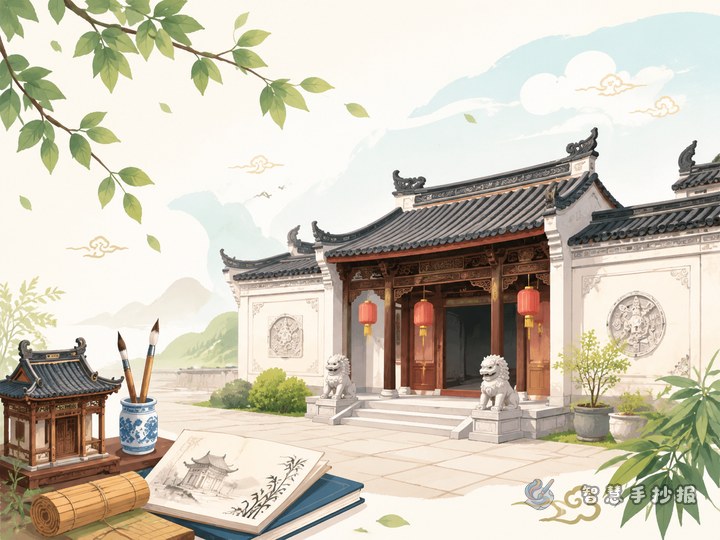
You can mention gray roof tiles, wooden doors, lattice windows, brick walls, eaves, and stone door elements. These details add character to the page and are also easy to draw as small illustrations.
Include life inside the courtyard, not only the building
A good handwritten newspaper should not sound like a dry list of parts. Add scenes of family life, such as children playing in the yard, flowers and trees in the courtyard, people chatting together, or festive decorations during the New Year. This helps readers feel that a siheyuan is not only a building but also a home full of tradition.
You can also add a sentence about cultural meaning: the siheyuan reflects ideas of family unity, order, respect, and close everyday living.
Place a simple courtyard plan in the center
One of the best page layouts for this topic is to draw a basic top-view plan of the courtyard in the middle. Label the main hall, side rooms, and entrance, then place short text sections around the drawing. This makes the page clear and visually focused.
- Put the main title at the top in bold handwriting.
- Use the courtyard diagram as the visual center.
- Place architecture notes on one side and cultural meaning on the other.
- Use the bottom area for daily life or personal learning points.
If you have more space, add a small “Did You Know?” box about symmetry, direction, or traditional living ideas.
Keep the colors simple and consistent
Good color choices include gray, brick red, brown, and beige. Gray works well for roofs and walls, red can highlight doors and titles, and beige helps soften the whole page. For decorations, you can use patterns inspired by window grids, tiles, bricks, or simple traditional borders.
Add small items like a lantern, a tree branch, a stone stool, or a door ring if needed, but do not overcrowd the page.
A short ending students can use directly
You may end with this idea: A siheyuan is more than a style of housing. It carries Chinese ideas about family, order, and the beauty of everyday life. Learning about siheyuan helps us better understand the charm of traditional architecture.
If you want to keep improving your title style, text boxes, or color plan, you can continue designing in the Zhihui Shouchaobao WeChat mini program for a more complete handwritten newspaper.