Start with One Main Idea: What Do Flowers on Clothing Express?
When making a handwritten poster about floral patterns in ancient Chinese clothing, there is no need to list every flower or dynasty. Build the poster around one question: why did people place flowers from nature on garments? Floral patterns decorated fabric, while also suggesting hopes for beauty, prosperity, good character, and good fortune. A useful opening line is “A flower on clothing can also be a message,” which connects patterns with daily life, aesthetics, and etiquette.
Remember that the meaning of a floral pattern could change with the dynasty, garment, occasion, and combination of motifs. Floral designs should not automatically be treated as official rank symbols. This reminder can become a special note on the poster.
Four Floral Motifs to Turn into Mini Fact Cards
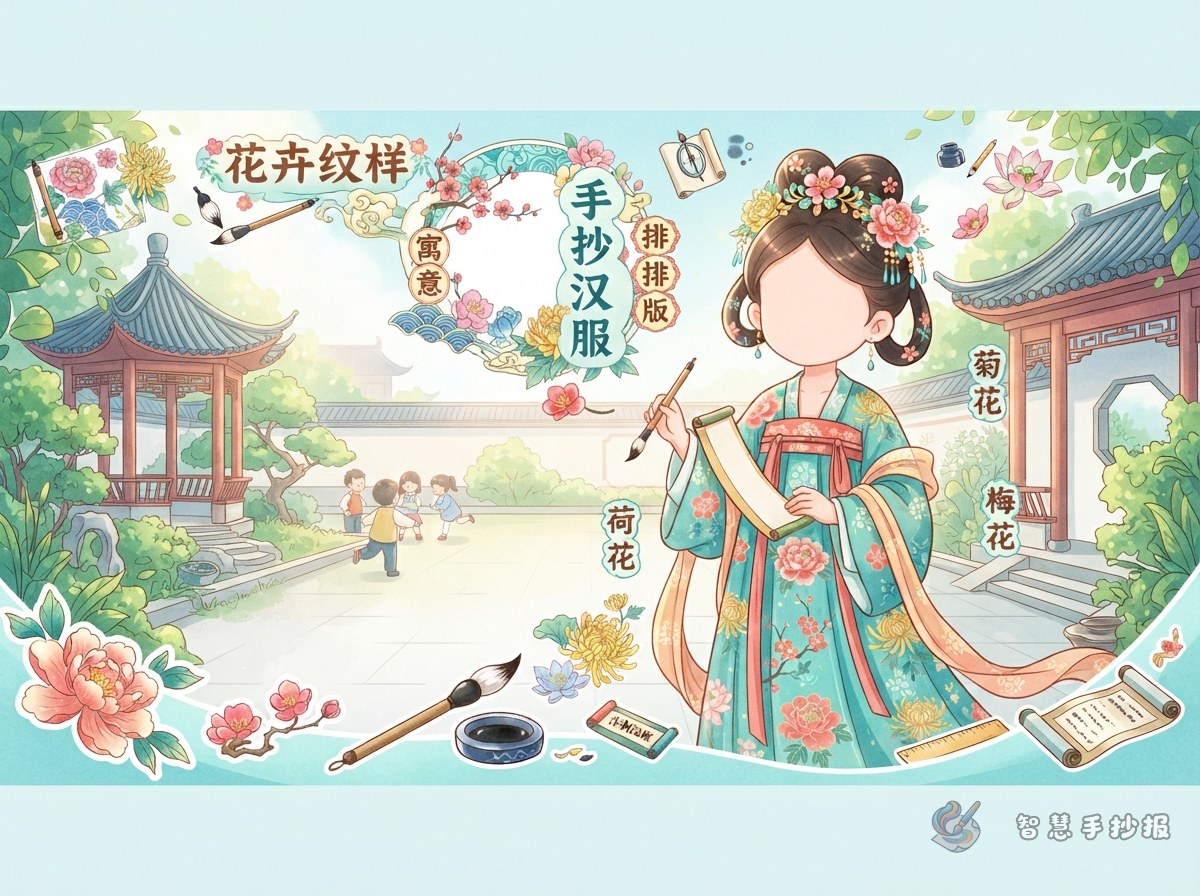
- Lotus: Begin with its cultural association with purity and elegance. On the poster, combine rounded leaves, petals, and rippling water into a repeating pattern.
- Peony: Its full shape and many layers create a rich, festive impression. It works well in the center of the poster as the most eye-catching flower.
- Plum blossom and orchid: They can suggest resilience and refined elegance. Make clear that these are cultural associations, not fixed clothing-rank rules for every dynasty.
- Trailing flowers and composite floral designs: Trailing patterns emphasize connected stems and leaves, while composite floral designs combine several imagined flower forms. Both are useful for borders, scrolls, sleeves, and garment edges.
Keep each fact card to three lines: the motif’s name, its visual features, and its cultural associations. This makes the poster easy to read instead of turning it into a crowded page of information.
A Note on Etiquette: Not Every Flower Shows Social Rank
The etiquette section can be explained through a short comparison. Ancient clothing was influenced by status, occasion, and regulations, and some clothing symbols had clearer formal rules. Many floral motifs, however, mainly served decorative, auspicious, and aesthetic purposes. When examining a motif, ask three questions: Which period did it appear in? What garment or occasion was it used for? Was there a clearly stated regulation?
Turn this idea into a “Pattern Judge” box. On one side, write what a motif may express, such as elegance, prosperity, or good fortune. On the other, write “Do not jump to conclusions,” reminding readers that not every flower represented rank. This keeps the poster both interesting and historically careful.
Design the Page Like an Open Flower
Try a creative “flower center and four petals” layout. Draw a simplified ancient robe or sleeve in the center and place the main title there. Use four petal-shaped sections for “Visual Features,” “Floral Associations,” “Etiquette Notes,” and “Drawing Tips.” Connect the petals with vines or thin lines to create a natural reading path.
- Top: Write the title in large hand-lettered characters and add two small flowers beside it.
- Left side: Draw parts of lotus, peony, and plum blossom motifs, labeling each with short notes.
- Right side: Place the three keywords “period, occasion, and status” in a clear reminder box.
- Bottom: Add a short summary and the date, then use trailing flowers to fill selected corners.
A suitable palette includes warm ivory, vermilion, indigo, and a small amount of yellow-gold. Sketch the robe and petals first, outline them with a dark color, and add color at the end. Keep the palette to about four colors so the text remains clear and the page keeps an antique feel.
Text You Can Copy into the Handwritten Poster
Short passage: Floral patterns on ancient clothing transformed plants from nature into a decorative language on fabric. Lotus, peony, plum blossom, and trailing flowers each have distinctive shapes and cultural associations. They made garments more beautiful and expressed wishes for elegance, prosperity, resilience, and good fortune. Their meanings could change with time, clothing, and occasion, so etiquette should not be explained with a single fixed rule.
Alternative headings: The Language of Flowers on Clothing, Wishes in Textile Patterns, Visible Etiquette and Beauty, How Did Ancient People Decorate Their Clothes?
- Decide on the central title and the four petal-shaped sections.
- Choose three or four floral motifs, draw their outlines, and note key words.
- Add the etiquette reminder and the short paragraph.
- Unify the border, lettering, and colors, then check readability and blank space.
To try several versions of the petal-shaped layout, continue in the WeChat Mini Program of 智慧手抄报 and adjust the sections to fit the paper size.