Begin with the Meaning of Two Clothing Terms
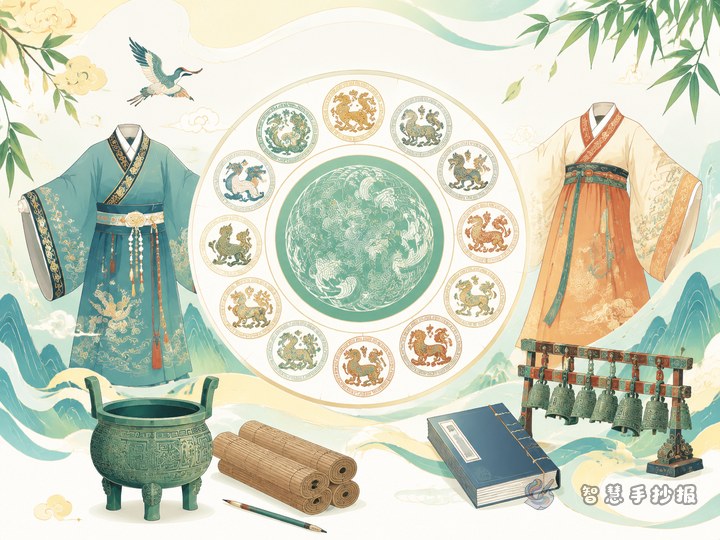
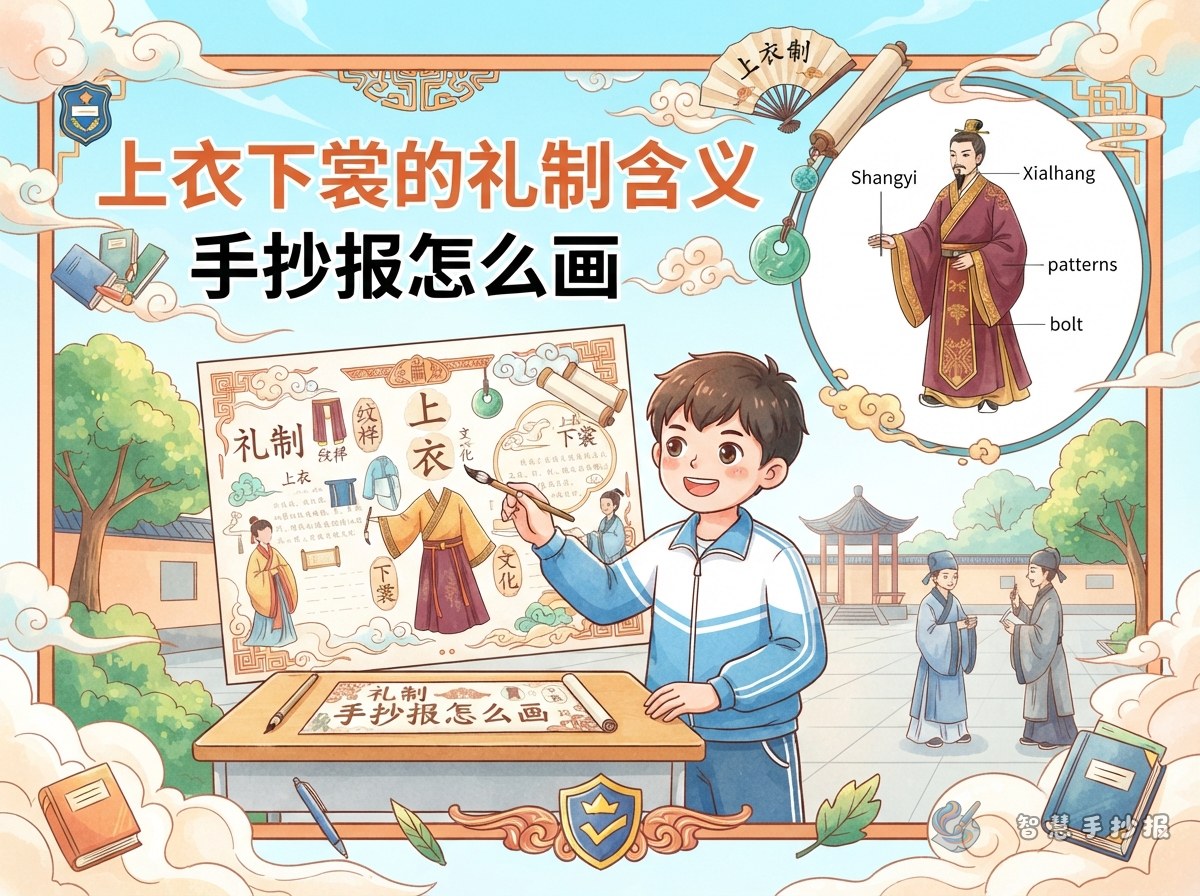
A clear way to introduce this poster is through the traditional expression for clothing, formed by the words yi and chang. In many ancient contexts, yi referred mainly to an upper garment, while chang meant a skirt-like lower garment. Over time, the combined expression came to mean clothing more generally. A simple two-part outfit diagram can make this distinction easy to understand.
How Clothing Structure Related to Ritual Order
The upper-garment-and-lower-garment form was more than a practical design. It also provides a useful starting point for learning how clothing reflected order and etiquette. Depending on the period, identity, occasion, and official rules, garments could differ in cut, color, fabric, decoration, and accessories. The poster should separate general structural knowledge from rules that belonged to particular dynasties.
- Basic structure: The upper garment covered the torso, while the chang wrapped around the lower body and should not simply be described as modern trousers.
- Appropriate occasions: Ceremonies, court events, weddings, and daily activities called for different levels of formality.
- Historical change: Clothing could communicate role and occasion, but the detailed rules changed over time.
Short Passages for the Poster
Upper and Lower Garments
In early Chinese usage, the words for upper and lower garments had distinct meanings. Their combination reveals a recognizable feature of ancient clothing and allows us to discover traditional dress culture through an everyday expression.
Etiquette Expressed through Dress
Ancient dress was expected to suit a person's role and the occasion. Formal ceremonial clothing usually followed more rules than everyday wear. Studying dress etiquette is not only about remembering names; it is also about understanding how clothing conveyed solemnity, order, and respect.
Remember the Differences between Periods
Chinese clothing developed over a very long time, and no single set of regulations applied to every dynasty. When presenting a specific style, color, or pattern, identify its approximate period instead of treating all ancient clothing as identical.
Shape the Page Like an Unfolded Outfit
Divide the page into upper and lower zones. Place the title, word meanings, and structural sketch in the upper section. Use the lower section for etiquette notes, short passages, and a question box. A belt-shaped divider can connect the two zones while reinforcing the theme.
- Choose about three main colors, such as warm white, vermilion, and blue-green.
- Add restrained textile lines or geometric borders in the corners.
- Highlight important terms with small color blocks and leave enough open space around the text.
- Keep costume drawings simple rather than adding elaborate details from an uncertain period.
Check the Facts before Finishing
Make sure chang has not been labeled as modern trousers and that rules from different dynasties have not been blended together. Every paragraph and drawing should support the central idea of upper and lower garments. After preparing the material, students and parents can use the Smart Handwritten Poster WeChat Mini Program to choose a layout, arrange the sections, and continue creating the poster.