Turn the Twelve Symbols into a Poster That Explains Ritual Dress
For a handwritten poster about ancient Chinese costume patterns and ritual rules, the Twelve Symbols are a clear and meaningful theme. These symbols appeared on formal robes in ancient China and included the sun, moon, stars, mountains, dragon, pheasant, sacrificial vessels, water plants, fire, grains of rice, axe pattern, and paired bow-like pattern. For students, the key idea is simple: patterns on clothing were not only decorations, but also signs of order, responsibility, and ceremony.
This topic works well as a mix of picture cards and short explanations. Students can draw simplified symbols and add one sentence about what each pattern represents, making the poster both visual and informative.
Short Text Materials for the Main Sections
Opening note
Ancient Chinese clothing was closely connected with ritual culture. Colors, patterns, and styles could show a person’s role and the importance of an occasion. The Twelve Symbols are a representative example of how meanings were placed on formal robes.
Pattern meaning cards
- Sun, moon, and stars: They suggest brightness, time, and the order of the sky.
- Mountains: They stand for steadiness, dignity, and responsibility.
- Dragon and pheasant: They can express authority, beauty, and elegance. Students may draw them in simplified lines.
- Water plants, fire, and rice grains: These can be linked with purity, light, and care for people’s livelihood.
- Axe and paired patterns: They may be explained as symbols of judgment, balance, and proper conduct.
Column Ideas: From Seeing Patterns to Understanding Ritual
- Symbol gallery: Draw several small symbols and write a short meaning beside each one.
- Ritual dress facts: Explain that formal clothing in ancient China followed rules of rank, occasion, and ceremony.
- Word corner: Add phrases about ritual, dress, and cultural beauty to enrich the poster.
- My discovery: Write one or two personal reflections, such as “Ancient patterns carried both beauty and rules.”
A Clean and Balanced Layout
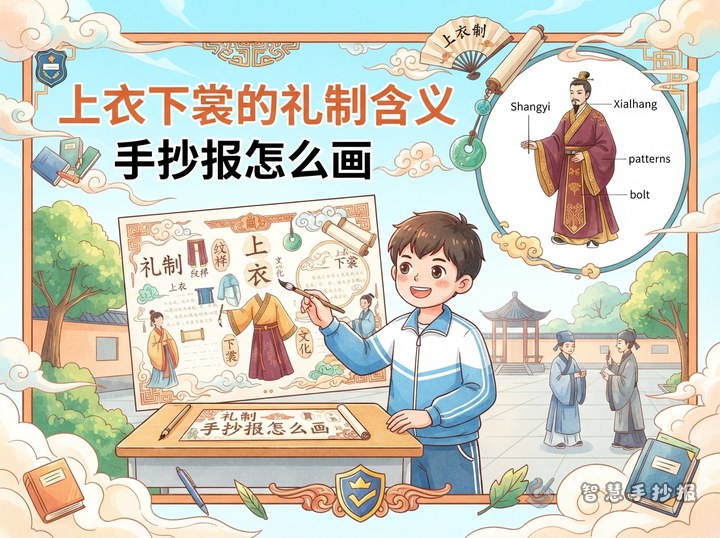
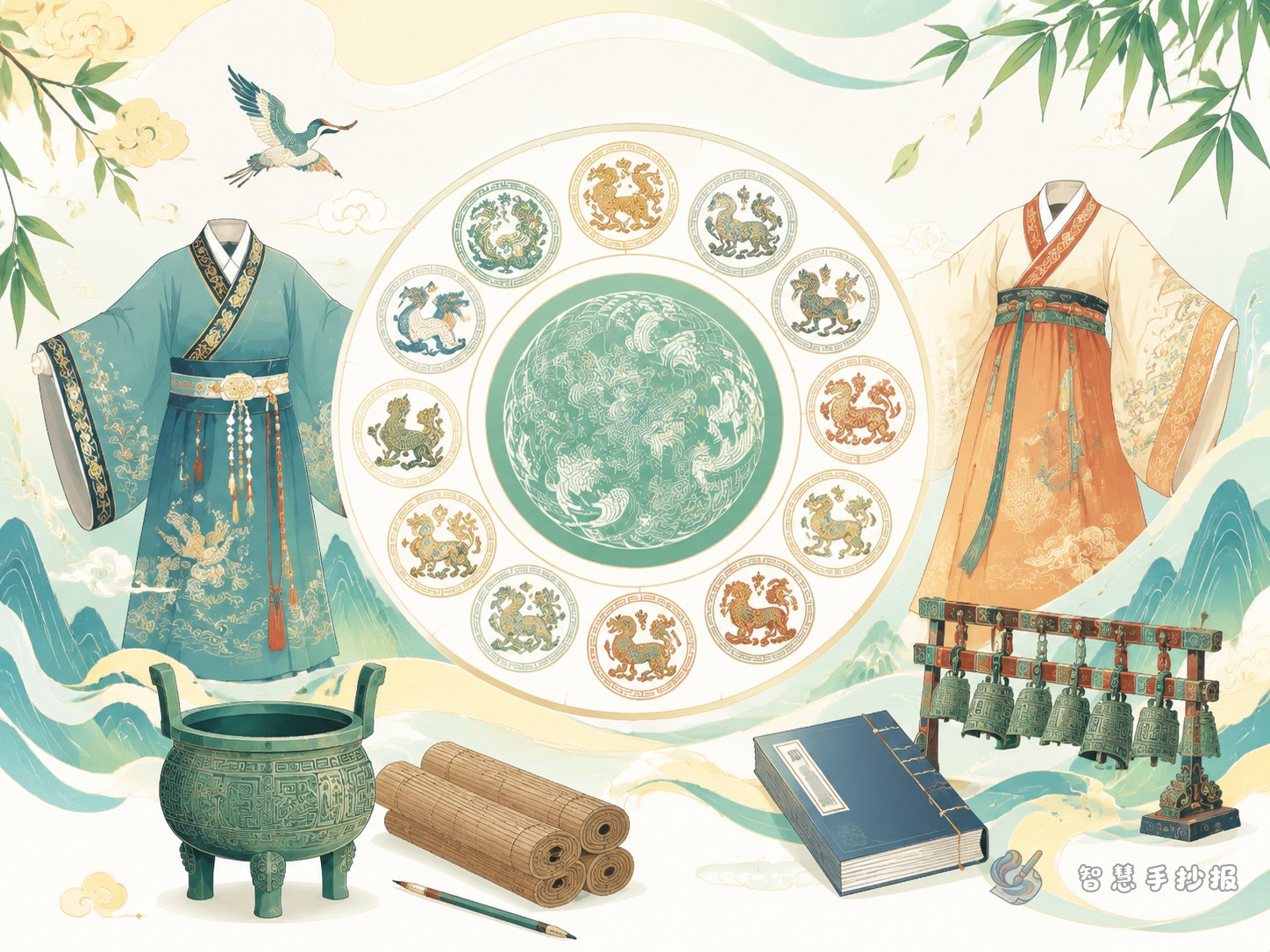
Place a simplified formal robe in the center of the poster. Add small symbols such as the sun, moon, mountain, and fire on or around the robe. Around the central drawing, use small boxes to explain the meanings of selected patterns. A symmetrical border can make the page feel orderly and ceremonial.
Recommended colors include red, warm yellow, dark blue, black, and ivory. Students do not need to fill every space with color. A neat outline, clear labels, and balanced white space will make the poster easier to read.
Common Mistakes to Avoid
- Do not draw only beautiful patterns without explaining their ritual meaning.
- Do not try to include every symbol in too much detail. Choose six to eight symbols and explain them clearly.
- Do not make the ritual system a long and boring list. Use simple examples of clothing, occasion, and meaning.
- To continue designing the title, columns, and text materials, readers can use the WeChat mini program of 智慧手抄报 for more poster-making support.