Turn the topic into a real discovery
A paper bridge experiment poster becomes more interesting when it is built around one surprising finding: a simple sheet of paper can hold much more weight after its shape changes. Instead of only introducing bridges, the poster should show a question, a test, and a discovery. Titles such as “Why can paper become a strong bridge?” or “Which paper bridge holds the most weight?” feel natural and student-friendly.
Try to organize the whole poster in a clear sequence: prediction, experiment, comparison, and conclusion. This makes the work look like real science exploration rather than copied facts.
Useful text you can place on the poster
Materials
- Several sheets of A4 paper
- Two thick books or small boxes
- Coins, erasers, or small blocks
- A ruler and a record sheet
Steps
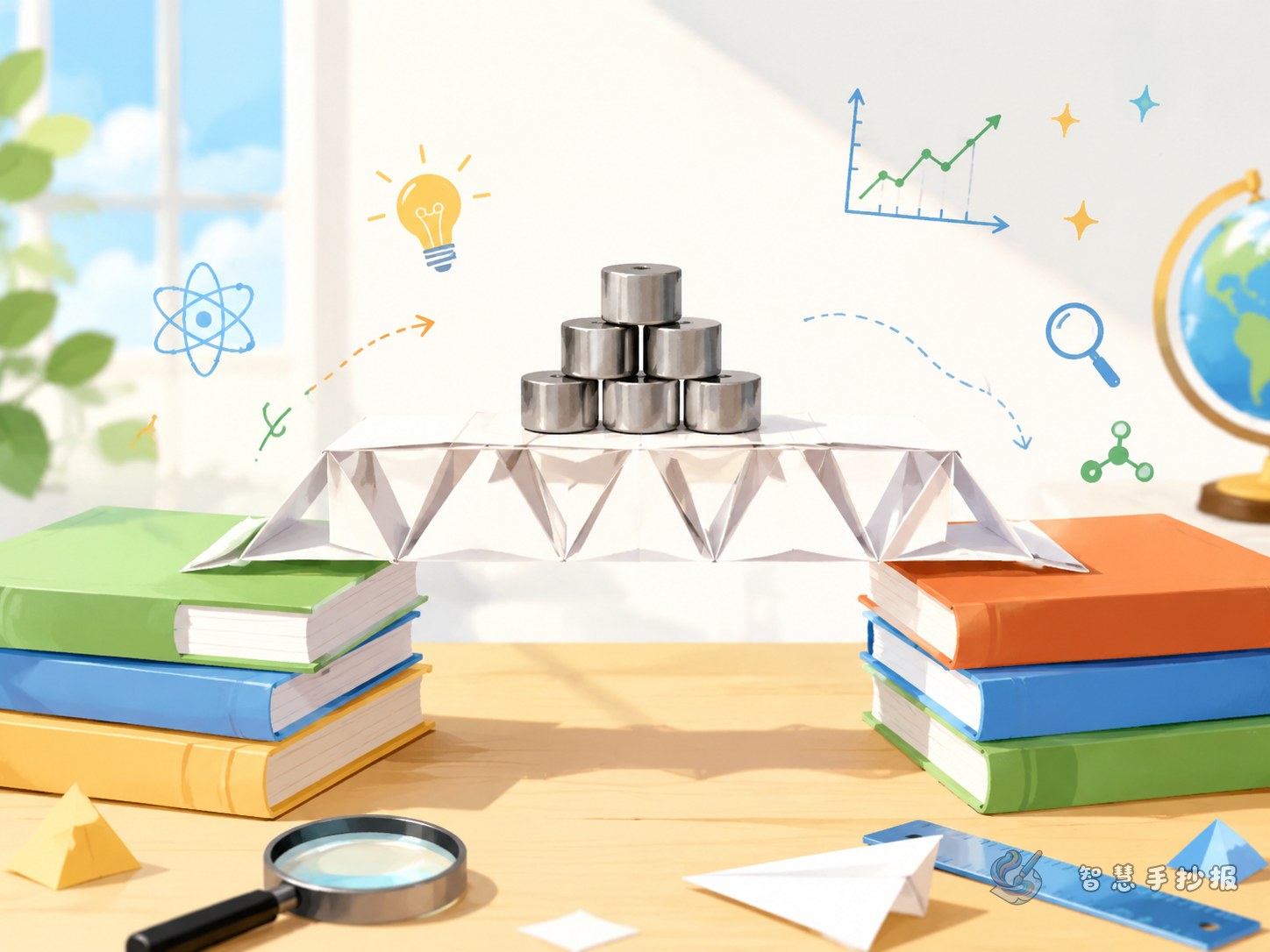
- Place two books a short distance apart to act as bridge supports.
- Lay one sheet of paper flat across them as the first bridge.
- Put coins gently in the center and count how many it can hold.
- Then fold another sheet into a wave, fan, or arch shape.
- Repeat the test and compare which shape is the strongest.
Observation
A flat paper bridge bends easily and collapses after only a few objects. A folded paper bridge usually holds much more because its shape creates support. The paper itself does not become thicker, but the new structure makes it stronger.
Explain the science in simple language
You do not need difficult words here. A simple explanation is enough: the shape changes the way the force is shared. Flat paper takes pressure in one weak form, so it bends quickly. Folded paper, especially in waves or arches, spreads the force across more parts, making the bridge steadier.
You can also connect it to daily life. Many real bridges, roofs, and even cardboard packages use smart structures to become stronger. That helps the poster move from one small experiment to a bigger science idea.
Try a layout that looks like an experiment map
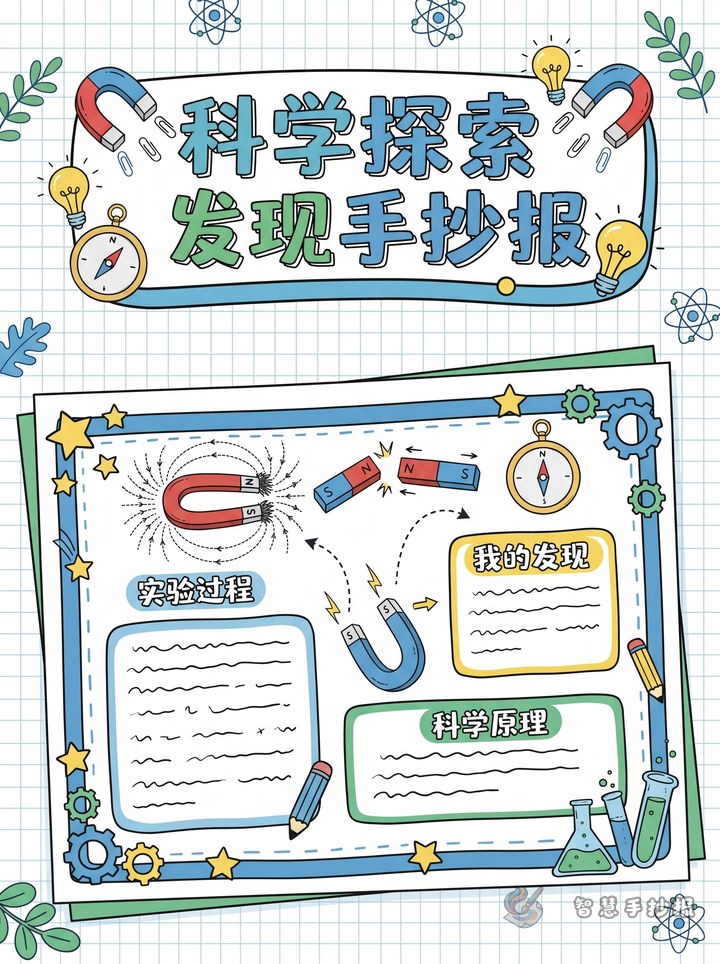
This topic works very well with a visual layout. Put the main title at the top in a bridge-like banner. Instead of using equal boxes everywhere, arrange the page by the experiment process.
- Left side: materials and steps in numbered order.
- Center: simple drawings of a flat bridge, wave bridge, and arch bridge.
- Right side: test results and observations, with clear comparisons.
- Bottom: “My Discovery” or “Science in Daily Life” for a strong ending.
If you still have blank space, add small drawings of coins, arrows, rulers, or supports. Soft blue, gray, and light green can make the page feel neat and scientific.
Small details that make the poster stand out
To make the work feel more polished, add one short line beside the title, such as “A thin sheet of paper can build a bridge of strength.” You can also create a tiny “Guess First” box to ask readers which bridge shape will hold the most weight before they see the result.
Try to write real-looking records, such as “Flat bridge: 5 coins” and “Wave bridge: 14 coins.” Numbers make the experiment feel more believable and vivid. If you want to keep refining the page and finish your design more easily, you can continue in the Smart Handwritten Newspaper WeChat mini program.
A simple ending sentence
You can end with a short conclusion: This experiment taught me that science discoveries often hide in small changes. The same sheet of paper can show different strength because of different structures. As long as we observe carefully and test with our hands, we can discover many interesting science secrets in everyday life.