What to include in this poster
If you are preparing an earthquake safety handwritten poster, a practical approach is to build it around a clear action guide for children. Instead of focusing too much on scientific explanations, make the poster useful for real school and home situations. A simple layout with safety tips is easier for students to copy and remember.
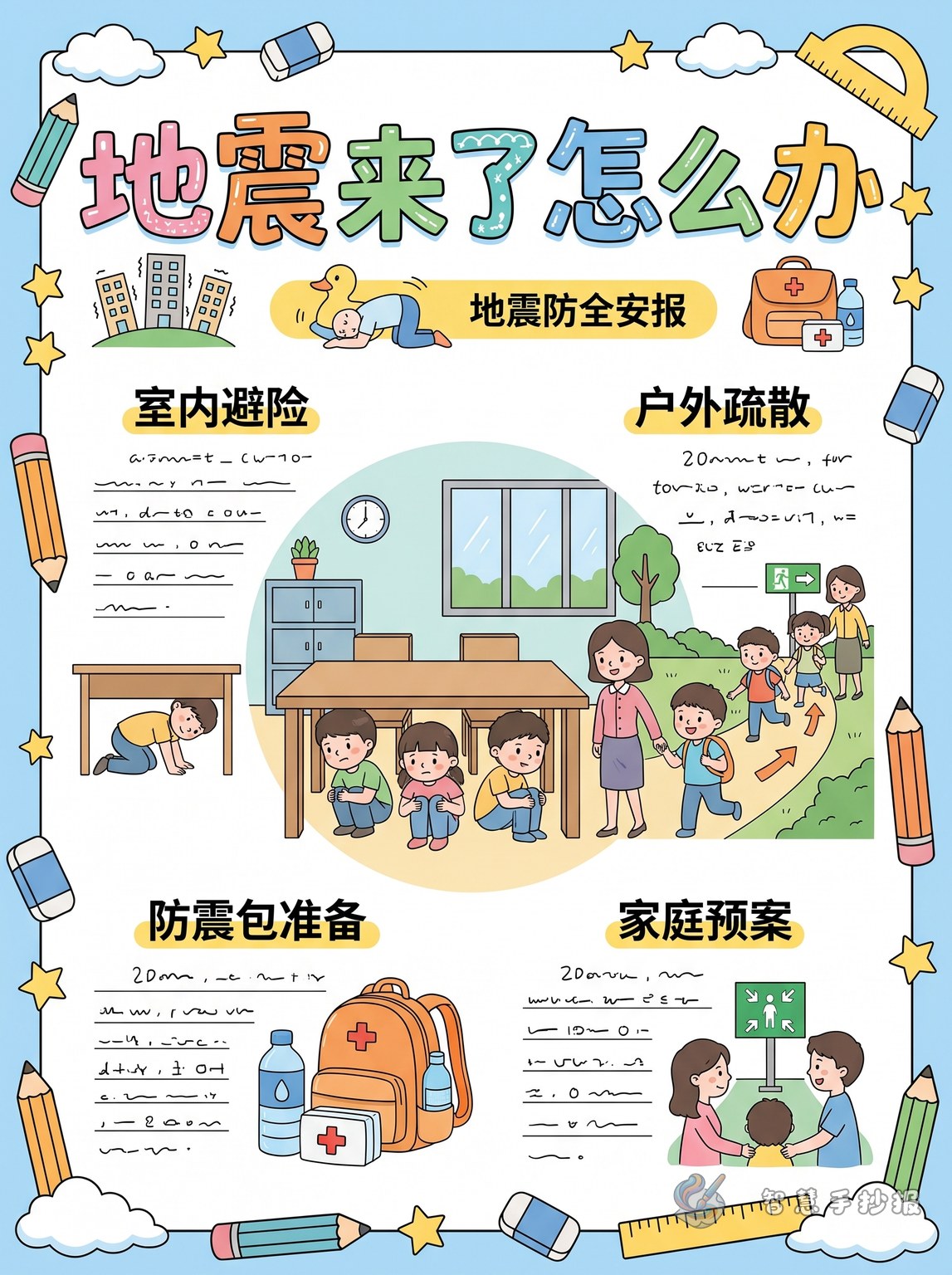
You can place the main title in the center and divide the page into sections such as “Indoors During an Earthquake,” “Outdoors During an Earthquake,” “What to Do After Shaking Stops,” and “Emergency Supplies.”
Ready-to-use text ideas
1. What to do indoors
- Stay calm and do not run around.
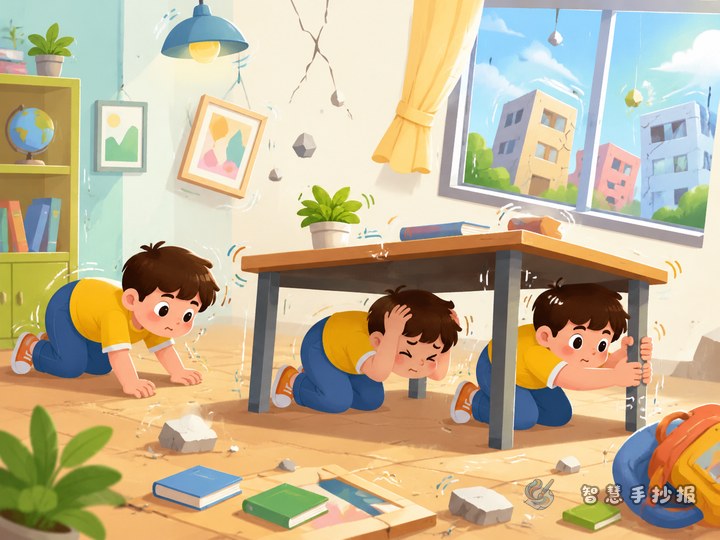
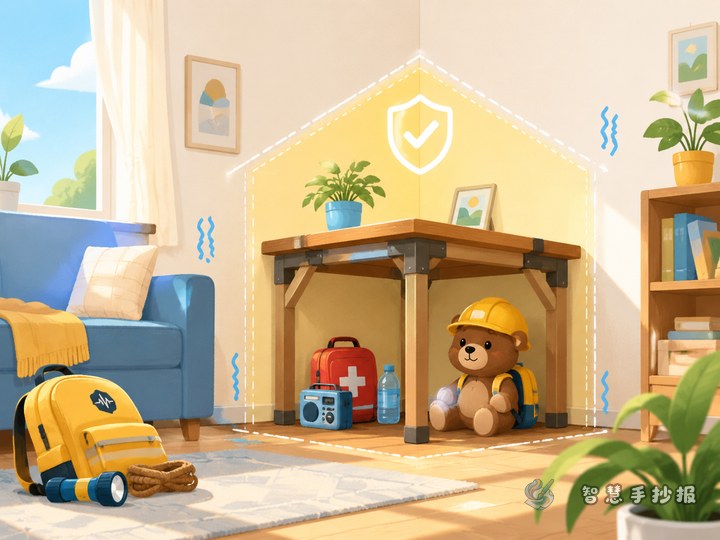
- Get under a sturdy desk or move near an interior wall corner.
- Protect your head with your schoolbag, a pillow, or your hands.
- Keep away from windows, glass, lights, and tall furniture.
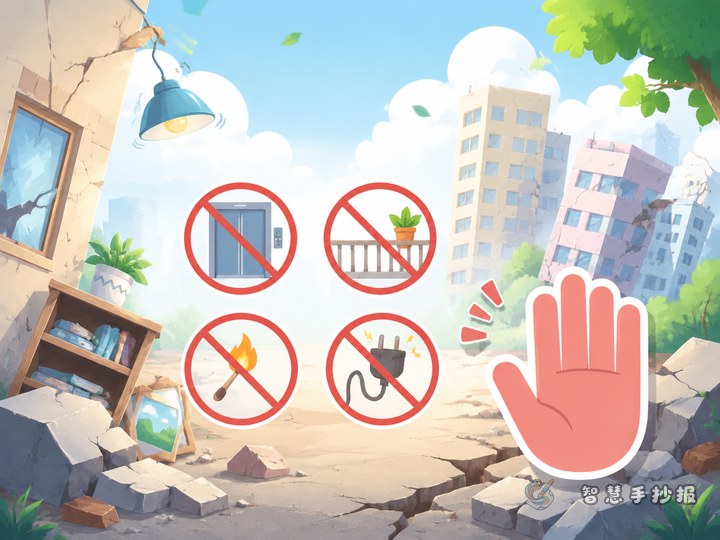
- Do not use elevators.
2. What to do outdoors
- Move quickly to an open area.
- Stay away from buildings, power poles, billboards, walls, and trees.
- Do not stand under bridges or in narrow alleys.
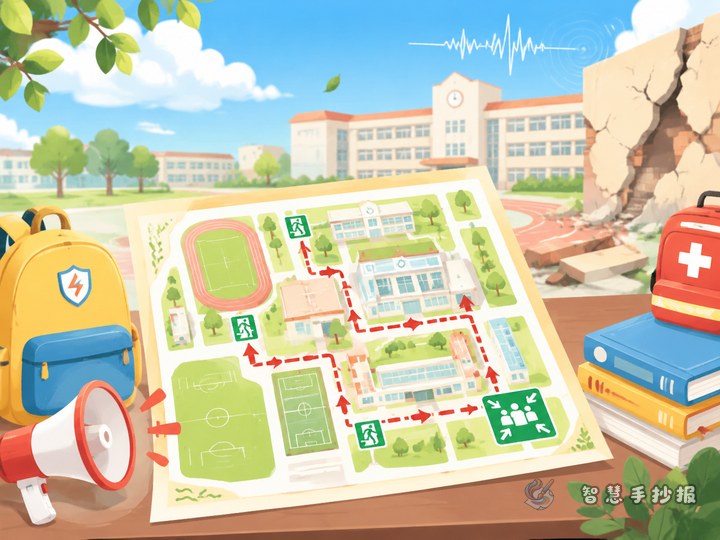
- Follow teachers’ or parents’ instructions and evacuate in order.
3. What to do after the shaking stops
- Leave dangerous areas calmly without pushing.
- Be prepared for aftershocks.
- Check whether you or others are injured and ask for help if needed.
- Do not go back into damaged buildings too soon.
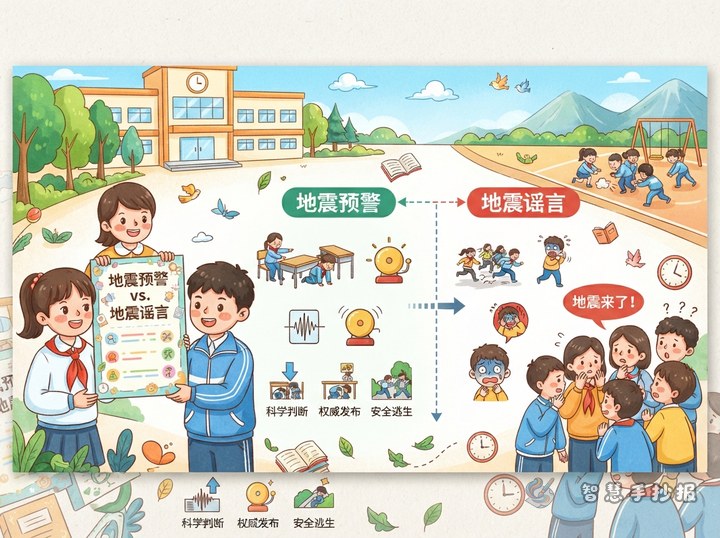
- Pay attention to official safety information and avoid rumors.
How to design the page
This topic works well with a step-by-step poster layout. You can place “During the Earthquake” on the left and “After the Earthquake” on the right, with a small drawing of the earth, a house, or a safety helmet in the middle. Border decorations can include warning stripes, emergency kits, shields, or simple wave lines.
For colors, blue, green, and orange are a good choice. They are bright, easy to read, and fit a school safety theme without making the page feel too heavy.
Section title ideas
- What to Do When an Earthquake Happens
- Safety Tips to Remember
- Protect Yourself in the Classroom
- Safe Actions on the Playground
- Things Not to Do After an Earthquake
- Emergency Kit Checklist
For younger students, keep the poster to three or four sections. For older students, you can add a small section about earthquake drills or why disaster preparedness matters.
A simple ending sentence
You can end the poster with a short reminder: Learning earthquake safety is not about fear. It is about knowing how to protect ourselves and others when it matters most.
If you already have a topic but want to improve the layout, colors, or section ideas, you can continue designing in the Zhihui Shouchaobao WeChat mini program.