Begin with a Road That Shows Relay
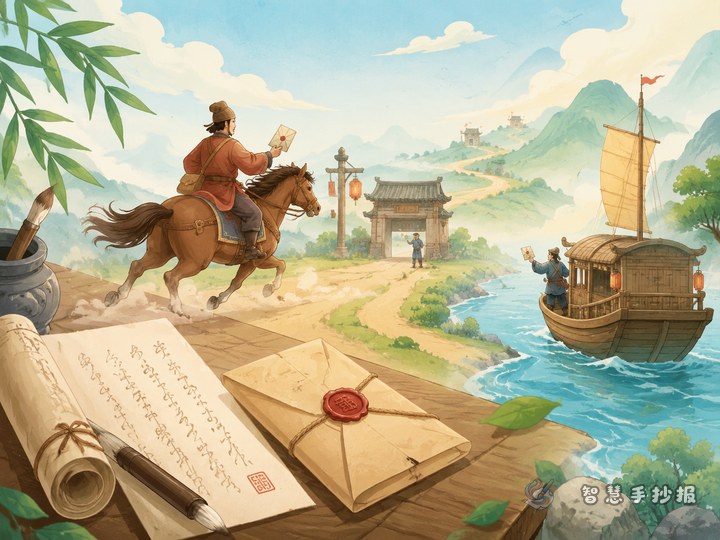
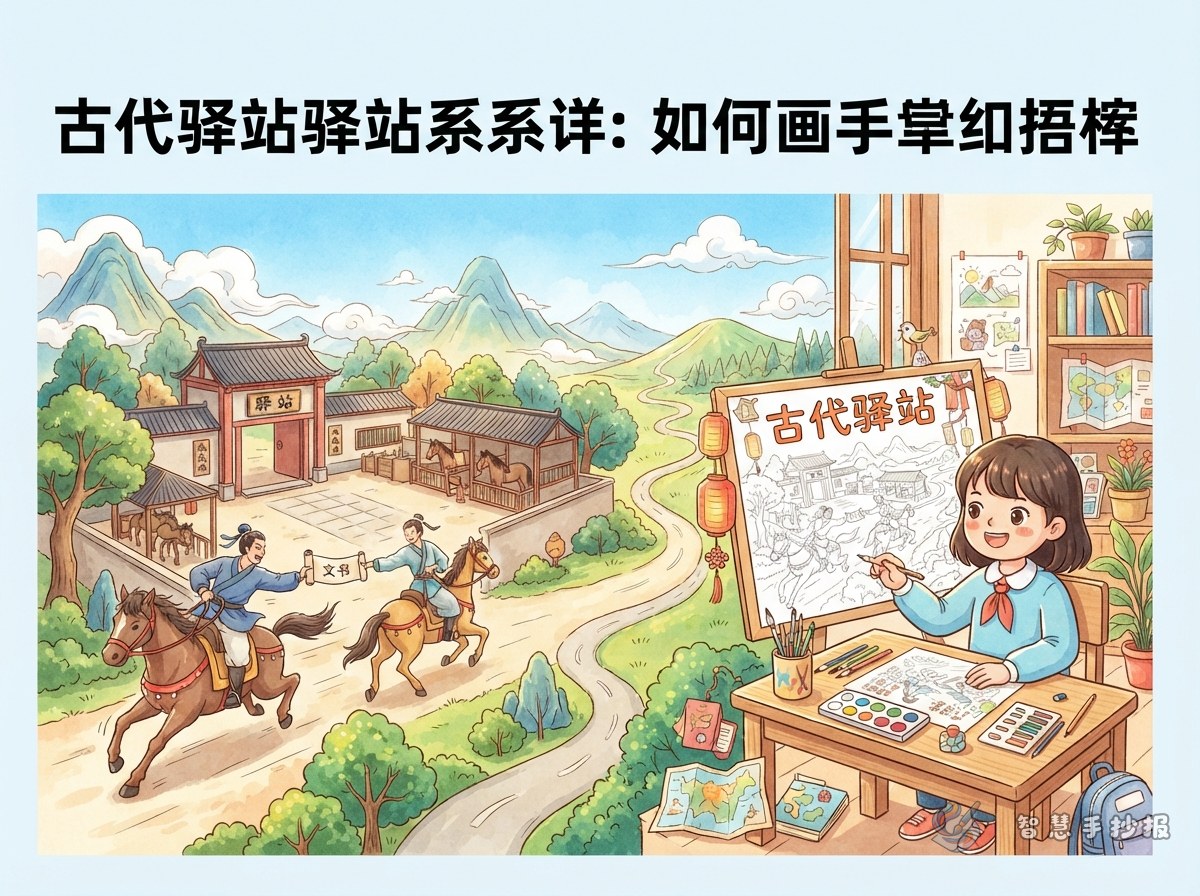
This handwritten newspaper can start with one clear question: why did ancient post stations change horses? In many official postal systems, stations were placed along important routes. Messengers, documents, or officials could change horses, receive basic supplies, and continue their journey after reaching a station. This allowed a long trip to be completed in stages and prevented one horse from running too far without rest.
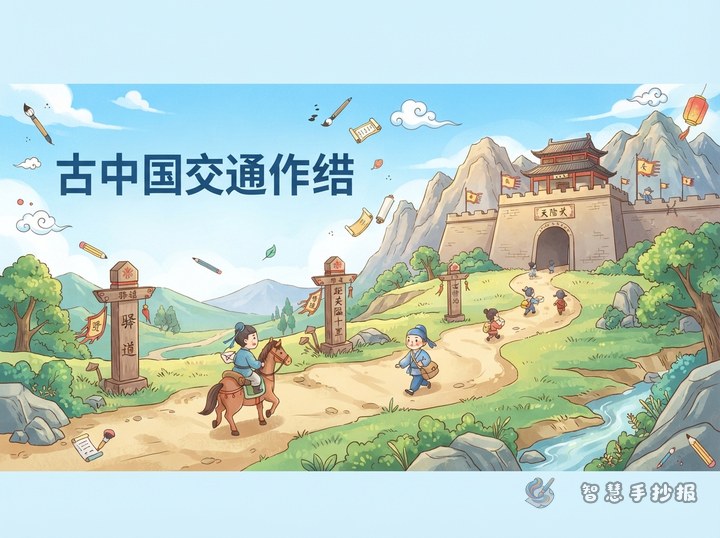
Draw a winding road across the center of the page. Connect three or four post stations with horses, documents, and arrows to show the cycle of “arrive, change horses, and set off again.” A simple route is enough to create a strong visual focus.
Turn Horse Changing into the Main Story
Give the central section a title such as “One Station, One Change, A Relay Across the Distance.” Present the basic process in four numbered steps:
- Arrive at the station: The messenger reaches the station according to the official route.
- Check the authorization: Official postal services normally operated according to documents or credentials, rather than being open for anyone to use freely.
- Change horses: Station workers prepare a suitable horse and care for the horse that has just completed a section of the journey.
- Continue to the next station: The messenger carries on with the document or assignment along the route.
Each step can become a small numbered box or a simple scene. Drawing one action in each box makes the explanation easy to follow.
Four Small Sections to Add Historical Detail
What Was a Post Station?
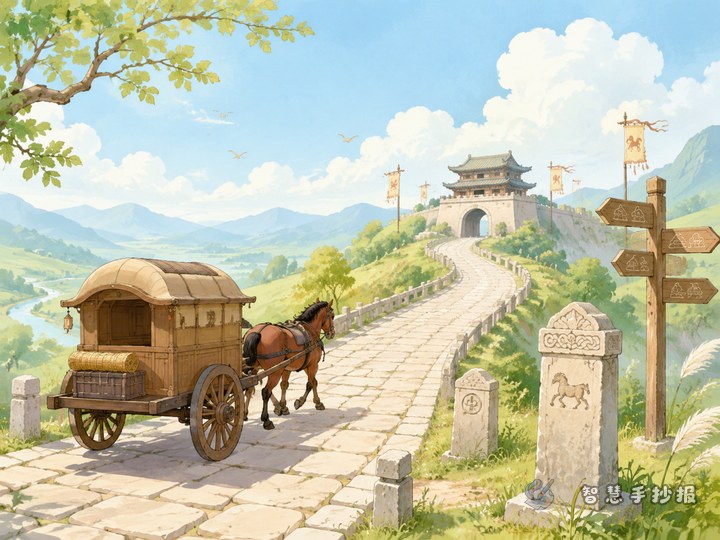
An ancient post station was a service point in an official transportation and communication network. Depending on the period, it could provide horse changing, basic lodging, food, and document delivery. The exact systems varied across dynasties, so the newspaper can use the broader phrase “official ancient postal facility.”
What Did Station Workers Do?
Station workers cared for horses, prepared transportation, received authorized travelers, and helped documents or orders continue their journey. Draw a stable, water trough, feed, and a record book to show that the station was an organized workplace, not merely a building beside the road.
Why Not Use Only One Horse?
A horse can become tired during a long run, making speed and safety harder to maintain. Regular stations and horse changes divided the journey into manageable sections. Three short phrases can summarize the idea: “horses receive rest,” “routes are divided,” and “delivery becomes steadier.”
Was a Post Station the Same as an Inn?
Not exactly. Post stations mainly served official transportation and communication and usually followed specific rules. Inns served ordinary travelers. A comparison box can help readers understand the public and administrative role of post stations.
Design the Page Like an Ancient Route Map
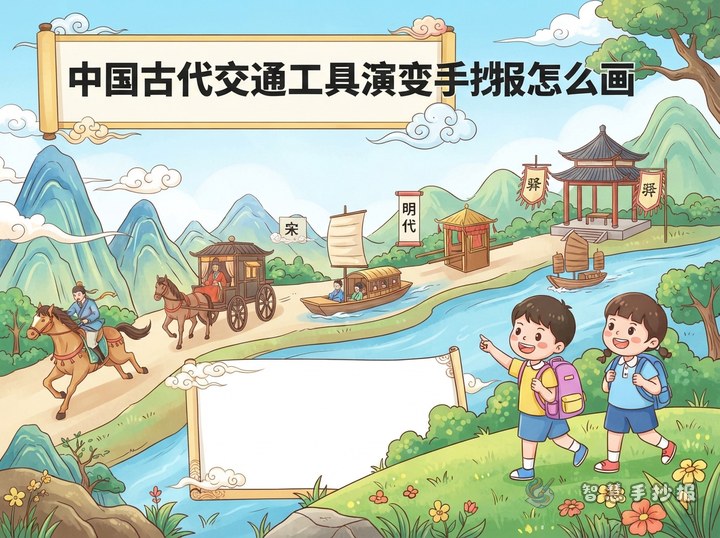
A useful layout is a horizontal route with sections around it. Draw an earthen-colored road and small stations in the middle, place “Why Change Horses?” on the left, “A Station Worker’s Day” on the right, and put the four relay steps along the bottom. Brown for the road, warm orange for the stations, deep red for horses and arrows, and cream-colored text boxes can create a bright but historical atmosphere.
- Make the title look like a wooden sign or a seal, while keeping every character easy to read.
- Use flags, hoofprints, bamboo slips, and wheels as corner decorations without covering the text.
- Keep each section to one or three short sentences and highlight horse changing, station workers, credentials, and relay.
- Use arrows in one consistent direction so the route is immediately understandable.
End with the Wisdom of Organization
The closing sentence can say: “Ancient post stations divided long roads into sections and used horse changing and teamwork to make delivery more efficient. They were not only resting places, but also examples of how people organized routes, transportation, and communication.” After preparing the text and sketches, you can open the WeChat mini program and use Smart Handwritten Newspaper to arrange sections and refine the layout.