Turn the Poster into an Ancient Journey
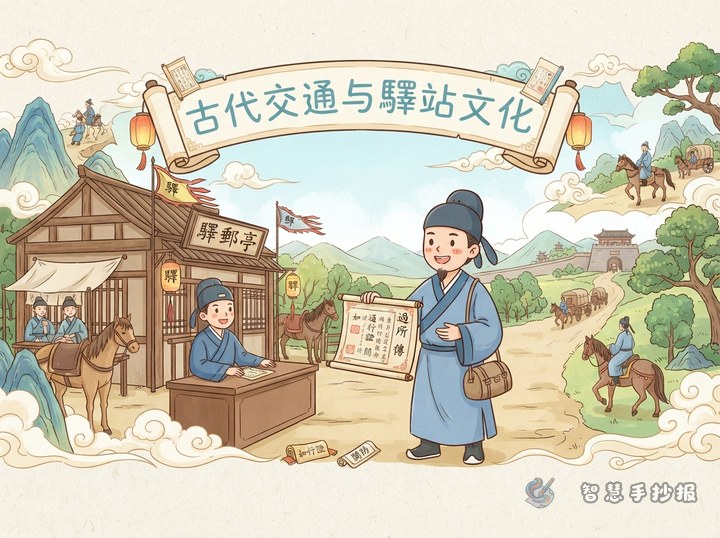
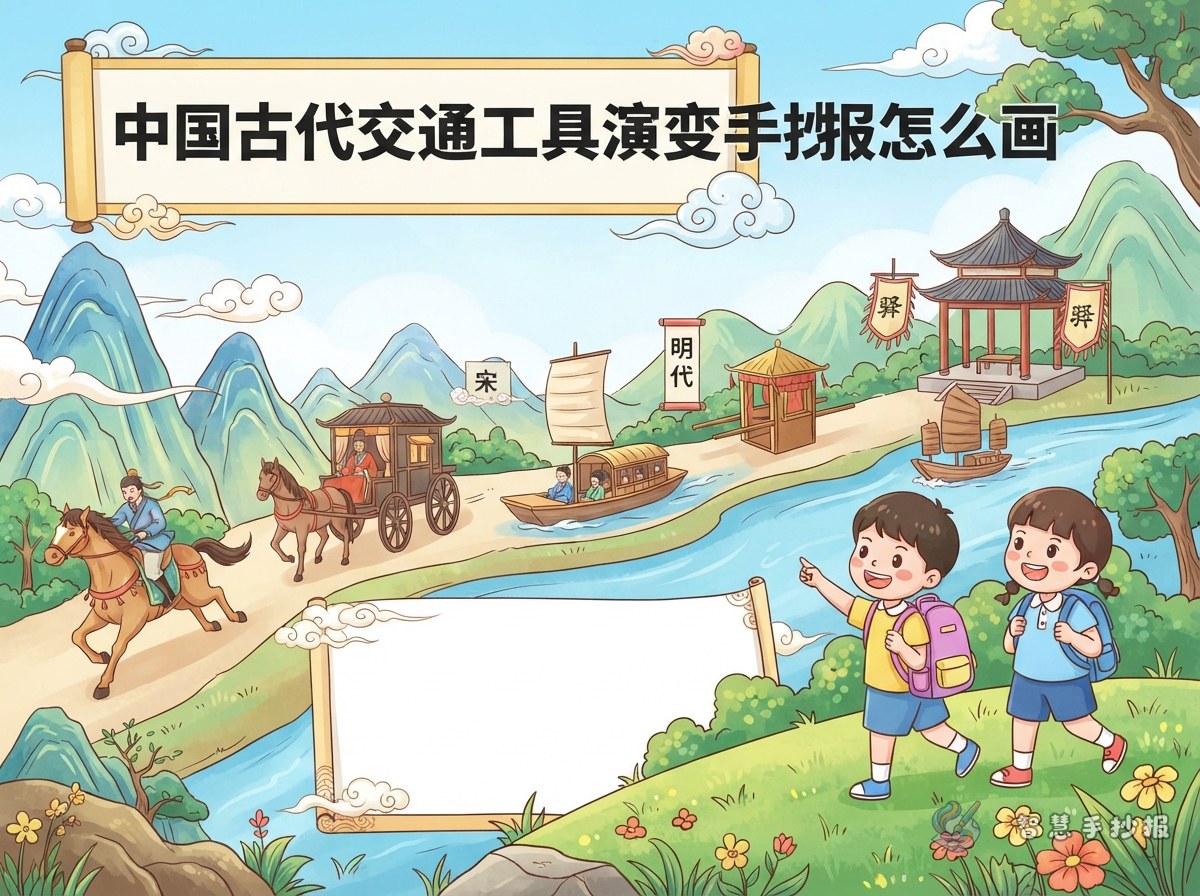
Build the handwritten newspaper around one clear question: How did people travel across mountains, roads, and rivers in ancient China? Choose four representative methods, walking, riding, traveling by cart, and sailing, then connect them with a route or a simple timeline. This approach shows change and variety without filling the page with too many dates.
Four Travel Scenes to Feature
Walking and Carrying Loads
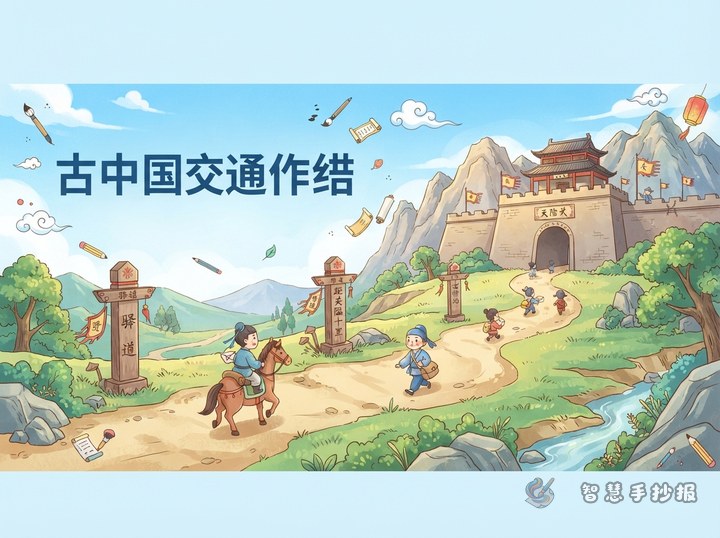
Walking was practical for everyday short trips. People could carry smaller loads with shoulder poles, baskets, or packs. A traveler on a mountain path makes a simple and meaningful illustration.
Horses and Pack Animals
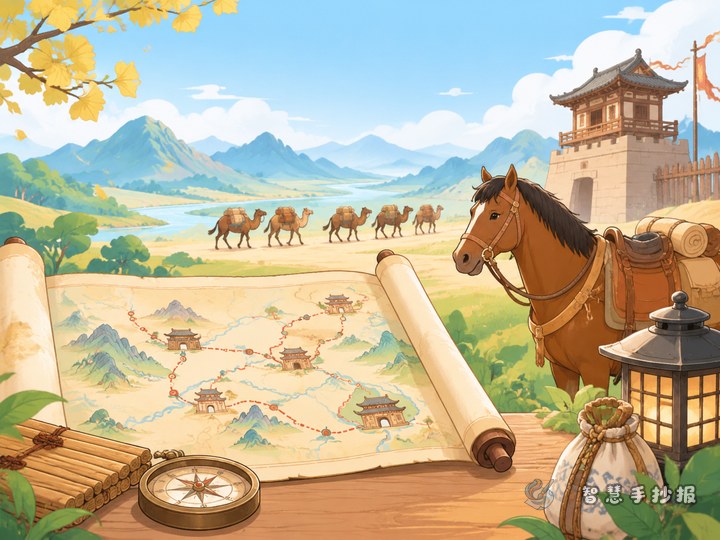
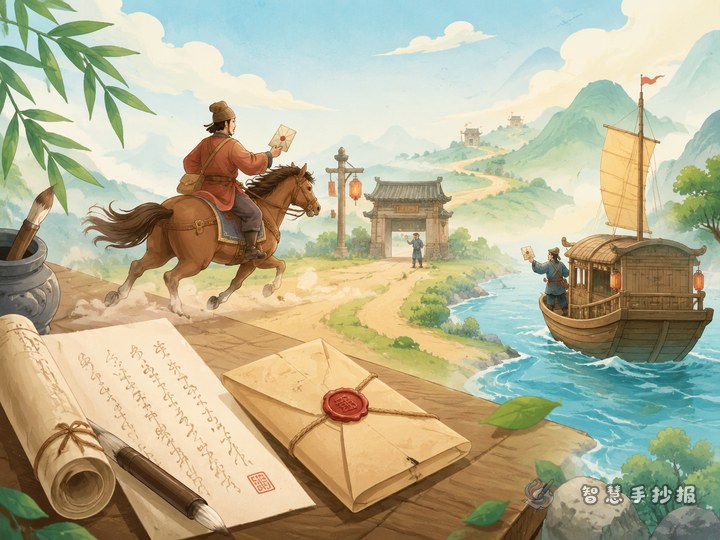
Horses provided faster travel and could carry both riders and supplies. When messages needed to move quickly, mounted travel was especially useful. Mules and donkeys also helped on rough terrain.
Carts on Land Routes
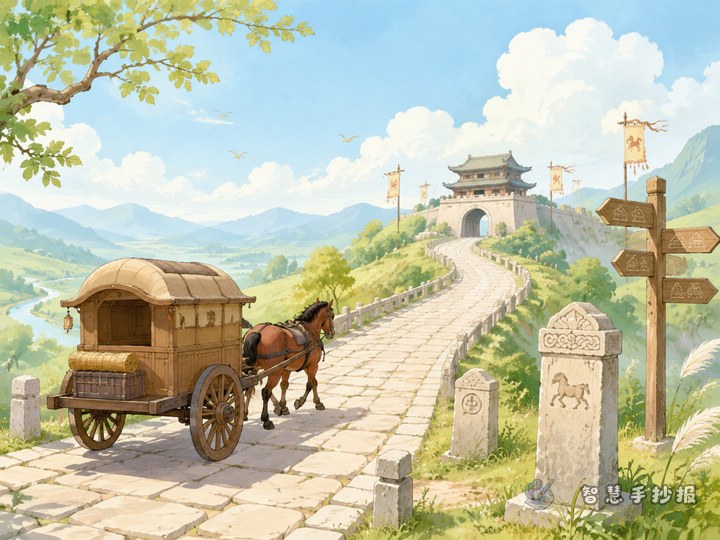
Animal-drawn carts moved people and goods where roads were relatively level. Add wheels, tracks, and a roadside scene to make the land-transport section easy to recognize.
Boats on Waterways
Rivers, lakes, and canals formed natural travel corridors. Boats could carry heavy loads, so water transport was important for grain, trade goods, and long-distance journeys.
Short Text Ready for the Page
- Main idea: Roads linked towns, while carts and boats helped people and goods move between regions.
- Geography note: Carts suited open and level land, while boats worked well in areas with connected waterways.
- History note: Wheels, oars, harnesses, roads, and bridges reveal the practical skill of ancient builders and travelers.
- Closing line: Travel methods have changed, but the desire to explore and communicate has remained.
Plan the Route Before Adding Color
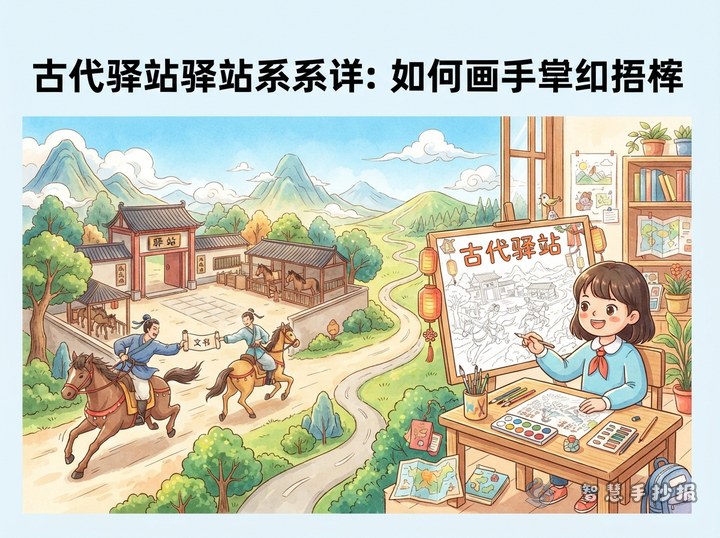
Place the title across the top and draw a winding route through the center. Let it pass a mountain path, city gate, bridge, and river. Arrange four text areas beside the route and pair each one with a traveler, horse, cart, or boat.
Use earthy yellow for roads, blue for water, green for hills, and red for small title accents. Wheel patterns, waves, and simple signposts can decorate the border. Leave enough open space for comfortable reading. After checking the text and pencil layout, students can use the Smart Handwritten Newspaper WeChat Mini Program to continue arranging and completing the poster.