Build the page around a warm bowl of porridge
Instead of listing customs one after another, use a bowl of Laba porridge as the thread of the page. From gathering ingredients to cooking and sharing the porridge, students can show hopes for harvest, family reunion, and the coming New Year. A main title such as “Warm Laba Porridge, Happy New Year” fits this idea well.
A short introduction may say that the Laba Festival falls around the eighth day of the twelfth lunar month. People may cook Laba porridge or prepare pickled Laba garlic as they welcome the New Year. Customs vary from place to place, but the wishes for peace, family care, and a good life are shared.
Create three small custom sections
Good wishes in mixed grains
Laba porridge is often cooked with a mix of rice, beans, red dates, peanuts, and other ingredients. Recipes vary by region and family. Explain that the mixture suggests abundance and also reminds us to value every grain of food.
The changing color of Laba garlic
In some places, garlic is soaked in vinegar around the Laba Festival and gradually turns green. It is often served with holiday foods. Draw a small glass jar and add the caption, “Waiting patiently is also part of welcoming the New Year.”
A bridge to the New Year
Laba is often viewed as an early step into the New Year season. Make a simple timeline with preparing holiday foods, cleaning the home, putting up spring couplets, and gathering with family. Use phrases such as “in some regions” to respect the variety of local traditions.
Keep the poetry corner short and accurate
Select a poem line about winter scenery, plum blossoms, or snow from class reading, and check the wording, author, and punctuation before copying it. Under the line, add one or two sentences of personal reflection. For example, plum blossoms blooming in the cold can remind us that a fragrant bowl of porridge brings warmth to a winter home.
For younger students, add an original rhyme and label it clearly: “Laba porridge, warm and sweet, grains and beans make a happy treat; family gathers, hearts unite, waiting for the New Year bright.” This adds fun without confusing original writing with classical poetry.
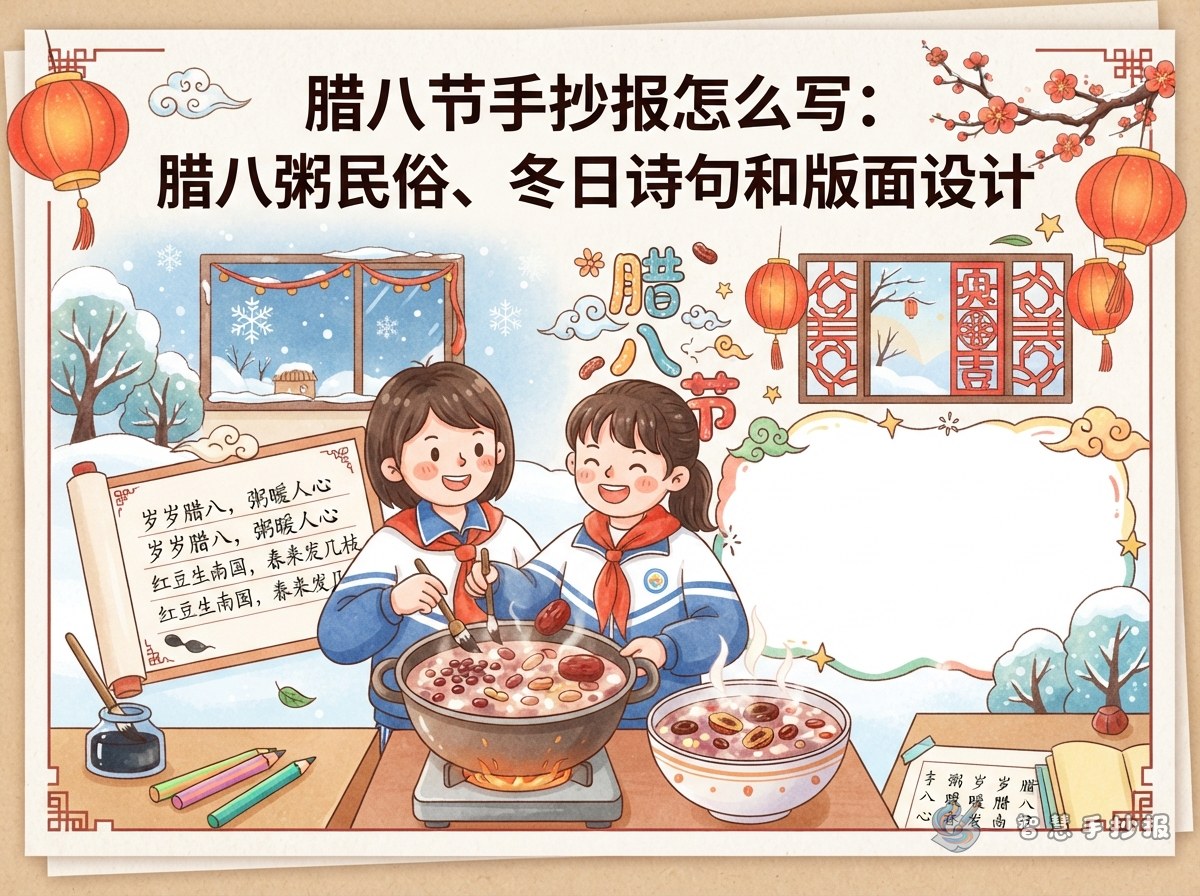
Arrange the page with a central porridge bowl
- Draw a large bowl in the middle of the page and use small circles for rice, beans, and red dates. Put the main title inside or above it.
- Place a “Laba Facts” box at the upper left and an “Ingredient Cards” box at the upper right, using simple drawings of rice, beans, and dates.
- Use the lower left for a poetry corner framed with plum branches, snowflakes, or a scroll. Use the lower right for “My Food-Saving Actions,” such as taking only enough food and sharing festival knowledge with family.
- Choose warm reds, golds, and light browns, with a small amount of blue and white for snow. Leave enough blank space so the writing remains easy to read.
Check these details before finishing
- Use careful facts: Describe customs as common practices instead of claiming that every place celebrates in exactly the same way.
- Make writing readable: Use different sizes for the title, section names, and body text, and keep each paragraph short.
- Match pictures to content: Every bowl, ingredient, jar, and flower should support a section of the page.
- Add your own thought: End with a sentence about turning the warmth of Laba porridge into actions that save food and care for family.
After planning the content, students can use the Zhihui Handwritten Newspaper WeChat mini program to choose a Laba-themed layout, adjust text sections and colors, and turn their ideas into a finished project.