Set a Clear Purpose: Help Children Spot the Trick
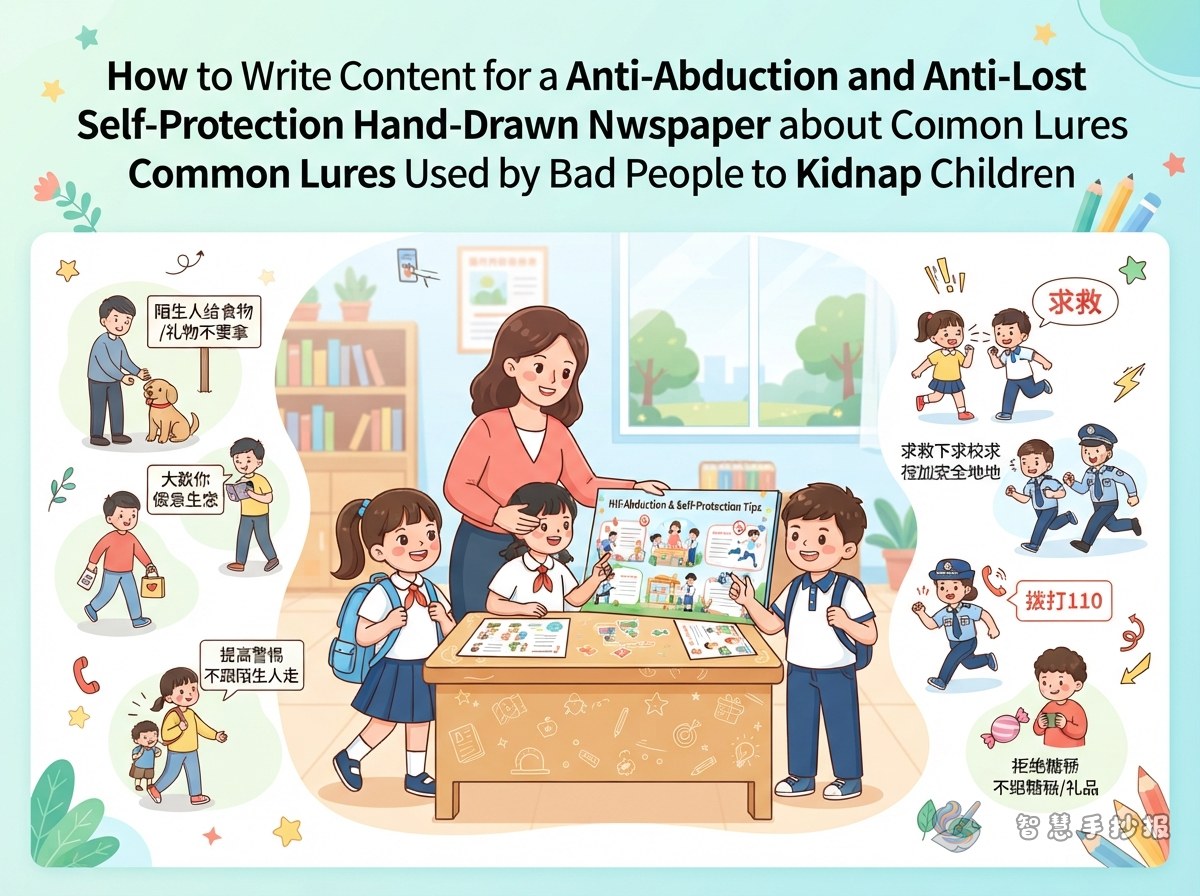
A page full of “never talk to strangers” only makes children nervous without telling them what to do. Turn the layout into a recognition chart instead: which words do abductors use, which words should make you alert, and what should you do next. The whole page can follow one short chain: spot it, refuse it, walk away, find a trusted adult.
Before writing, ask classmates or family whether they have heard someone say, “I’m a friend of your parents.” Real examples make the columns much more convincing than empty slogans.
Four Tricks to Explain Clearly
The pretend acquaintance: “Your mum asked me to pick you up”
This trick often includes your name and your parents’ names, which makes it sound believable. The warning sign: no matter how accurate the details are, check with a teacher or call home before going anywhere.
The request for help: “Can you help me find my dog?”
Adults normally ask other adults for help. If someone asks you to guide them, look for something, or carry something, and then leads you towards a quiet place, say no and walk back towards crowds or a familiar shop.
The false emergency: “Your dad is hurt, come with me”
Stay calm and keep one rule: wait until your family contact you, or ask a teacher to phone them. In a real emergency, family members will reach you through a familiar number or a known adult.
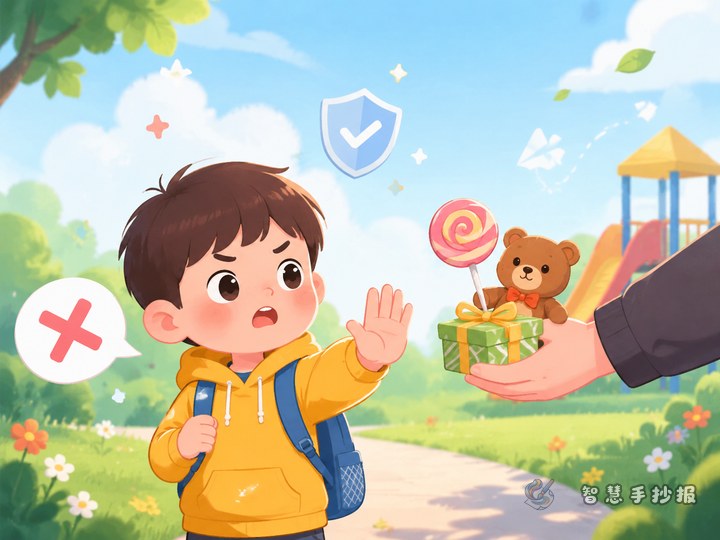
The lure: pets, snacks, toys, games and phones
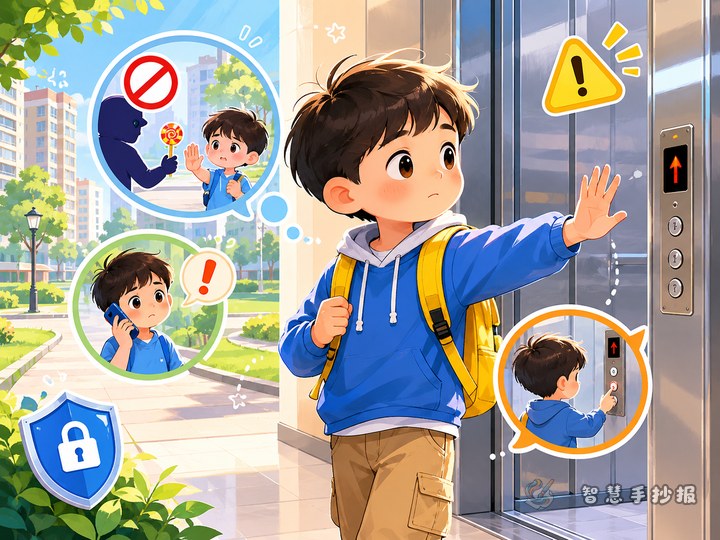
A puppy, a new game or free snacks are used to draw a child closer, followed by “let’s go over there” or “get in the car.” If the person wants you to leave the spot, refuse even when the offer looks exciting and move towards other people.
Ready-to-Copy Lines for Your Page
- Knowing my name does not mean you know me.
- Adults ask adults for help, not children.
- No gifts, no car rides, no陌生 rooms.
- If someone grabs me, shout “I don’t know you” and run towards people.
- If my family has not told me, I go with nobody.
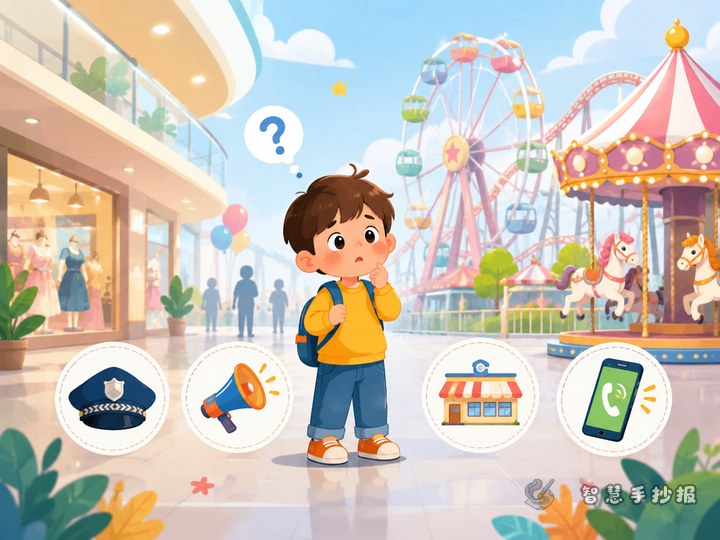
- If we are separated, stay where I am or find staff in uniform.
- Remember 110, my parents’ phone numbers and my home address.
These lines are short, easy to copy and easy to remember. Put one at the end of each column as an action reminder and highlight it with a coloured pen.
Planning Boxes, Colours and Decoration
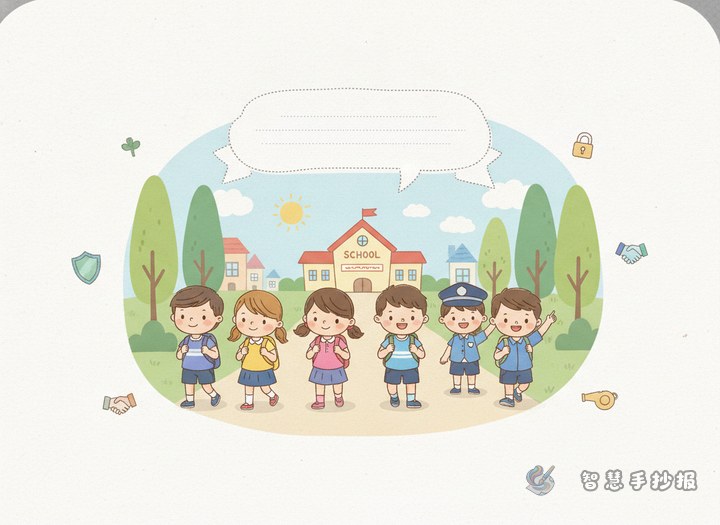
- Main title: place it across the top with a positive line such as “I can protect myself from tricksters,” written large and bold.
- Layout: draw a big circle or a four-petal shape in the middle and divide it into four boxes, each with a small heading and two or three lines of text.
- Colours: use pale yellow or light blue for the background and red or orange outlines for warning points, but leave white space so the page stays clean.
- Drawings: traffic lights, warning triangles, footprint trails, shields and telephone icons all fit the theme; keep them small and in the corners.
Always Leave Room for a Getting-Help Corner
Reserve a strip at the bottom or in the lower right corner and list what to do in danger: shout for help, run towards crowds, find staff in uniform, dial 110, and say your family phone number and address. Ask the child to write these details by hand; copying them once is already a memory exercise.
If Layout Feels Difficult, Borrow a Ready-Made Style
When you are unsure where the title should go or how to divide the boxes evenly, start from an existing page style and replace the text with the lines above. In the 智慧手抄报 WeChat mini program you can search for anti-abduction themes, pick a template and adjust it into a clear, tidy handwritten newspaper.