Start with a clear theme that is easy to develop
For a museum and history handwritten newspaper, you do not need to explain everything about a museum. A better choice for students is to focus on one vivid topic, such as “The Silk Road and the Stories of Cultural Relics”. This theme connects museum exhibits with history, trade, travel, and cultural exchange, so the page feels rich but still organized.
Your title can be something like The Silk Road in the Museum, Stories of Relics on the Silk Road, or Learning History Through the Silk Road. A short subtitle about relics, history, and exchange can make the whole poster feel more focused.
What to include on the handwritten newspaper
What the Silk Road was
You can write a short introduction: the Silk Road was not just one road, but a network of ancient routes linking China with Central Asia, West Asia, and even Europe. It carried not only silk, but also ideas, art, music, food, and friendship between regions.
Common museum relics related to the Silk Road
- Silk fabrics that show ancient weaving skills and beauty.
- Pottery and porcelain that reflect daily life and trade.
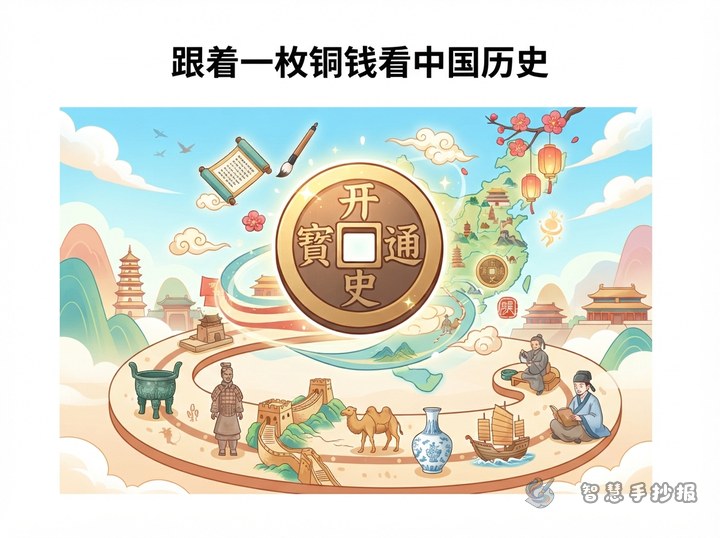
- Coins that reveal commercial activity in ancient times.
- Murals or statues that show artistic influence between cultures.
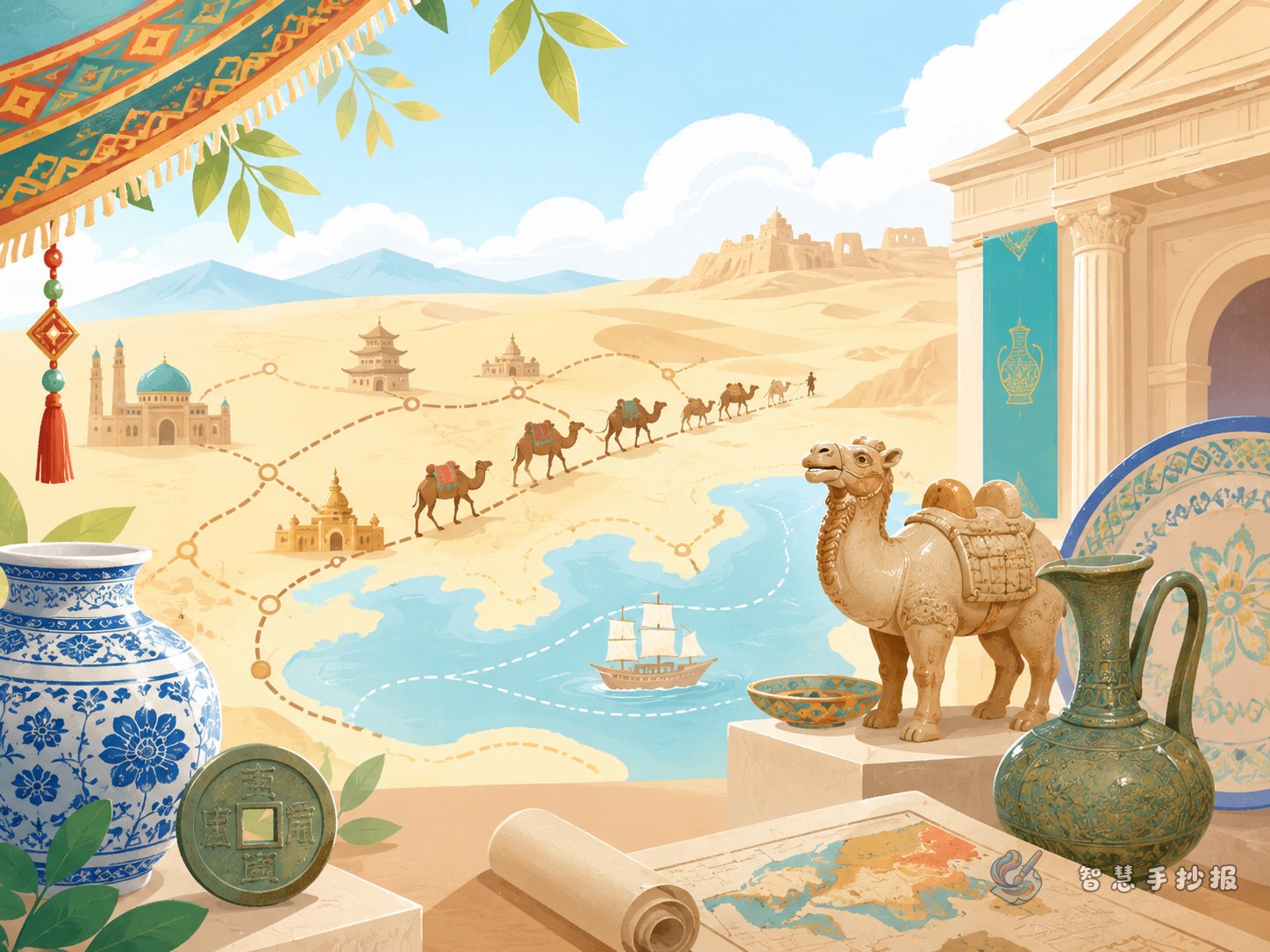
- Relics featuring camels or caravans that help explain old transport methods.
The meaning behind the relics
A relic is not only an old object. It is like a messenger from history. Through its patterns, materials, shape, and use, we can learn how people traveled, traded, and lived, and how different cultures influenced one another.
Ready-to-use writing blocks
For a “History Facts” section
- The Silk Road made trade and cultural exchange more active across regions.
- Ancient caravans often used camels to cross deserts and long roads.
- Many museum relics help us understand what life and exchange were really like in the past.
For a “If Relics Could Speak” section
If a piece of silk could speak, it might tell us how skillful ancient craftsmen were. If a coin could speak, it might tell us how busy trade once was. If a mural could speak, it might tell us how different cultures met along the road.
For a “My Thoughts After Visiting” section
Walking into a museum feels like opening a three-dimensional history book. Quiet relics actually carry lively stories of trade routes, long journeys, and cultural exchange. Learning about the Silk Road helps me understand why communication between civilizations matters.
Try a route-map layout instead of equal boxes
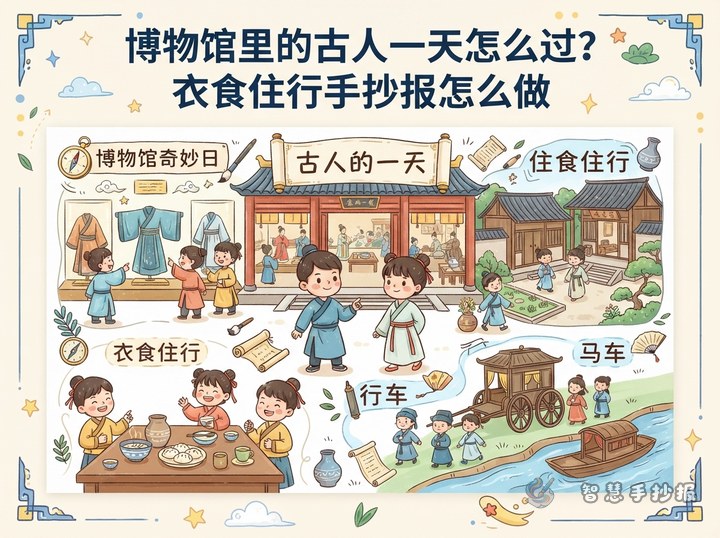
This topic works very well with a route-inspired layout. Put the main title near the center, then use curved lines like ancient trade routes to connect several content boxes. This makes the page match the theme and look more creative than a standard block design.
- Top left: short theme introduction.
- Top right: common relics section.
- Center: connecting lines to create a route-map feeling.
- Bottom left: history facts.
- Bottom right: personal reflection or learning gains.
You can decorate with camel caravans, scrolls, old city gates, cloud patterns, map lines, or pottery outlines. Do not overfill the page. Leave enough blank space so the writing stays easy to read.
How to keep it beautiful and readable
- Make the title stand out: use larger letters and colors such as earthy yellow, reddish brown, or dark green for a historical mood.
- Keep paragraphs short: short blocks are easier for children to copy and easier for readers to follow.
- Show clear levels: main title, section titles, and short text should be visually different.
- Balance text and drawings: about seventy percent text and thirty percent decoration is a practical choice.
- End with a strong closing line: a sentence like “Step into a museum and discover history” gives the work a finished feeling.
If you have chosen the Silk Road theme and want to keep building your layout, titles, and writing blocks, you can continue your design in the Zhihui Handwritten Newspaper WeChat mini program.