Why a smaller theme often makes a better poster
After a museum visit, many students want to write about everything they saw. That can make the page crowded and unclear. A better idea is to choose one favorite artifact and let it become the main thread of the whole poster.
Ask yourself what caught your attention most. Was it the shape, the color, the pattern, or the story behind it? Once you choose one artifact, the rest of your poster becomes much easier to plan.
What to write in the main content
Start with basic facts
Introduce the artifact with simple and clear information. You do not need difficult academic language. The goal is to help readers quickly understand what the object is.
- Name of the artifact
- Material it was made from
- Main visual features
- Where you saw it in the museum
Explain what it tells us about the past
A good museum poster should go beyond description. Try to explain what the artifact shows about people's lives, customs, craftsmanship, or values in history.
- How people may have used it
- What it reveals about daily life
- What cultural meaning it may carry
Add your own museum reflection
This is the part that makes your poster feel personal. You can write about how you felt when you saw the artifact, what surprised you, or what you want to learn more about next time.
For example, you might write that seeing the real object felt very different from seeing it in a textbook, or that the fine details helped you imagine people from long ago.
Useful section titles for the page
If you are not sure how to divide the poster, choose 3 to 4 of these section ideas:
- Artifact Facts
- What I Noticed First
- The Story Behind It
- What I Learned
- Good Museum Manners
- A Few Words to the Artifact
These sections help organize the page and make the information easy to read for classmates and teachers.
A layout idea that is easy and effective
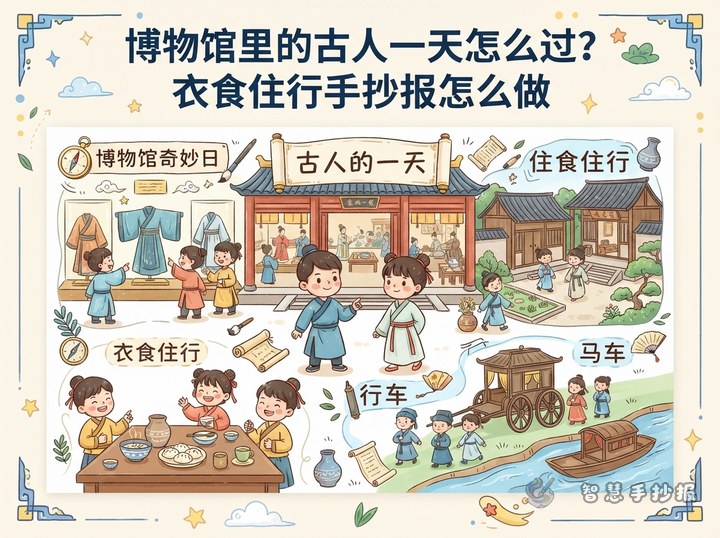
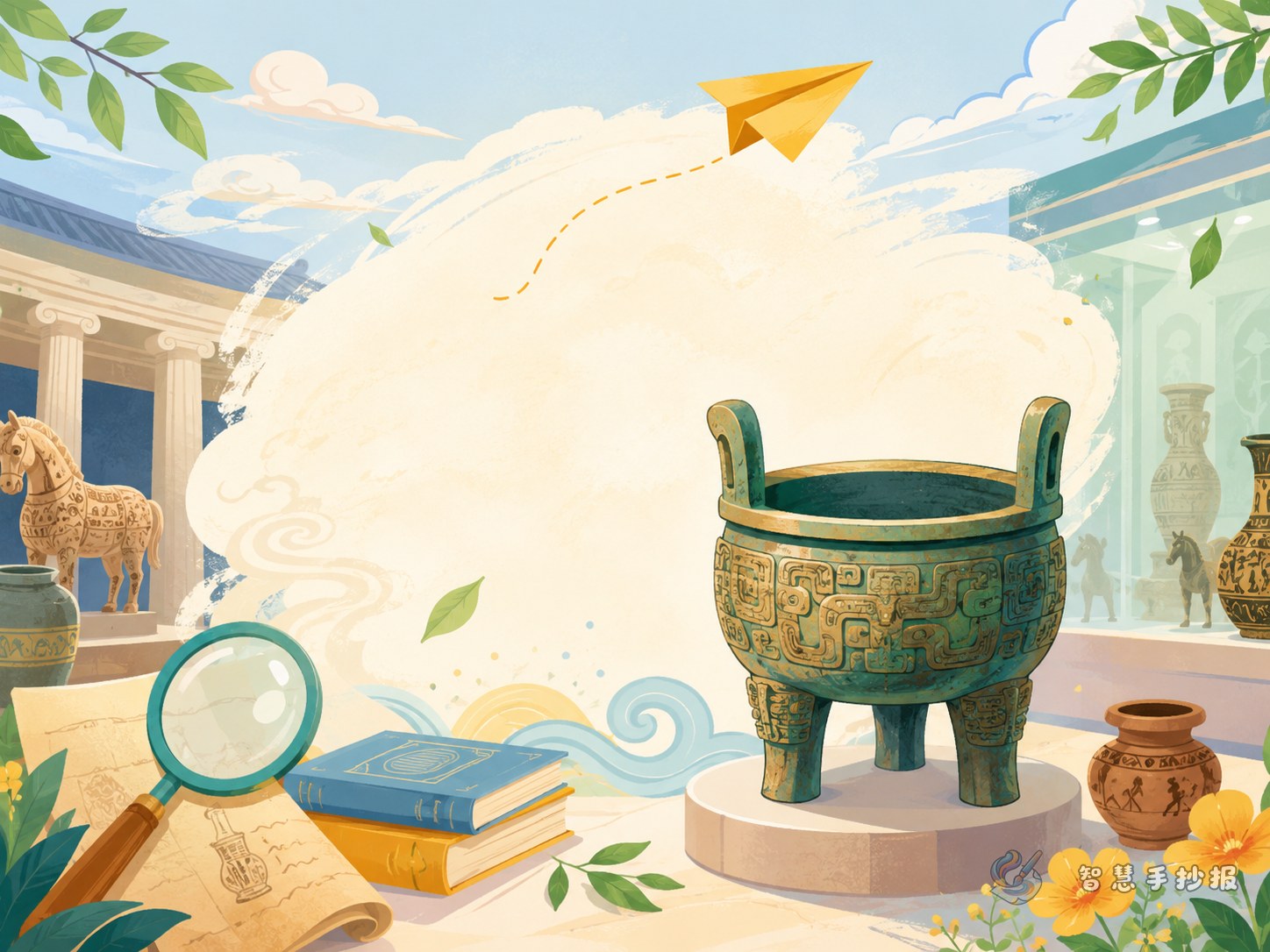
This topic works best with a center-focused design. Put the title and a drawing of the artifact in the middle, then arrange the text sections around it. This gives the page a clear visual focus.
- Write the title at the top in larger letters
- Draw the artifact in the center
- Place fact boxes and historical notes on the upper sides
- Put your reflection and museum manners in the lower corners
- Add simple decorative borders inspired by traditional patterns
Choose calm colors such as beige, dark green, brick red, or navy blue. Too many bright colors may distract from the historical theme.
Short lines you can use on the poster
- A museum is like a three-dimensional history book.
- This artifact helped me feel the wisdom and beauty of the past.
- Although quiet in a display case, artifacts carry real memories of history.
- A museum visit is not only about seeing objects, but also about understanding culture.
- Respecting artifacts begins with respectful museum behavior.
If you want to keep improving the layout and sections, you can continue organizing your poster ideas in the Zhihui Shouchaobao WeChat mini program.