Why choose patterns as the main idea
A museum handwritten newspaper does not have to revolve around only one famous artifact. A pattern-based topic is easier for students to organize because it connects artifacts, decoration, symbolism, and history in one clear line of thought.
It also makes the page look more unified. The same motifs used in the writing can appear in borders, headings, and small visual details.
Useful content students can write
- What is a pattern: explain that patterns are decorative designs found on ancient objects.
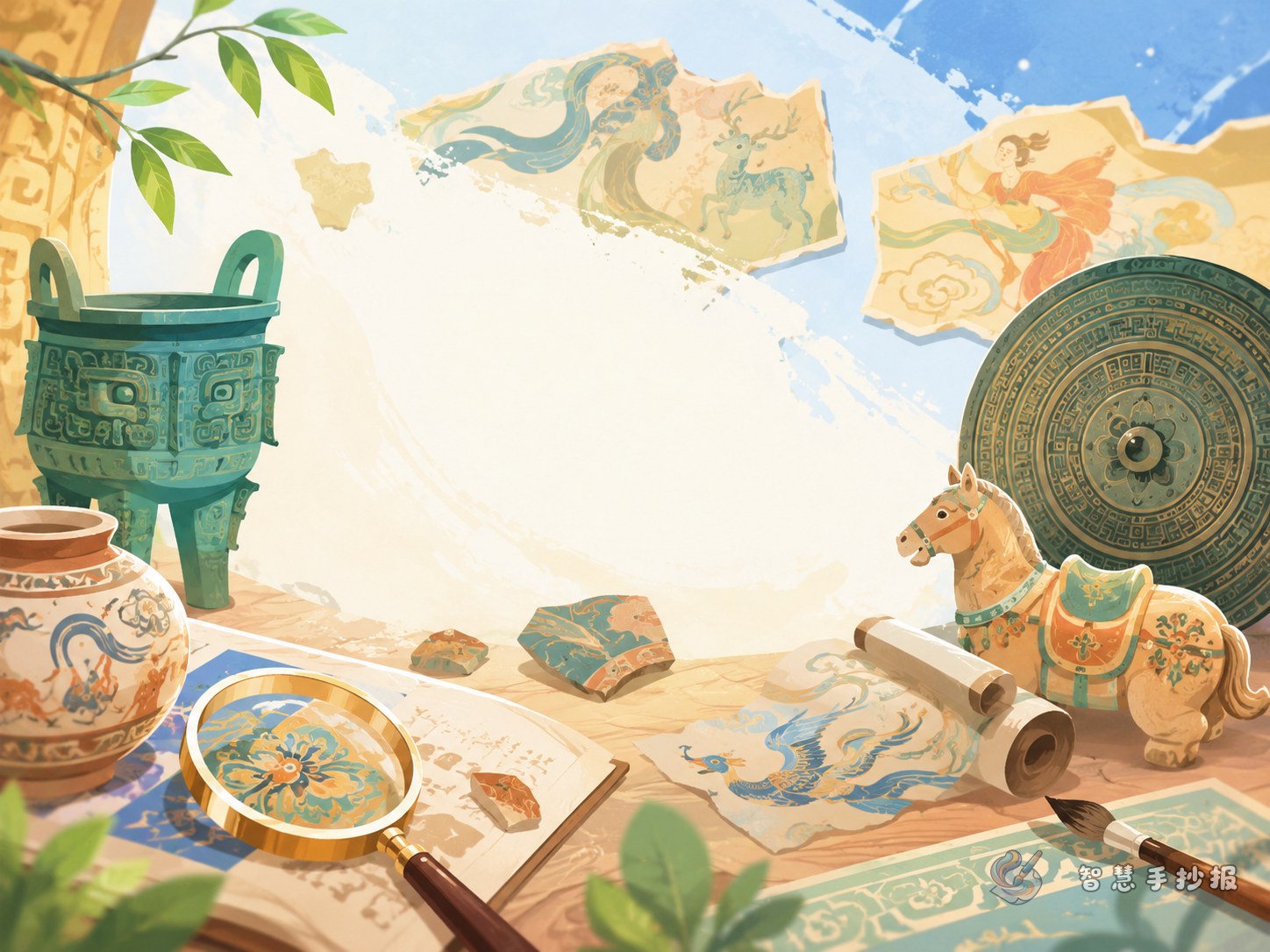
- Where patterns appear: bronze ware, porcelain, clothing, murals, tiles, and carved objects.
- What they may mean: good wishes, power, nature, protection, or beauty.
- How patterns changed: compare simple geometric styles with later detailed decorative forms.
Good motif choices for one page
Cloud patterns
Cloud patterns often create a flowing and elegant feeling. They can be used to show movement and imagination in ancient decoration.
Lotus patterns
Lotus motifs are graceful and neat. They are suitable for discussing beauty, symbolism, and artistic design in historical objects.
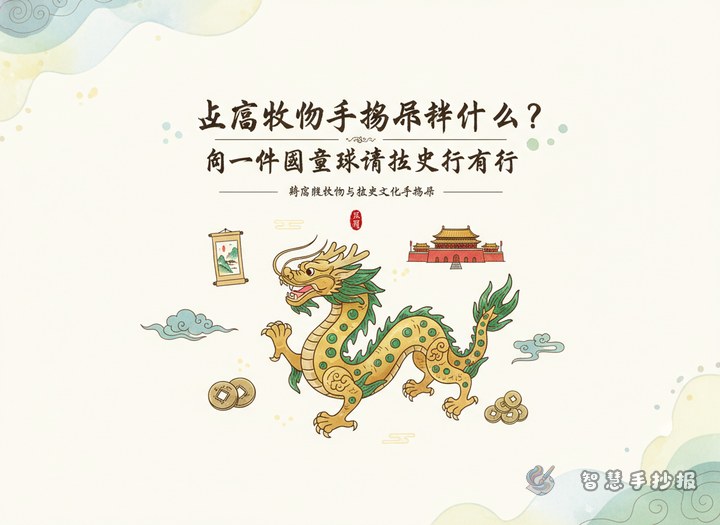
Dragon or animal patterns
Animal motifs often feel powerful and vivid. Students can describe how these patterns made ancient objects look more ceremonial or expressive.
How to arrange the layout
- Put the title in the center top and decorate it with a simple repeating motif.
- Create two main columns: one for pattern knowledge and one for artifact examples.
- Add a small box for “What I learned in the museum” to make the page more personal.
- Use simple repeating lines or corners instead of heavy decorations.
Writing tips for a clean and lively page
Use short paragraphs, not long blocks of text. Each pattern can be introduced in three steps: where it appears, what it looks like, and what it may symbolize. This keeps the page easy to read for children and teachers.
If you want to keep improving the layout after drafting your ideas, you can continue designing in the Zhihui Shouchaobao WeChat mini program.