Turn the Topic into a Plant's Circular Journey
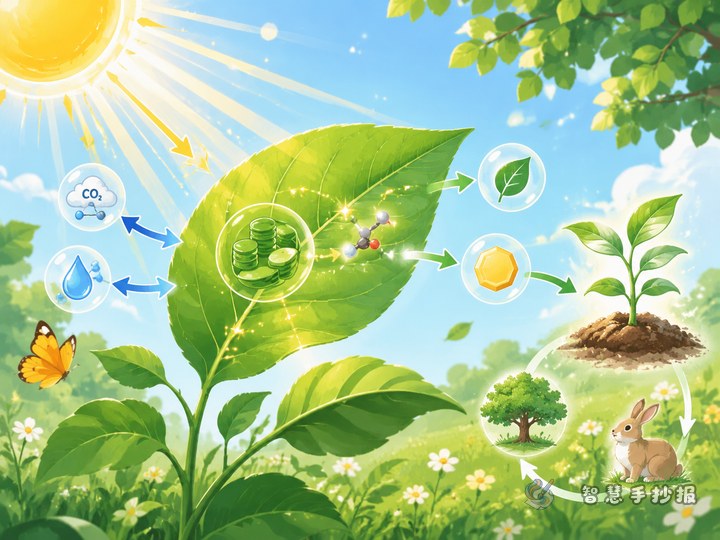
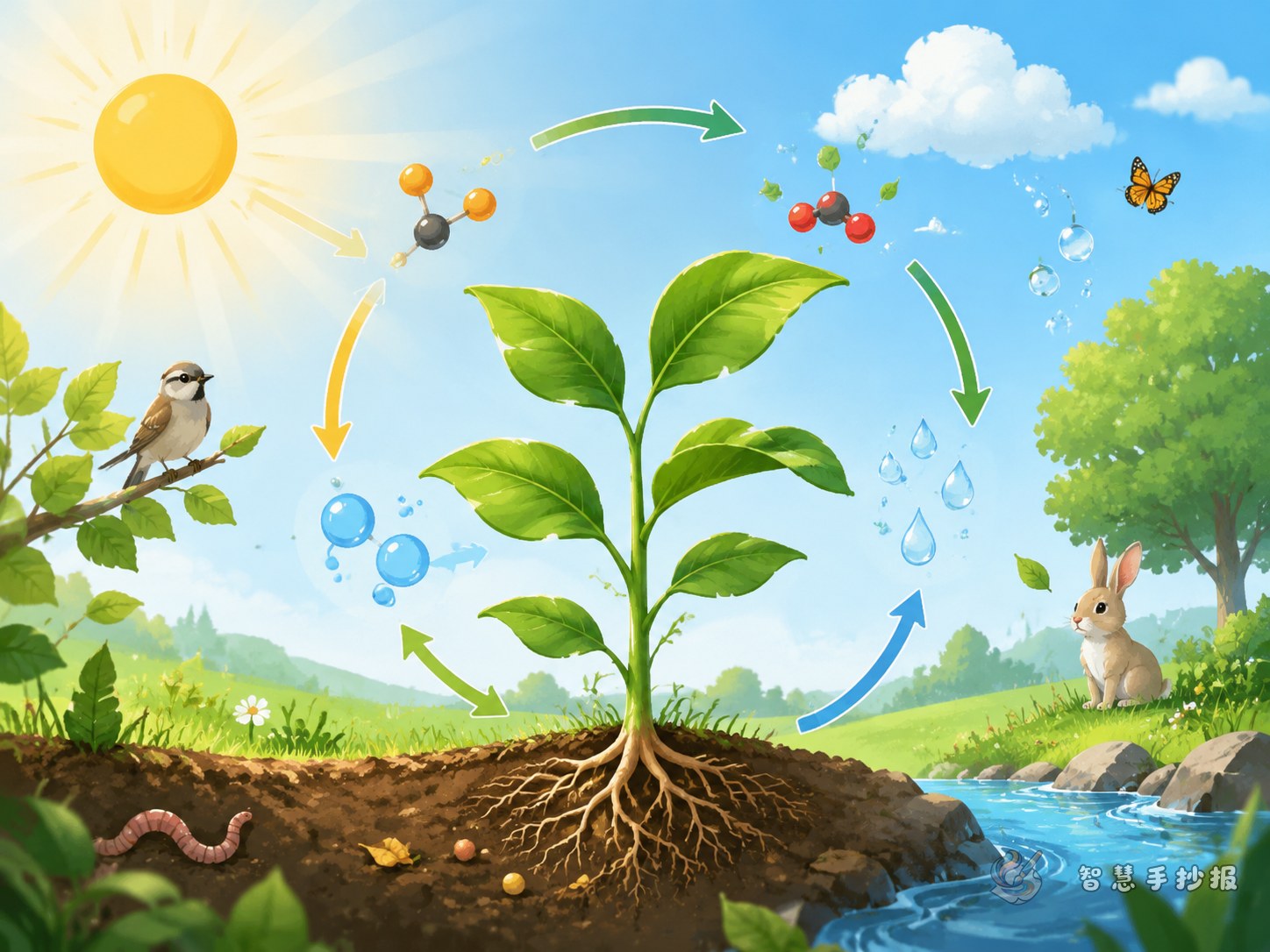
This handwritten newspaper can be more than a simple explanation of photosynthesis. A clear idea is to present the journey of a plant: sunlight reaches the leaves, the plant makes food, energy moves through animals, and fallen leaves return nutrients to the soil.
You may place a title at the top center, such as “What Happens After Sunlight Reaches a Leaf?” or “The Small Cycle Started by a Plant”. Add simple icons of the sun, leaves, water drops, soil, and arrows to make the theme easy to understand.
Writing Materials Starting from the Leaf
Short Knowledge Box
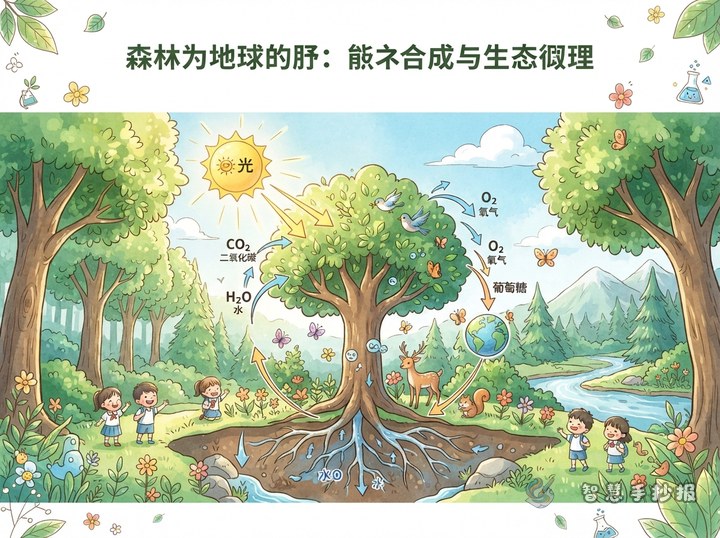
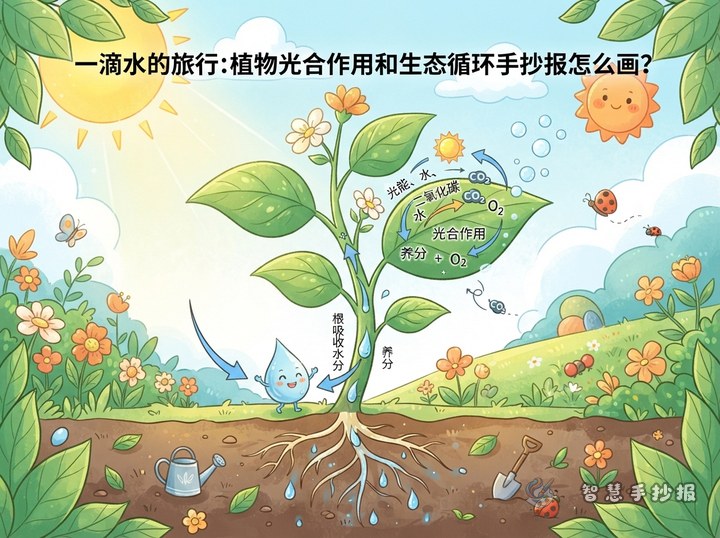
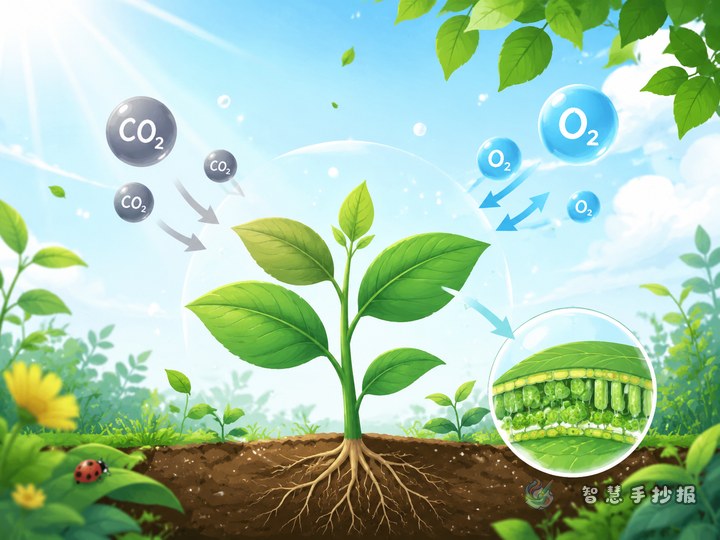
A leaf works like a tiny factory. During the day, plants use sunlight, water from the roots, and carbon dioxide from the air to make food with the help of chlorophyll. At the same time, they release oxygen. This process is called photosynthesis.
Sentences for the Ecological Link
- The food made by plants helps them grow and also becomes a food source for many animals.
- Animals release carbon dioxide when they breathe, and plants can use it again for photosynthesis.
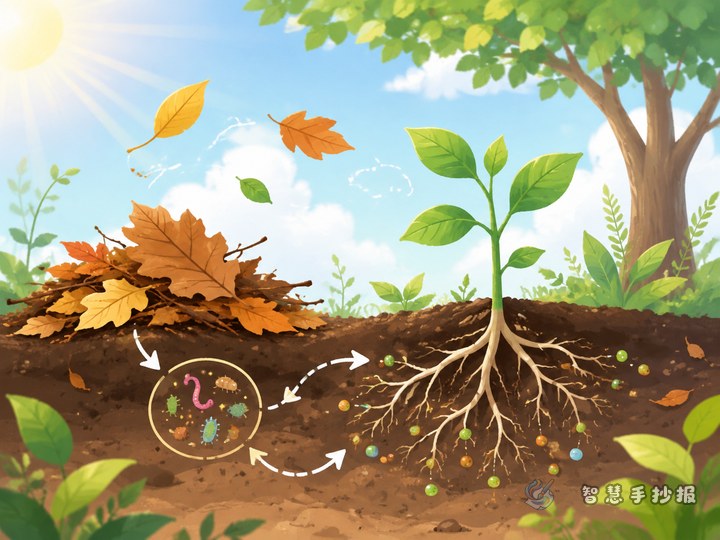
- Fallen leaves and dead branches are broken down and become nutrients in the soil.
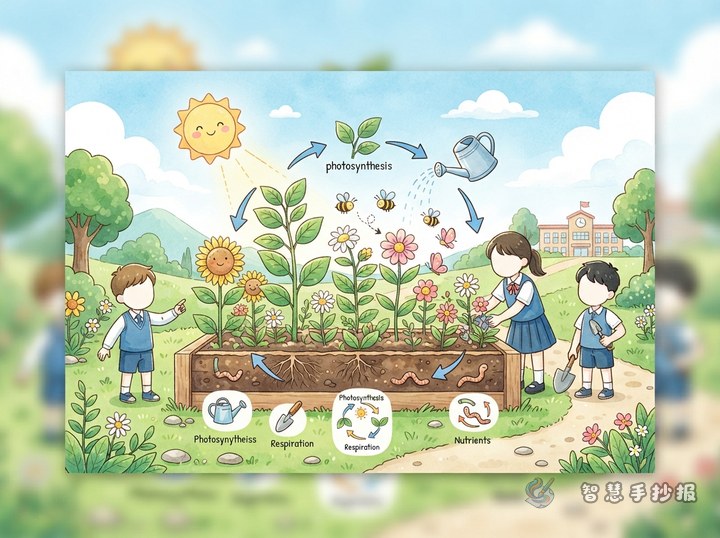
- Sunlight, water, air, plants, animals, and decomposers work together in a continuous ecological cycle.
Useful Sections for the Page
- Sunlight Energy Station: Explain that sunlight provides energy for plants.
- Leaf Factory: Use arrows to show water and carbon dioxide entering the leaf, and oxygen and food being produced.
- Food Chain Path: Draw grass, insects, and birds to show how plant energy moves to animals.
- Back to the Soil: Write about fallen leaves becoming nutrients after decomposition.
- Green Action Corner: Add simple actions such as caring for plants, saving paper, and protecting grass.
Design the Layout as a Big Circle
Draw a tree or a large plant in the center. Around it, use circular arrows to connect “sunlight—leaf—animal—soil—plant.” Keep each arrow short and add one simple sentence beside it so the page stays clean and readable.
Use green, light blue, and yellow as the main colors. Green stands for plants, yellow for sunlight, and blue for water and air. Leaf-shaped, cloud-shaped, or soil-shaped text boxes can make the handwritten newspaper more lively.
Final Checklist Before Finishing
- Does the page explain that photosynthesis needs sunlight, water, and carbon dioxide?
- Does it connect plants with animals, soil, and air?
- Does it include a small section about what students can do to protect nature?
If you want to turn these ideas into a complete page more easily, you can open the 智慧手抄报 WeChat mini program, choose a related theme, fill in the sections, and continue designing the handwritten newspaper with suitable borders and illustrations.