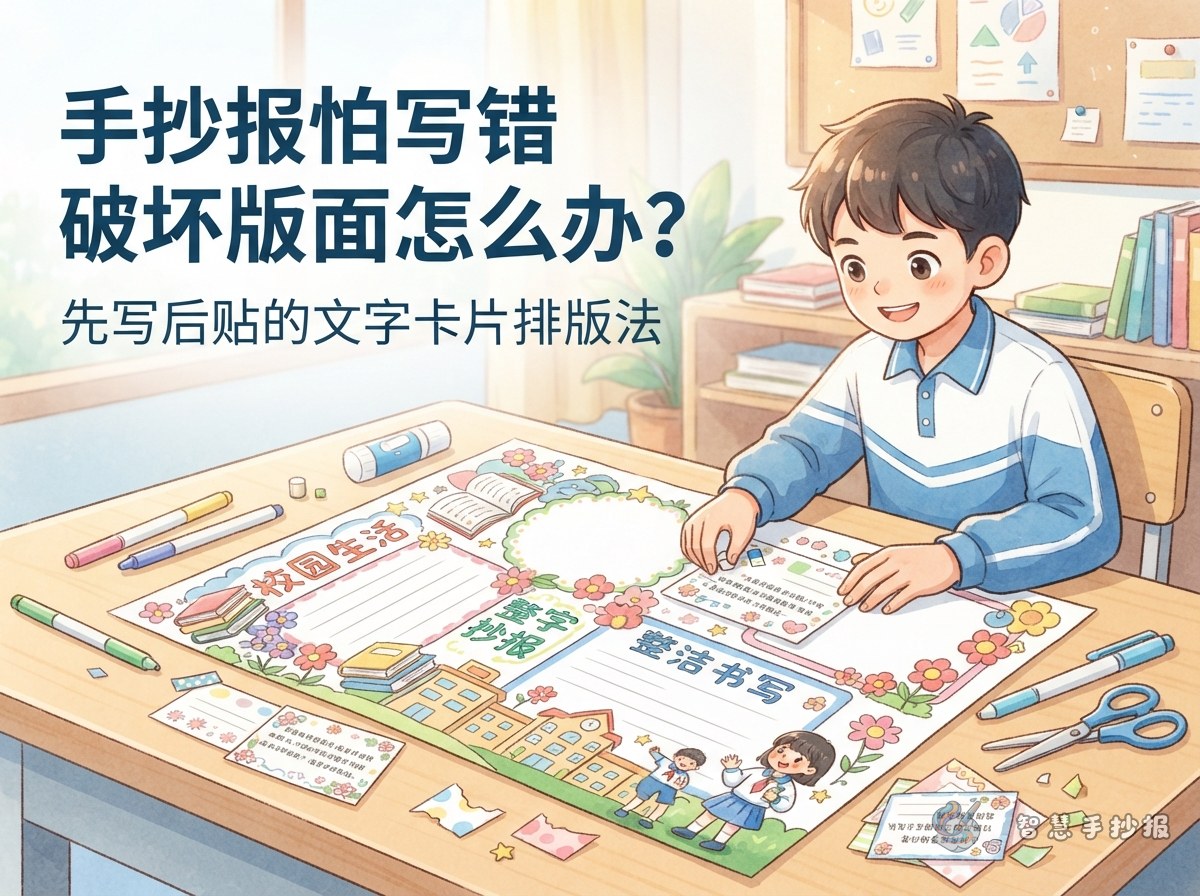
Why separate text cards protect the whole poster
Titles, borders, and illustrations can be adjusted gradually, but a misspelled word in the main text may lead to smudges, worn paper, or a complete restart. With the write-first method, every section becomes a separate card. A good card is attached to the poster, while a flawed one can simply be rewritten.
This approach is useful for text-heavy school posters, paper that should not be ruled directly, and younger students who often write beyond a planned box. The cards also create clear sections that readers can scan quickly.
Choose the sections before cutting the cards
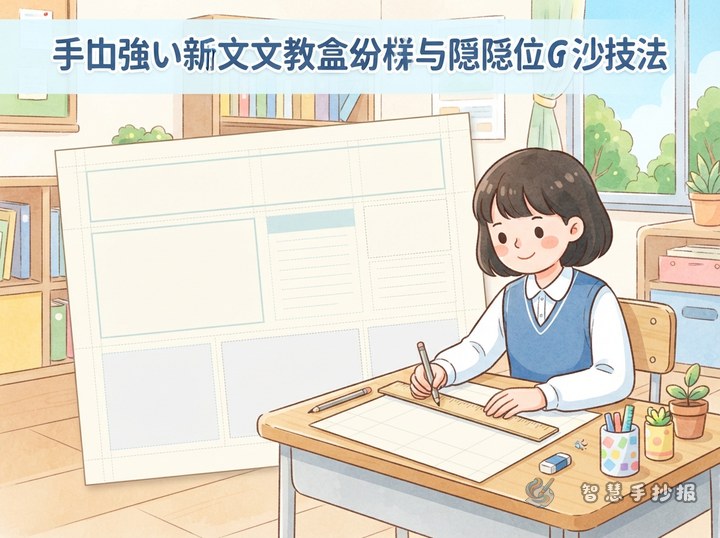
Do not begin by cutting many identical pieces. Place a temporary title strip and rough illustration shapes on the main sheet first. Use the remaining space for two to four cards with different purposes:
- Topic card:Explain the subject in one short paragraph and give this card a little more room.
- Fact list:Present three to five facts, steps, or reminders in a narrow space.
- Action card:List practical things students can do and place it near the bottom.
- Key message:Feature a short slogan or concluding sentence on a small, noticeable card.
Leave roughly one character width of empty space around the writing. Keep the gaps between neighboring cards consistent instead of filling every available corner.
A no-trace writing process
- Cut a piece of paper slightly larger than the estimated final card.
- Place graph or lined paper beneath it and work in a bright area where the guides are easier to see.
- Draft lightly in pencil, check spelling, punctuation, and line length, and then copy the text in a dark pen.
- Wait until the ink is dry, mark the final edges, and preserve an even inner margin.
- Arrange all cards on the main sheet and confirm their order before applying glue.
Use one body-text size and a consistent first-line indent. Highlight important words in only one way. Combining outlines, several colors, and heavy lettering in the same paragraph can make the page look crowded.
Short sample text to adapt
For a reading theme, a topic card could say: Reading helps us collect useful words and discover the world through different stories. Set aside a quiet time to read each day and record a sentence you enjoy. Small notes can gradually become a valuable collection.
For an environmental theme, an action card could say: Saving a sheet of paper, turning off a tap, and sorting waste correctly are practical ways to care for the environment. A good habit matters not because it sounds impressive, but because we practice it every day.
For other subjects, organize the cards around three questions: What is the topic, why does it matter, and what can we do? Let each card answer one question rather than crowding several ideas into one block.
Arrange first and decorate last
Attach the title and largest text card first. Add the smaller lists and message cards next, then fill the remaining spaces with illustrations. Spread a small amount of glue evenly and press from the center toward the edges to reduce wrinkles.
Use one consistent edge treatment, such as a thin outline, rounded color backing, or a few small motifs. If a card blends into the background, place a slightly larger coordinating sheet beneath it. This creates contrast and can hide minor cutting errors.
A three-part final check
- Read the words:Check spelling, missing words, punctuation, and ink clarity.
- Check alignment:Make sure card edges run parallel to the main title, border, or paper edge.
- Check hierarchy:Keep the main title strongest, section headings second, and body text consistent.
If you still need help choosing card shapes or arranging sections, continue in the Smart Handwritten Poster WeChat mini program to explore layouts, organize the content, and use the preview as a guide for your own poster.