Make a Reusable Underlay Guide
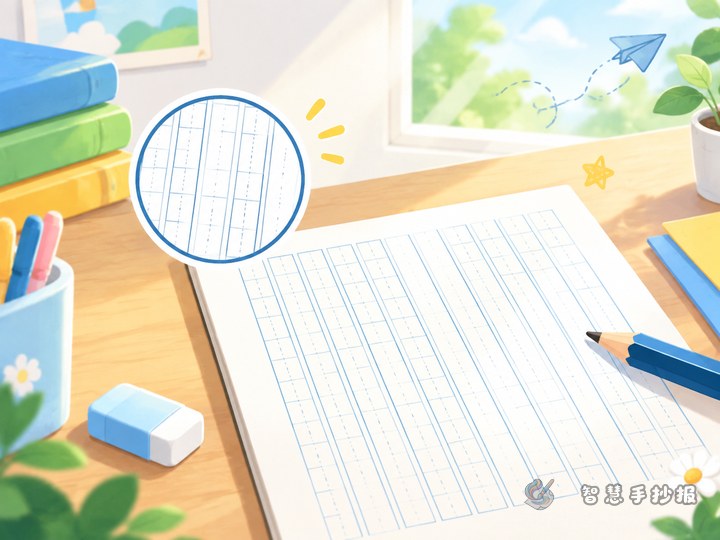
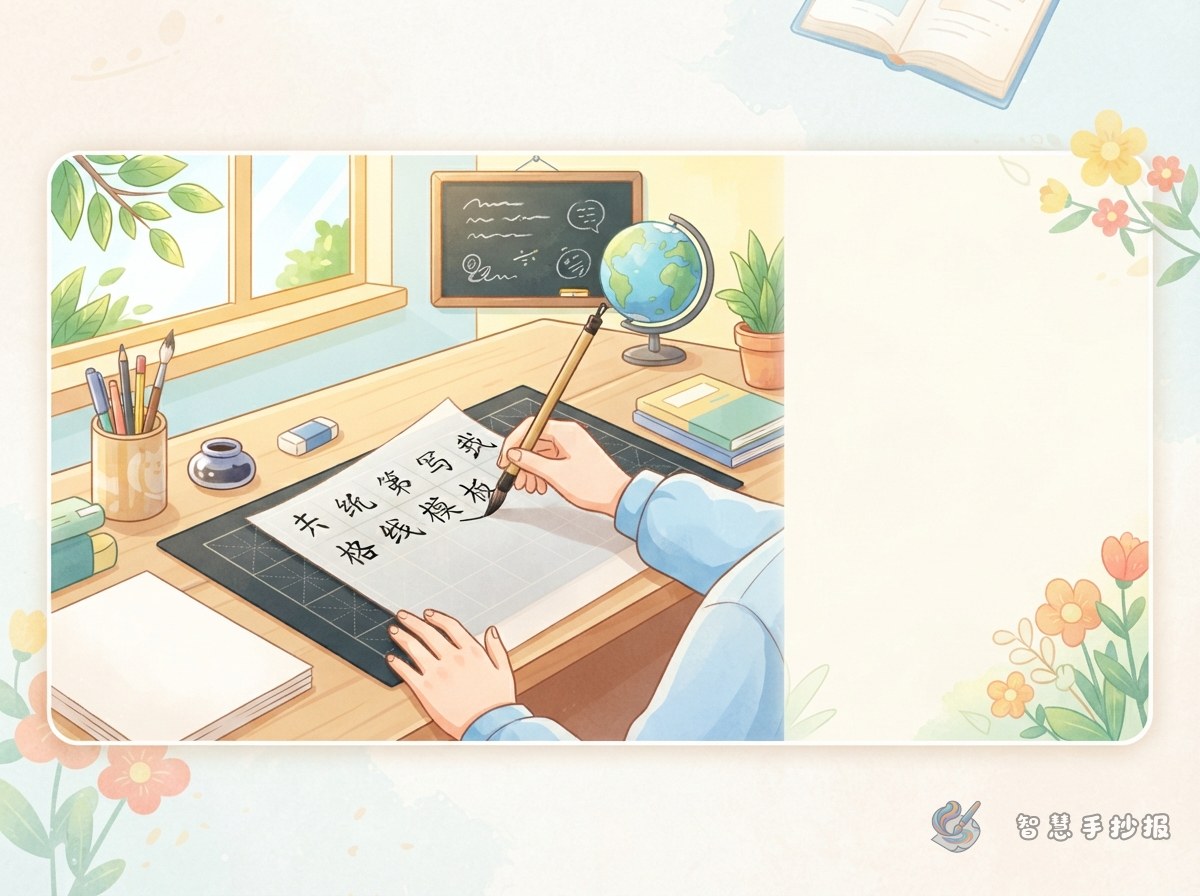
An underlay guide sits beneath the final poster paper, so no pencil guidelines need to be drawn on the finished page. Slightly translucent white drawing paper allows the writer to see the baseline, margins, and section boundaries underneath. Once the writing is complete, the guide can simply be removed.
- Choose a sheet the same size as the final handwritten poster.
- Draw horizontal baselines in dark gray. Use wider spacing for younger pupils and slightly narrower spacing for smaller text.
- Add left and right margins, a safe area for the main heading, and the planned section boundaries.
- Align both sheets at the corners and secure the edges with clips or low-tack paper tape.
Quick check: Test one line in a corner before starting. The guide should be visible without overpowering pale decorations or colored text boxes.
Position the Whole Page at Once
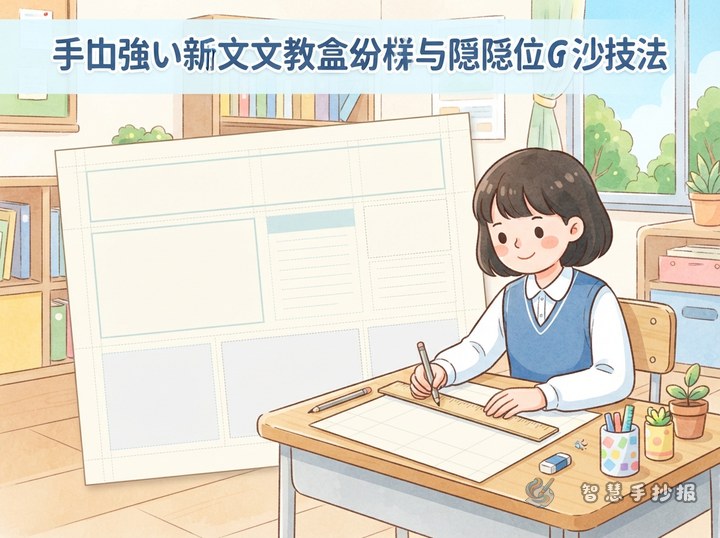
A full-page underlay does more than keep individual lines straight. It can show where the title ends, where illustrations will sit, and how much room each writing section receives. This makes it easier to start and finish every paragraph in the correct place.
- Two-column layout: Put the title across the top and divide the lower area into two balanced text sections.
- Central illustration: Reserve the middle for one themed drawing and place three or four short sections around it.
- Stepped sections: Vary the heights of the text areas while keeping the internal writing lines level.
The final page does not need a solid border around every section. Small leaves, clouds, books, or other themed symbols can indicate boundaries while keeping the design open and friendly.
Test the Plan with Real Content
For a handwritten poster called “Build a Daily Reading Habit,” possible sections include “My Reading Plan,” “How I Choose Books,” “Reading Reminders,” and “Favorite Lines.” A short introduction could say: “Set aside a quiet moment each day, meet a good book, and let reading become a natural part of life.”
Short sections work well with two or three sentences or a compact list. For example: “Prepare a bookmark and pencil; mark a sentence you enjoy; write one thought after reading.” Draft the wording first, compare it with the number of available lines, and shorten it before writing on the final sheet.
Follow the Baseline, Not Every Mark
While writing, watch the lower edge of each word and keep it close to the same baseline. Pause after every two or three lines to check the left and right spacing. It is better to leave a little room at the end of a section than to stretch the final words unnaturally.
- Write section headings first, add body text next, and finish with illustrations.
- Keep the letter size, spacing, and pen color consistent within each section.
- Place a clean scrap sheet under the writing hand to prevent smudges.
- If the guide is hard to see, improve the light or darken the underlay instead of pressing into the final paper.
Remove the Guide and Balance the Finish
Slide the underlay out gently from one side. Check whether the heading is centered, the spaces between sections feel balanced, and paragraph endings are not crowded. Add only a few small stars, leaves, or themed icons to large empty areas, and avoid adding decorations where the text is already dense.
If the topic sections or page proportions are still undecided, scan the code on the page to open the 智慧手抄报 WeChat Mini Program. Choose a suitable handwritten-poster layout and content plan, then create an underlay guide that matches it.