Why the Ruyi Motif Makes a Great Centerpiece
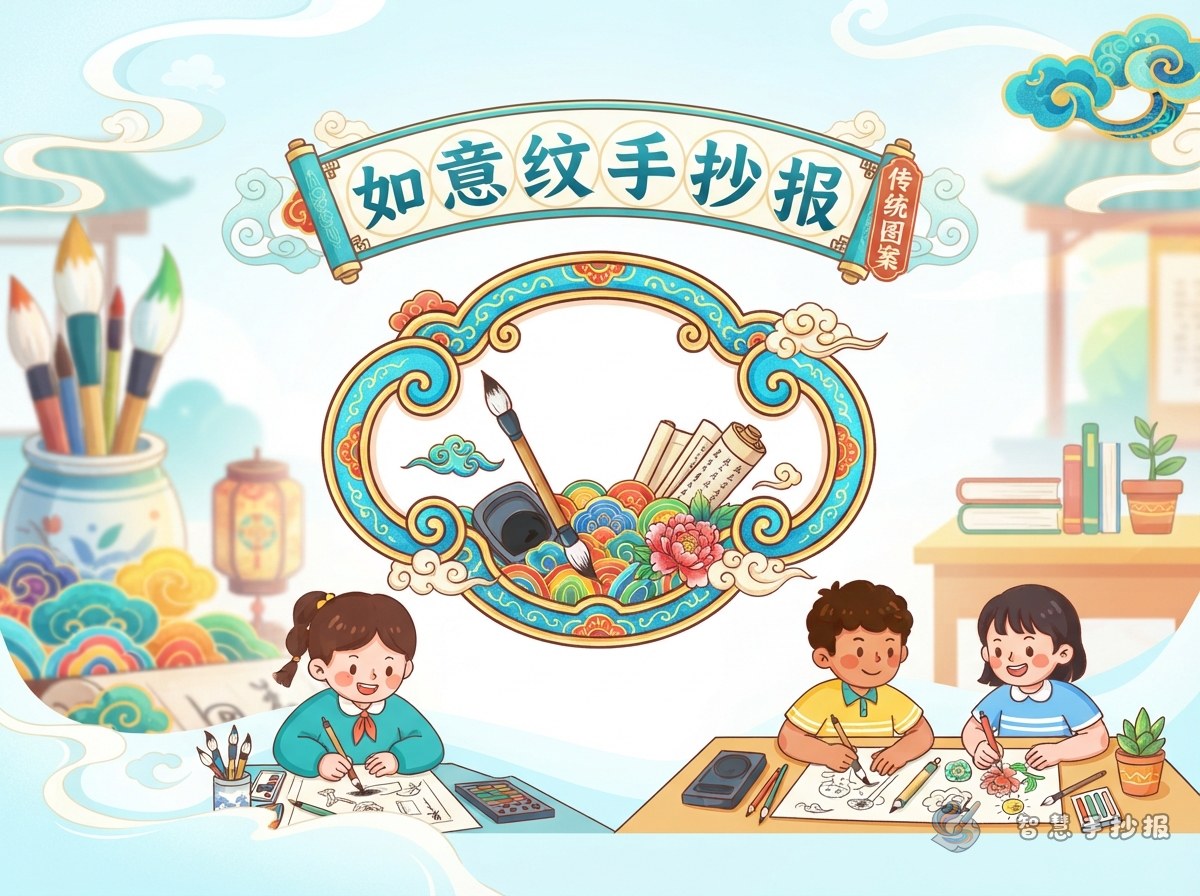
The ruyi motif comes from the head of a traditional ruyi scepter and looks like a curled, heart-shaped cloud. Its lines are round and simple, so a student can sketch the basic shape in just a few strokes. It also carries a wish for everything going smoothly, which gives the page a traditional flavor without needing long explanations.
Another advantage is that it works both as a star and as a helper: enlarge one ruyi head and you have an easy title frame, shrink a row of them and you have a neat border.
Three Steps to Draw a Ruyi Cloud Head
Step 1: Draw a Single Cloud Head
Draw a small arc as the opening, bulge it outward into a rounded head, then add a tiny curl on each side. Practice three of them in pencil and try to keep the sizes even.
Step 2: Build a Triple Ruyi
Make the middle petal slightly larger and higher, place two smaller petals below on each side, and connect them with a short arc. This triple ruyi is the classic shape for a title frame or a corner ornament.
Step 3: Add Vines and Curls
Draw curved stems on both sides of the triple ruyi and add small leaves or curling lines. The motifs then link together into a continuous border.
Text Ideas for a Ruyi Pattern Handwritten Newspaper
- Meaning: the ruyi motif expresses wishes for peace, good luck and things going your way, and it often appears beside characters for blessing and long life.
- Shapes: single ruyi, triple ruyi, scrolling ruyi, and ruyi cloud heads combined with curling grass.
- Everyday sightings: ruyi-shaped ornaments appear on the corners of traditional furniture, the rims of porcelain, and beams and window lattices in old buildings.
- Combinations: ruyi is often paired with auspicious clouds, lotus flowers and key patterns to form a continuous border.
- Your own notes: write a short paragraph about how you drew your ruyi motif, which feels fresher than copying reference text.
Three Useful Places for Ruyi Motifs in Your Layout
The biggest risk is filling the page with patterns and leaving no room for writing. Try using ruyi motifs in only three places:
- Title frame: write the topic inside a triple ruyi and leave the side petals empty, giving the title an instant traditional look.
- Corners: draw one single ruyi head in each corner and keep the whole middle area free for text.
- Column dividers: draw a scrolling ruyi line between two columns so it separates and decorates at the same time.
Plan your columns and word count first, then add the motifs.
Color Choices and Finishing Touches
- Pick two or three main colors such as red, gold, green or ochre; too many colors make the page messy.
- Outline the cloud heads with thicker lines and use thin lines for the inner vines so the pattern looks lively.
- White space suits traditional motifs well; a clean writing area looks better than a fully decorated border.
- Write the text first and add colors afterward, which makes the page much easier to control.
If you want a faster start, open the Smart Handwritten Newspaper mini program in WeChat, choose a traditional motif template, replace the text, print it for tracing, and then add a few ruyi cloud heads of your own.