Build the story around one journey
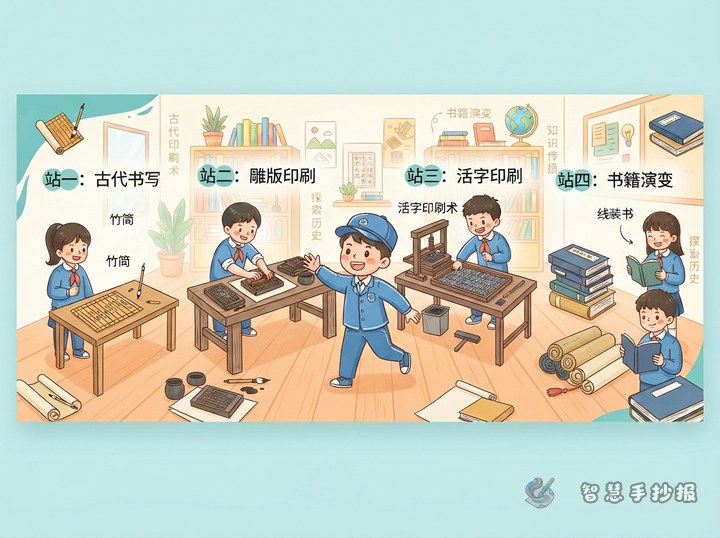
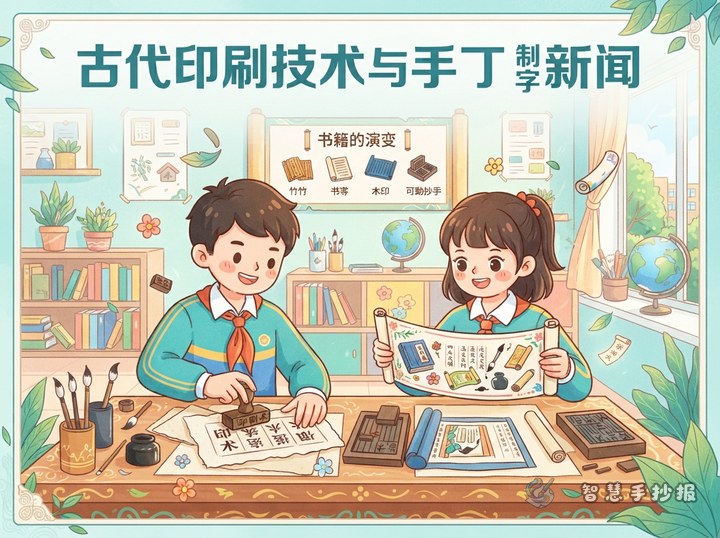
This handwritten newspaper can present the history of ancient printing as a journey taken by a book. Begin with bamboo slips, wooden tablets and silk, move on to paper, then woodblock printing, and finally movable type. A clear route is easier to read than a page filled with disconnected facts.
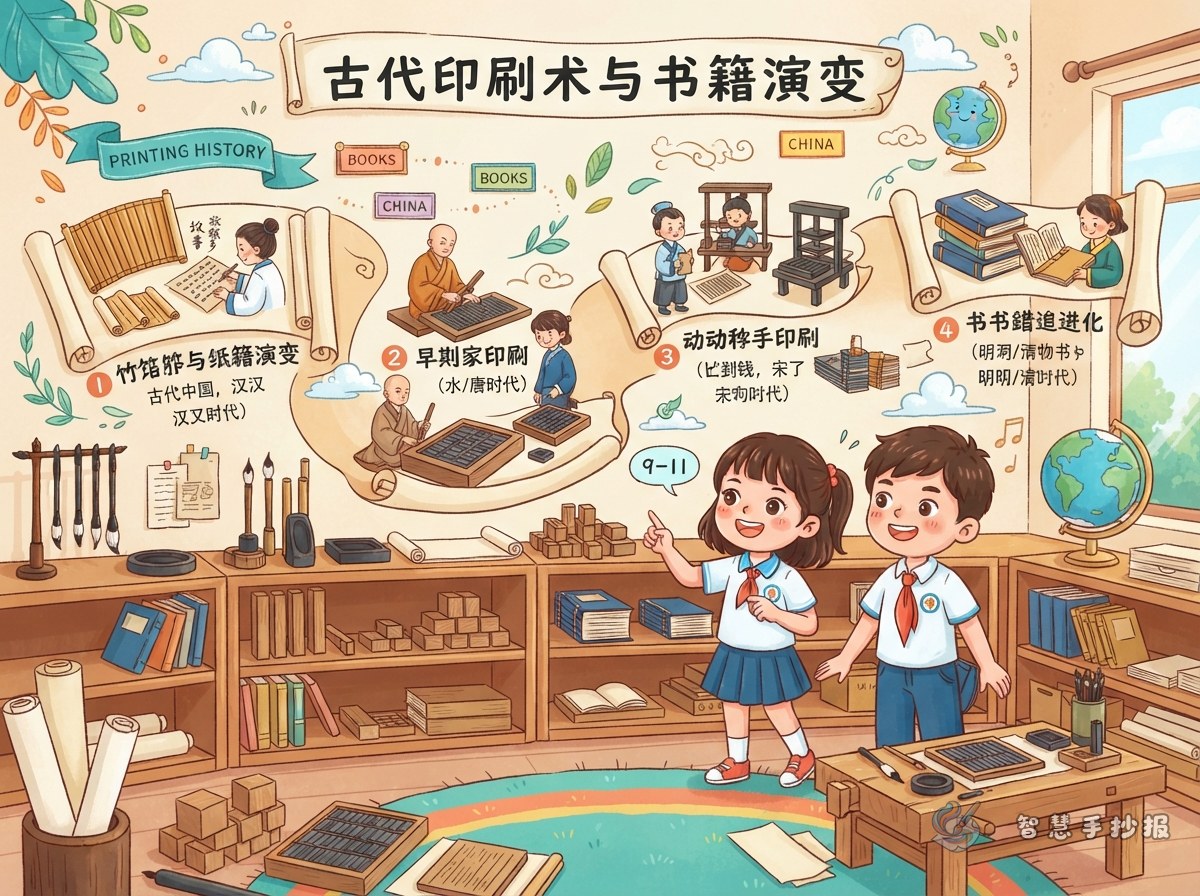
Draw a curved timeline through the center, connecting four stages with open book pages, an ink block or small footprints. Write only two or three key sentences for each stage and add a simple icon so the illustrations support the information.
- Main title: The Evolution of Books and Ancient Printing
- Subtitle: From a Bamboo Slip to a Printed Page
- Key line: As materials and methods changed, books became easier to preserve and knowledge became easier to share.
Four turning points for the timeline
Stage one: Bamboo slips, wooden tablets and silk
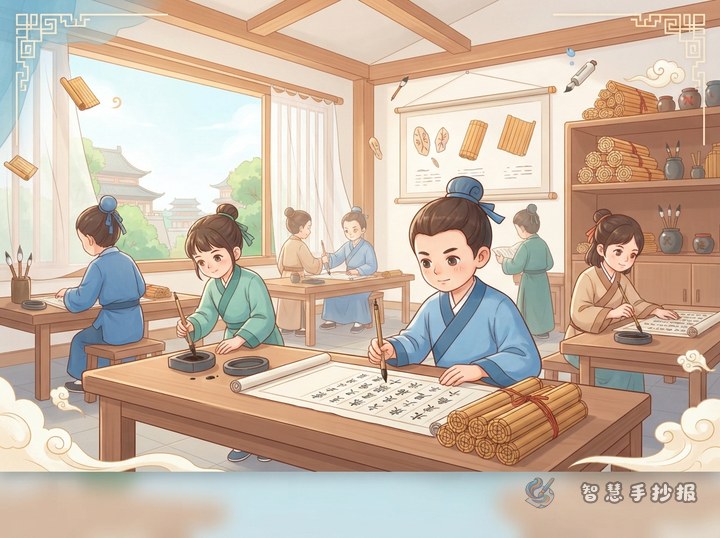
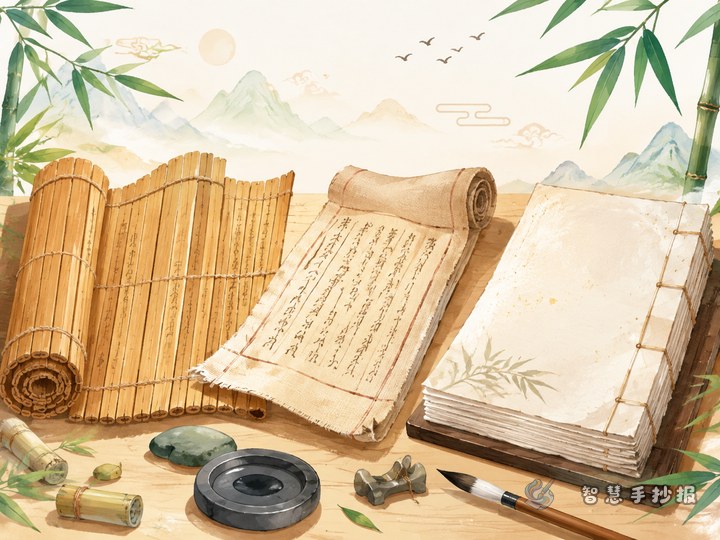
Before paper became widely used, people wrote on bamboo slips, wooden tablets or silk. Bamboo slips had to be tied together, while silk was light but not practical for making large numbers of books. Draw several slips joined by a cord and add a short note such as “recordable, but not very convenient to carry.”
Stage two: Paper made writing lighter
As paper became an important writing material, recording, carrying and preserving words became more convenient. Draw a rolled sheet of paper and place three keywords beside it: light, thin and easy to write on. A few strong words can show the change better than a long paragraph.
Stage three: Woodblock printing copied a whole page
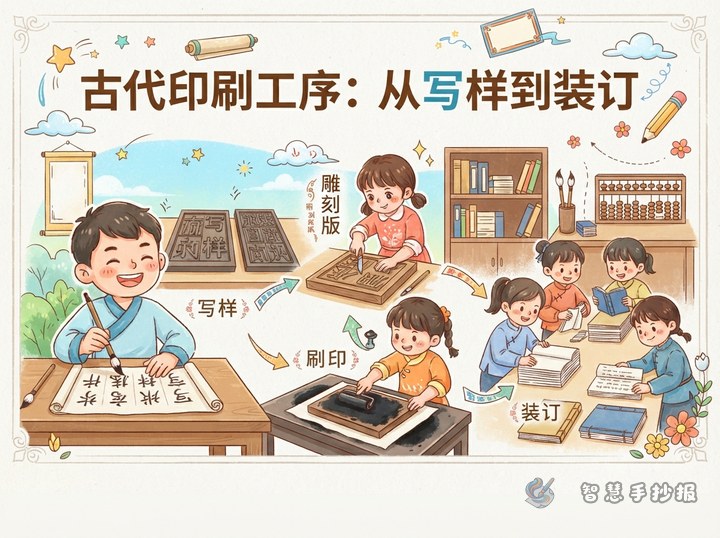
In woodblock printing, an entire page of text or pictures was carved in reverse on a wooden block. Ink was brushed onto the block, and paper was pressed against it to make a print. Show a woodblock, an ink brush and a freshly lifted sheet, with arrows labeled “carve, ink, press and print.”
Stage four: Movable type allowed flexible layouts
During the Northern Song period, Bi Sheng used clay movable type. Instead of carving every page as one block, individual characters could be arranged into a page and rearranged when needed. Draw several square type pieces and write “arrange character by character” and “reusable layout” beside them. The Diamond Sutra, dated 868, is often introduced as one of the earliest surviving complete printed books with a clear date, making it a useful knowledge-card example.
Turn the facts into three easy-to-read sections
Section one: A materials card set. Create four small cards for bamboo slips, silk, paper and printed books. Each card only needs the material name, its visual feature and the change it brought to reading or preserving books.
Section two: A printing comparison. Compare woodblock printing and movable type in two columns. A woodblock places a whole page on one block and works well for repeating the same page. Movable type is made from separate characters and is easier to rearrange. The contrast will be clearer than two isolated definitions.
Section three: People and key terms. Introduce Bi Sheng and the term movable type. There is no need for a long biography: explain his connection with clay type and draw a small seal or type mold as decoration.
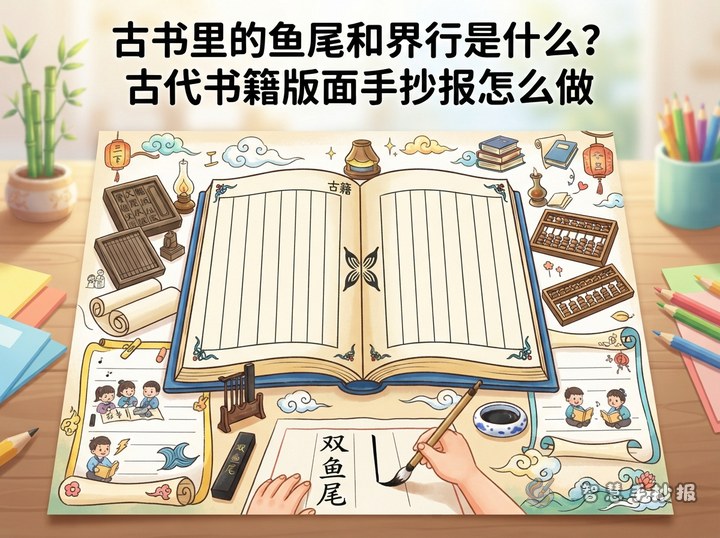
Make the layout look like an opening book
- Place the title inside a scroll or along a book spine at the top, with one line of subtitle underneath.
- Arrange the timeline from the lower left toward the upper right so the eye moves forward like a turning page.
- Put the largest open-book illustration in the center, with material changes on one side and printing methods on the other.
- Use the lower-right corner for a knowledge card in a circle or note shape, keeping it visually quieter than the main timeline.
- Choose cream, brown, cinnabar red and deep blue to suggest paper, woodblock and seal ink. Use red only for key words instead of changing color in every sentence.
A quick checklist before you finish
Lightly divide the page with a pencil first, then decide the title size and timeline position before writing the text and adding decoration. Keep each fact to two or three lines and leave even spaces between characters. Finally, check four things: Are the four stages in order? Is the difference between woodblock and movable type clear? Do the drawings support the words? Are the margins spacious enough?
After finishing the sketch, you can enter the WeChat mini program to continue making the handwritten newspaper. Choose a history-friendly layout and adjust the timeline, text and decorations to create a neat final page.