Choose the main idea: how books reached more readers
Instead of listing inventions, build the newspaper around one question: why did books become easier to make, keep, and share? Bamboo slips, silk manuscripts, paper, woodblock printing, and movable type can show a gradual change from limited copies to wider access to knowledge.
Place this sentence below the title: “Printing changed books and helped knowledge travel farther.” It gives the whole page a clear direction and makes the topic easy to understand.
Make a “book growth record”
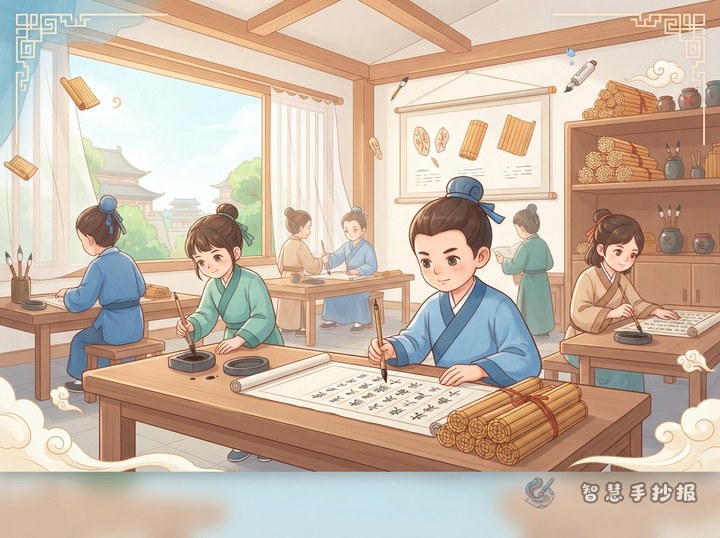
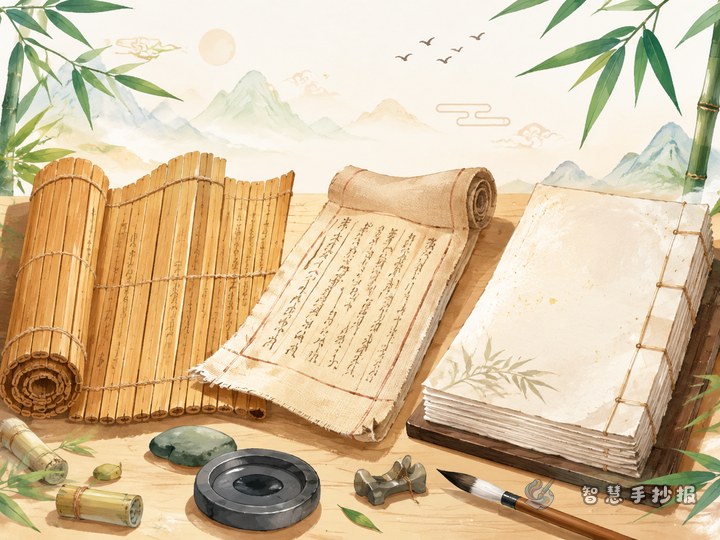
- Bamboo slips and silk: Bamboo slips show that early writing materials could be heavy, while silk was lighter but costly to produce.
- The arrival of paper: Paper was lighter and easier to write on and carry. Draw an open sheet as a visual transition.
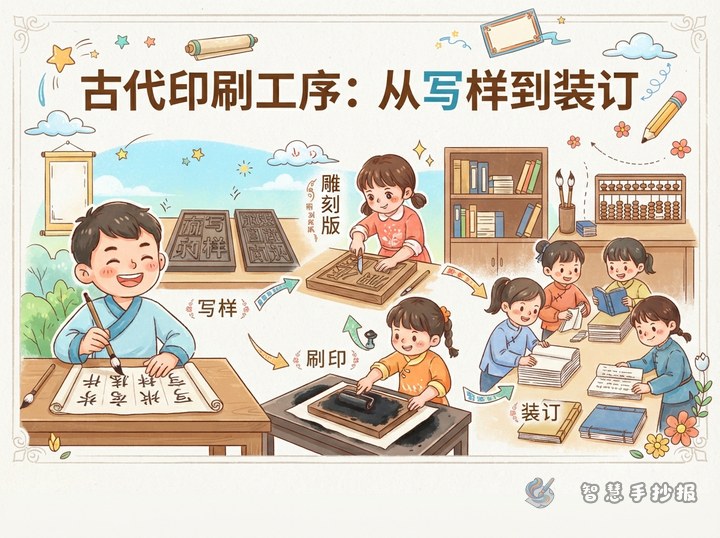
- Woodblock printing: Words or pictures were carved into a wooden block, inked, and pressed onto paper. One block could make repeated copies.
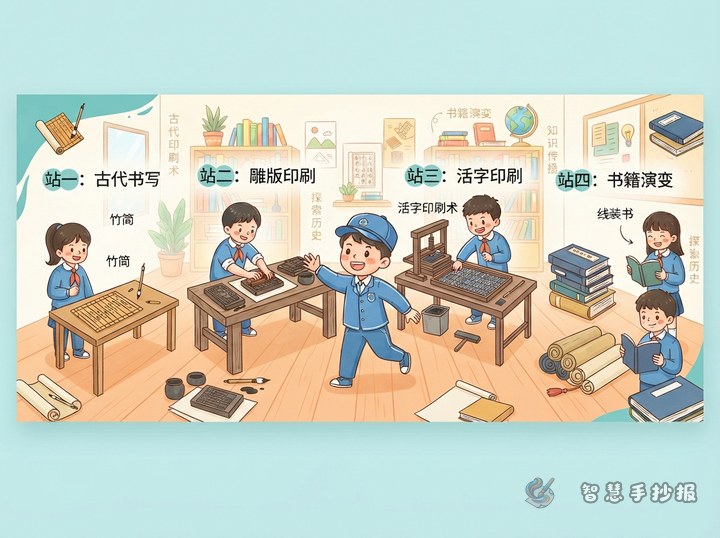
- Movable type: Bi Sheng developed a movable-type method during the Northern Song period. Individual characters could be arranged, reused, and stored after printing.
Give each section only two or three sentences and add a small icon or simple drawing. This keeps the page readable and suitable for young students.
Explain the importance through a “knowledge relay”
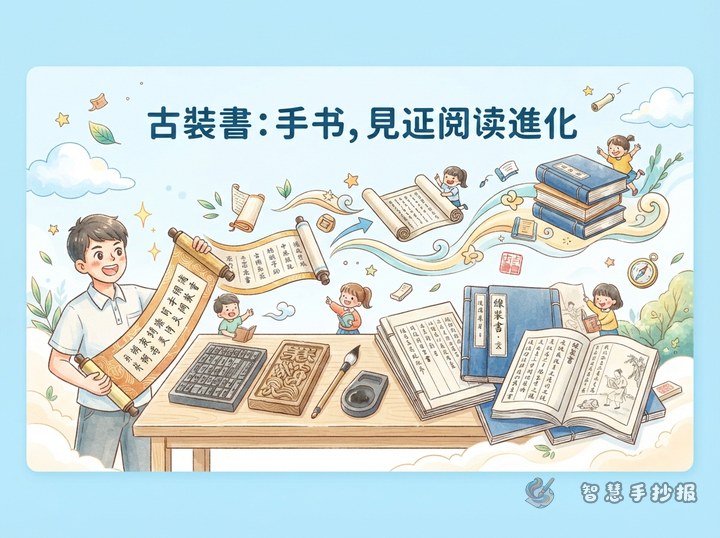
This can become the special feature of the page. Draw four connected scenes: a person copying a book, a craftsperson carving a printing block, a printer arranging type, and a reader opening a printed book. Add short labels such as “slow to copy,” “copies can be repeated,” “layout is more flexible,” and “more chances to read.”
Printing did not mean that everyone immediately owned books. A more accurate explanation is that it improved the efficiency of copying and spreading books, giving more people opportunities to encounter knowledge.
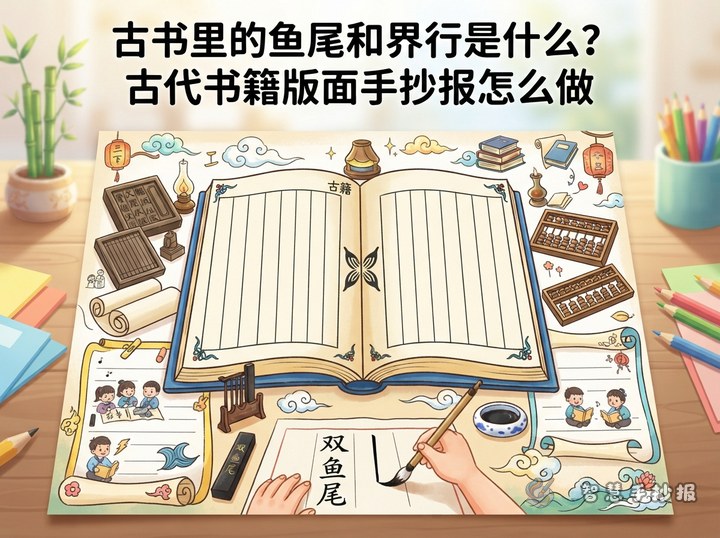
Design the page as an open book
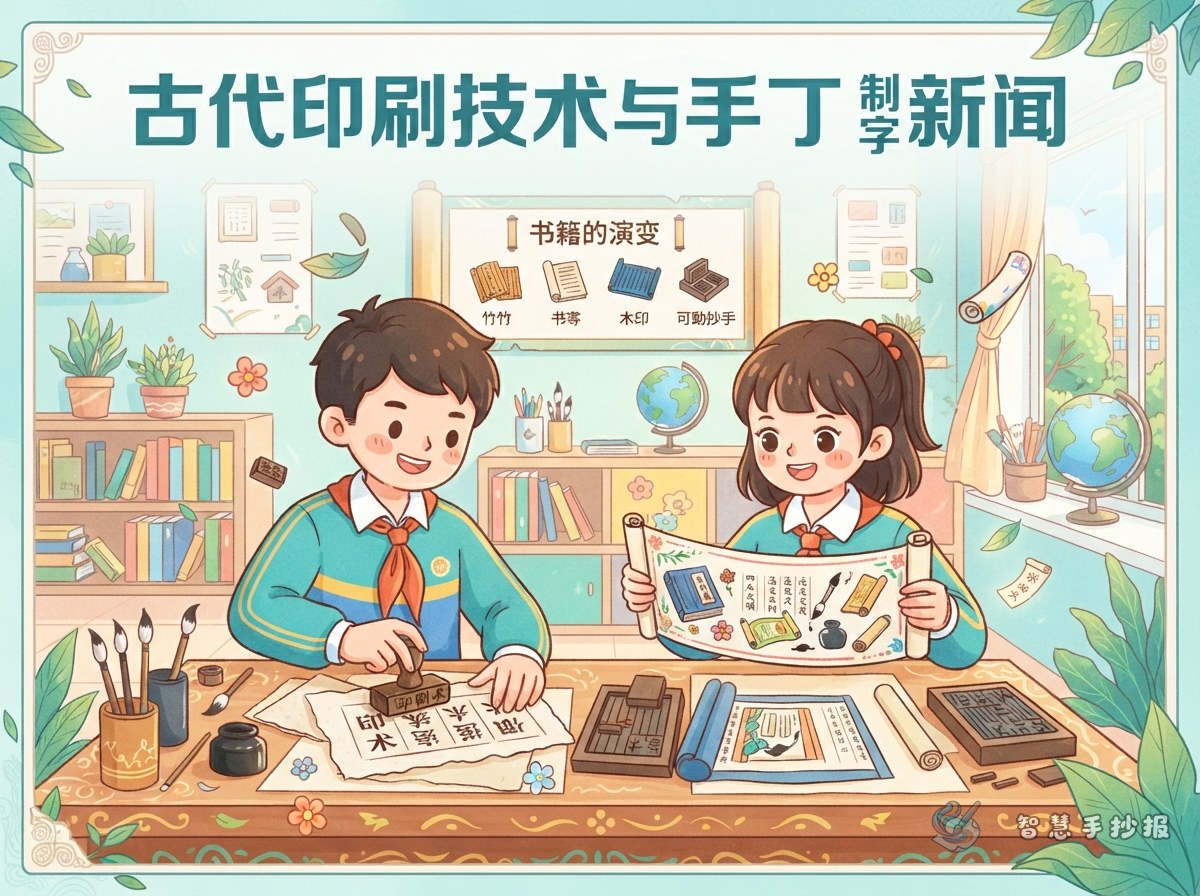
A landscape sheet can look like two open pages. Put “writing materials” on the left and “printing methods” on the right, with the title along the center fold. At the bottom, draw a curved knowledge route with arrows connecting materials, technology, and reading.
- Use brown, cream, and dark green to create an old-book and woodblock feeling.
- Make the title resemble a seal or an old book label, while keeping the body text clear.
- Use bamboo slips, paper sheets, wooden blocks, and type pieces as border decorations without covering key facts.
- Leave a small “My discovery” box in the lower corner for a sentence such as “Printing made knowledge easier to preserve and share.”
Final checklist before drawing
Check four things: Have you included both writing materials and printing methods? Have you explained the difference between woodblock and movable type? Is there a section about the spread of knowledge? Are the title, text blocks, and illustrations balanced? When you need to organize the headings, columns, and decorations, continue creating in the WeChat mini program Zhihui Shouchaobao.