Start With One Message Instead of a Full Retelling
The most striking moment in the tale is that everyone sees the truth and nobody says it out loud. Build the poster around that idea: see the truth, and dare to say it. Once the message is fixed, every part of the page has a job. The story section keeps only the turning points, the character section compares three kinds of people, and the lesson connects to real school life, such as admitting a mistake or defending a classmate who is being blamed.
Three Text Blocks With Clear Jobs
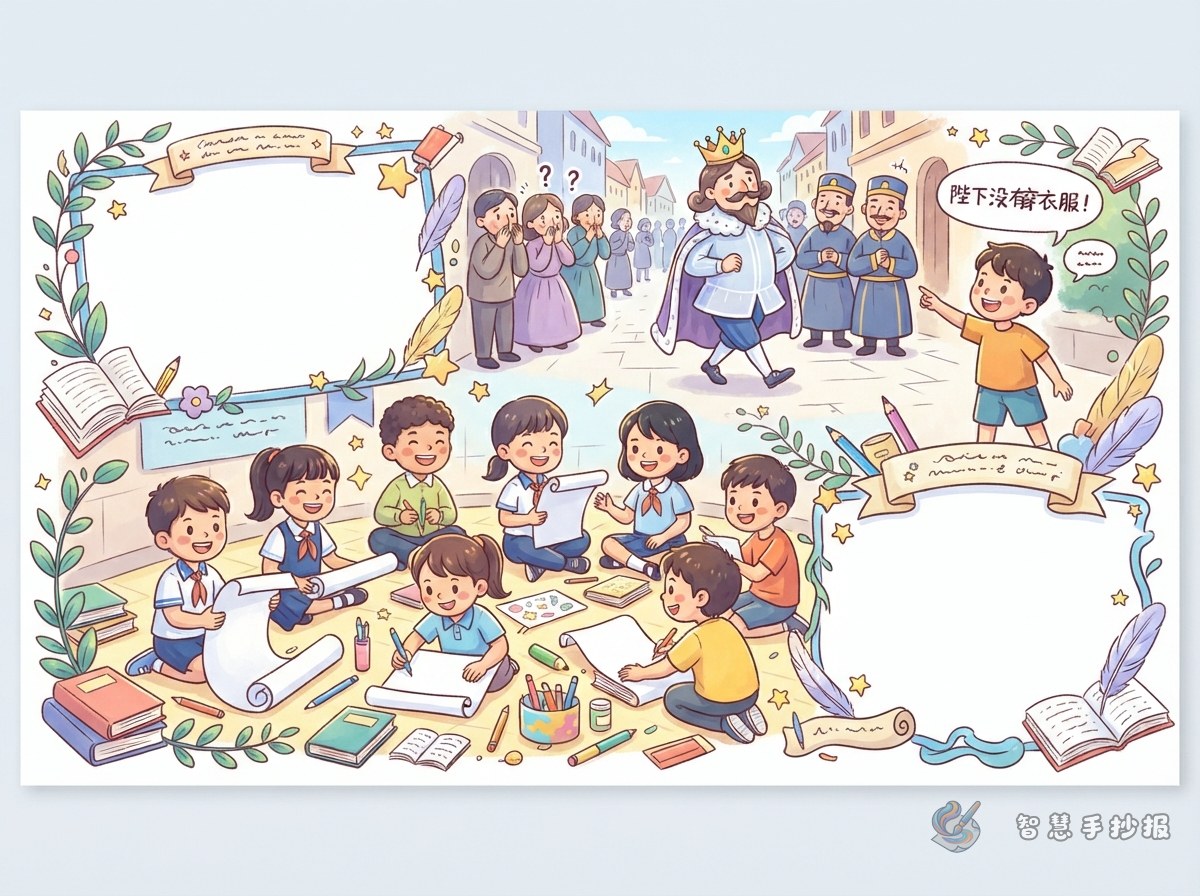
A story window, a character mirror and a truth wall are enough to fill the page without repeating the plot.
- Story window: about one hundred words on the beginning, the middle and the ending, highlighting two moments: the swindlers say only clever people can see the cloth, and the child calls out that the emperor has nothing on.
- Character mirror: three framed boxes, each with a simple face and one line. The emperor fears losing face, the ministers fear losing their positions, the child is not afraid of being laughed at. The contrast explains why honesty is difficult.
- Truth wall: two or three short lines about honesty, either written by you or marked as your own wording so the page stays original.
If space remains, add a small corner titled what I would say, where you write one sentence in your own voice.
Borrow the Fairy Tale Contrast in Your Layout
The story sets a glittering surface against a plain truth, so let the layout do the same. Use gold or deep blue scroll lines, a crown, thread spools and loom patterns around the border, then keep a clean white area in the middle for the honest words. That single contrast makes the theme visible before anyone reads a sentence.
- Title area: draw the title in decorative letters with a simple crown beside it.
- Story window: shape it like a roll of cloth, with scissors and thread in the corners.
- Character mirror: three small frames, one face and one comment in each.
- Truth wall: sticky-note shapes, slightly tilted as if just stuck on.
Limit yourself to three colours. Gold, deep blue and white space are enough, and bold lettering on headings will stand out better than heavy ornament.
Match the Depth to the Grade Level
Younger students can work mostly with drawings and short sentences, writing three or four lines for the story and a single line for the lesson. Middle grades should show the character comparison and connect the message to something that happened to them. Older students can add a question for readers to think about, such as why adults stayed silent, or a short comment on how telling the truth takes both courage and tact. Teachers can leave one blank corner for each student to add a personal thought, which keeps the class from producing identical posters.
From Rough Sketch to Finished Page
- Divide a rough sheet into three areas and note how many words each one needs.
- Write the story window first, keeping even spacing and highlighting the turning points.
- Draw the character frames and faces, then add the comments underneath.
- Decorate the title and border lightly so the writing stays readable.
- Check spelling, remaining white space and whether anything drifts away from the main message.
If planning the sections and layout takes too long, open the 智慧手抄报 WeChat mini program, pick a fairy tale template as a starting frame, and fill in your own written content. The final lettering and drawings are still done by hand, so the poster keeps your own style.