Choose a Message Beyond “Work Hard”
The story contrasts an ant that gathers food during warm weather with a cicada that spends the season singing. A strong poster can explore using time wisely, preparing ahead, and balancing duties with enjoyment. This gives students more to discuss than simply labeling one character hardworking and the other lazy.
Ready-to-Use Writing Material
Short Story Summary
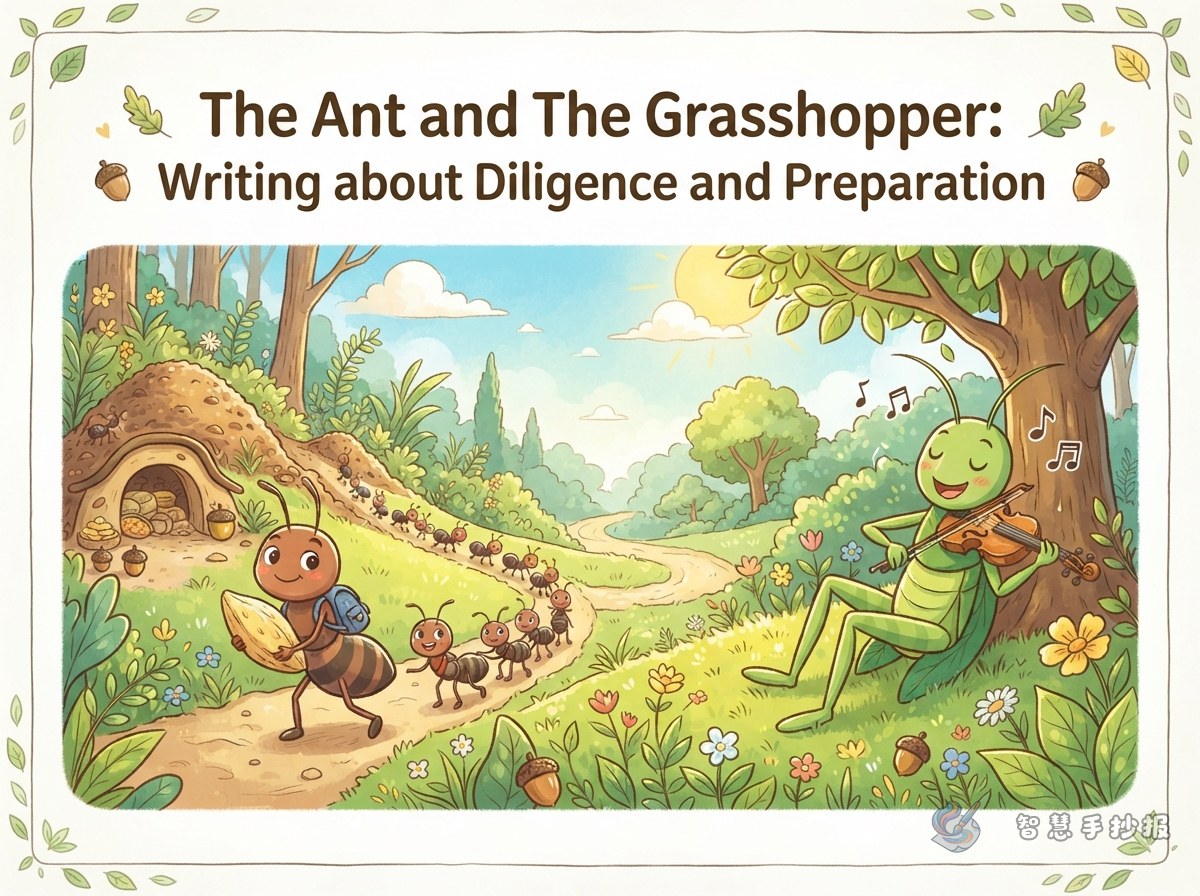
Throughout the summer, the cicada sings in the trees while the ant searches for food and carries it home. The cicada wonders why the ant does not stop to enjoy the day, but the ant continues preparing for winter. When cold weather arrives and food becomes scarce, the cicada finally understands why planning ahead matters.
The Lesson in the Fable
Rest and happiness are important, but they should not replace responsibilities. Studying regularly, organizing supplies, and completing tasks on time are like storing food for winter: each small effort prepares us for a future need. Being diligent also means knowing when to work and when to rest.
Connections to Everyday Life
- Finish homework before setting aside time for games and entertainment.
- Review lessons in stages instead of waiting until the night before a test.
- Prepare materials early and complete an assigned role in a group project.
- Learn from the ant's planning while keeping the cicada's joy in life.
Build the Page Around Two Seasons
Divide the sheet into a warm summer scene and a cold winter scene. Use green and yellow around the summer meadow, then pale blue and white around the snowy branches. A tree trunk, winding path, or simple timeline can connect the scenes and make the change in the story easy to follow.
Place the title at the top. Add “The Ant's Plan” and the beginning of the story on the summer side, then place the outcome and “What I Learned” on the winter side. A small “My Weekly Plan” section along the bottom turns the lesson into a practical activity.
Make It Read Like a Story
- Sketch the title, illustration spaces, and text sections lightly in pencil.
- Use the ant, cicada, grain, leaves, and snowflakes as accents without covering the writing.
- Keep paragraphs short and highlight only a few key phrases.
- Decorate the border with alternating grain, leaves, and music notes.
- Check the story order, spelling, and punctuation before erasing guide lines.
Finish With a Personal Reflection
A thoughtful closing could say, “I want to plan responsibly like the ant while still noticing life's happiness like the cicada. Diligence does not mean giving up rest; it means not avoiding responsibility.” After choosing the sections, students and parents can use the Smart Handwritten Newspaper WeChat Mini Program to select a layout, refine the material, and continue making the poster.