Start with a simple food-and-care storyline
A tooth-shedding poster does not need to read like a long nutrition lesson. Use a clear storyline: choose the right foods, chew well, and clean teeth afterward. Under the title, add a short line such as “Let every bite help growing teeth.” Then let the body answer three questions: which foods are friendly to teeth, which snacks should be limited, and what to do after eating. This keeps the sections connected and easy to follow.
A food traffic light makes the content easy to read
Divide foods into “eat often, eat in moderation, and eat less often.” This works better on a poster than a long paragraph.
- Green-light foods: milk, yogurt, cheese, eggs, tofu, fish, leafy greens, apples, and corn. Describe them as everyday foods that support growing teeth and gums.
- Yellow-light foods: crackers, bread, and dried fruit, which may stick to teeth. Add a reminder to rinse or brush after eating.
- Red-light reminders: hard candy, soft candy, sugary drinks, and ice cream. Avoid saying “never eat these”; write “enjoy less often and do not let them stay on teeth.”
Draw three small lights or three plates and use color to separate the groups. Keep the text to key words so the poster stays clean.
Add a sample day of meals for tooth-shedding age
A list of foods can feel empty. A sample menu makes the poster more practical.
- Breakfast: milk, an egg, whole-grain bread, and a small piece of fruit.
- Lunch: rice, tofu, leafy greens, and fish, with a reminder to chew slowly.
- Snack: yogurt or a small fruit, with fewer sticky sweets.
- Dinner: noodles, vegetables, and lean meat; rinse after the meal and brush carefully before bed.
Add a note beside the menu: “Every family eats differently, so you can adapt this to your own table.” This prevents the sample from looking like a fixed rule.
Arrange the poster in four clear zones
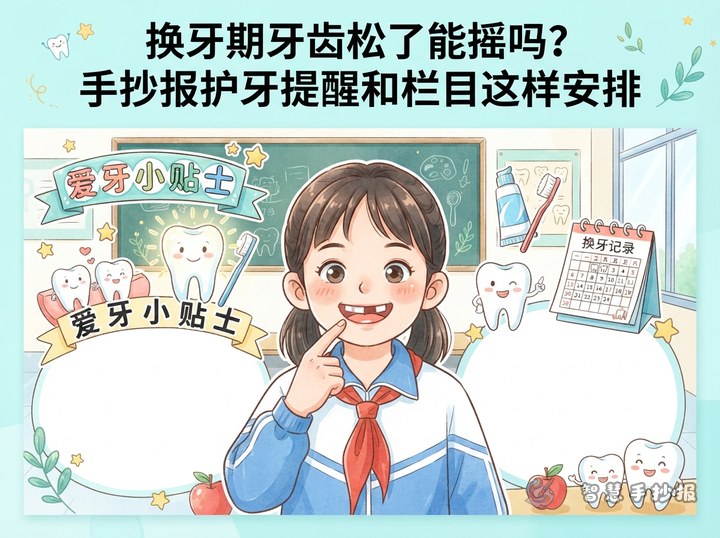
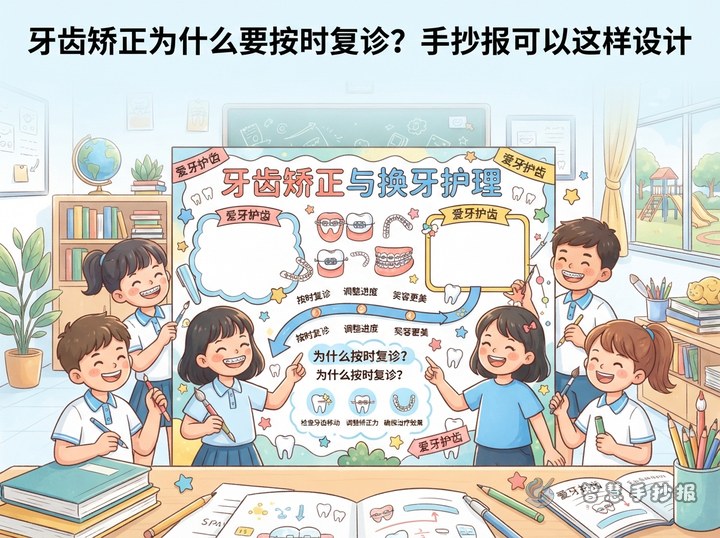
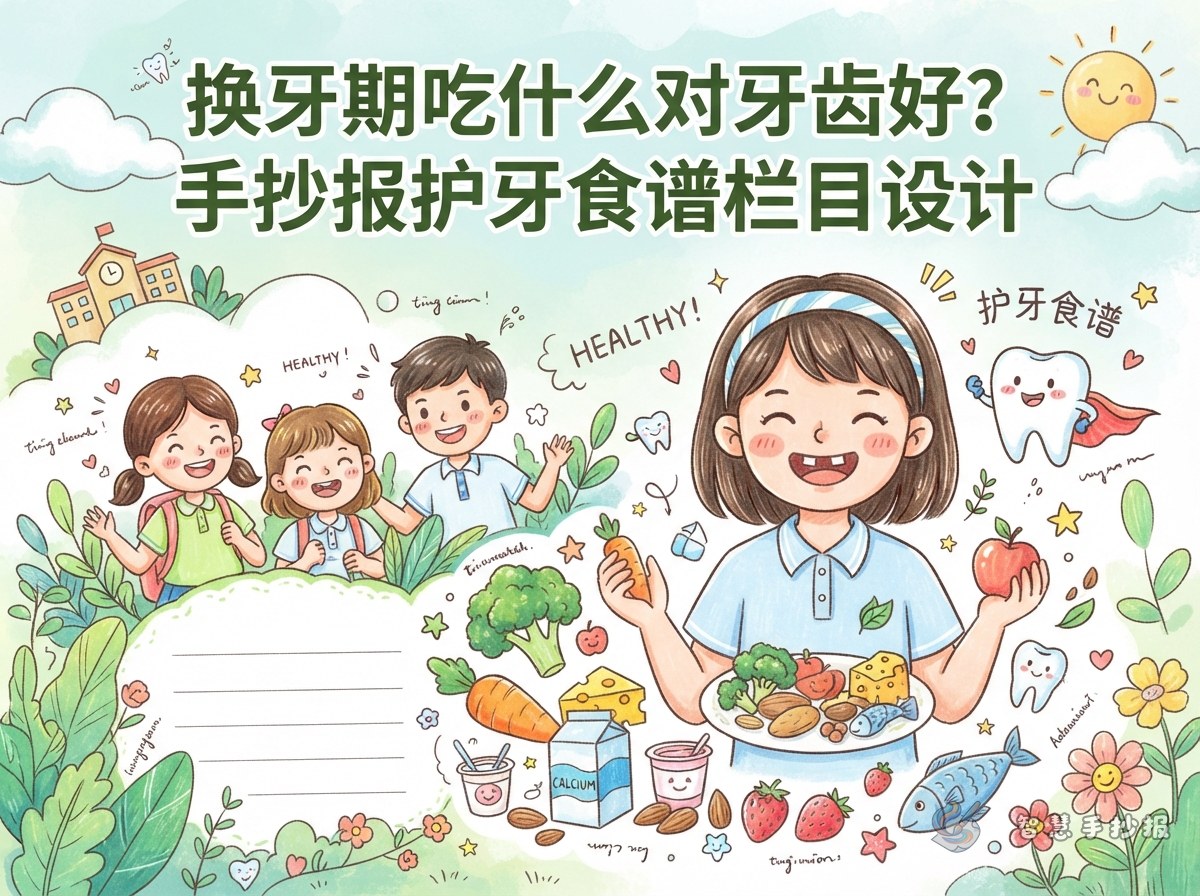
Use a title zone, a food traffic light, a sample menu, and a dental habit checklist. Put the title at the top in large letters and draw a small tooth or plate beside it. Place the food traffic light on the left and the menu on the right so readers can compare them. At the bottom, add a “brushing check-in” or “my small dental goal” box with handwritten lines. Keep borders simple and leave enough white space; horizontal text is easier to read.
If the page is large, add a small question box such as “Can I bite an apple during tooth shedding?” or “How soon after eating should I brush?” Answer each question in one or two sentences and avoid overcrowding the box.
Make headings, captions, and drawings feel like a student's work
Use lively titles such as “The Tooth-Friendly Food Battle,” “A Good Smile Starts with Good Food,” or “The Food Traffic Light for Teeth.” Write a two- or three-sentence introduction explaining why food matters, and avoid slogans that sound like an advertisement. Drawings can include teeth, plates, milk cartons, apples, toothbrushes, and smiling faces. Keep the number of drawings modest and match each one to a nearby section.
Finish with a small reminder in the corner: limit sticky sweets and sugary drinks, rinse after meals, and brush in the morning and at night. This gives the poster both knowledge and action steps. For more section ideas and layouts, continue in the WeChat mini program and complete your own poster.