Start with One Snow Saying, Not a Long List
Weather-proverb pages often turn into long lists of sayings. A snow theme works better when it grows from one main idea: good snow can support the next harvest. Put “A Heavy Snow Promises a Good Year” in the center, then use smaller boxes to explain snow amount, snow timing, and the weather after snow.
Three Sayings for Three Small Boxes
Choose three proverbs with different jobs. Each one should get a short “what I understand” note.
Box 1: How Much Snow
“A heavy snow promises a good year.” Explain it in plain words: winter snow can cover the fields like a soft blanket, and when it melts, it adds water to the soil. Write it as farming experience, not as a fixed rule.
Box 2: When the Snow Falls
“Winter snow is a treasure, spring snow is not.” This saying is told in many places. A small timeline can show the difference: winter snow may help keep soil warm and hold moisture, while spring snow may affect crops that are greening up or flowering. Add that local climate matters.
Box 3: Weather After the Snow
“Cold follows snow, warmth follows frost.” Turn this into a weather-watch box. After snow stops, notice the temperature drop, remind family members to stay warm, and record the changes. This makes the proverb part of real observation.
Turn Each Saying into a Farming Note
The farming wisdom box is the part teachers often notice. Place it in the middle or on the right side of the page.
- Insulation: snow cover acts like a loose blanket and reduces heat loss from the soil.
- Moisture: melting snow in spring adds water to the soil and can help planting and regrowth.
- Pests: low temperatures are unfriendly to some overwintering pests and germs; this is a common farming observation.
- Protection: too much snow can damage frames or block roads, so farm work still needs practical checks.
End with one sentence: “Proverbs are long-term observations, not a replacement for a weather forecast.” This gives the page a scientific attitude.
Design the Page Around a Snow Line
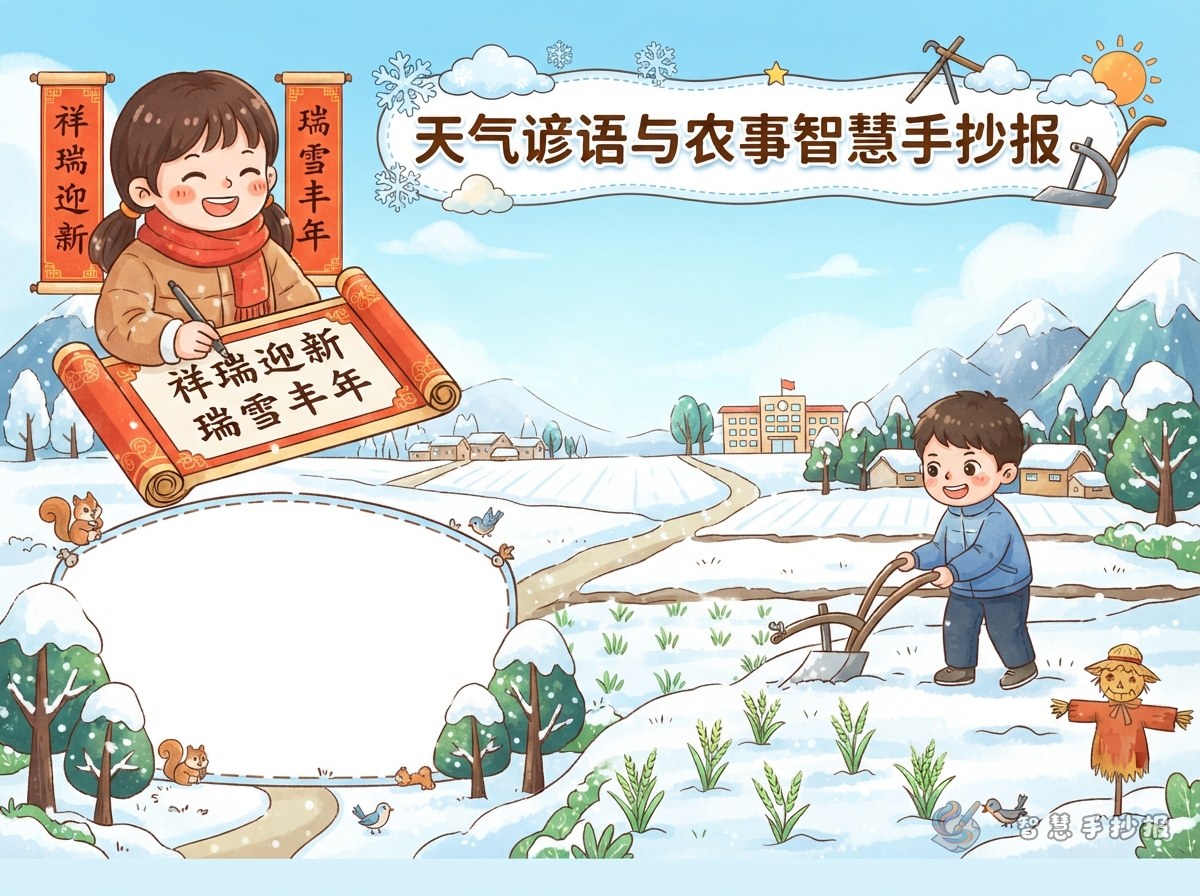
A landscape page is easy to read. Leave the top for the title, draw a wavy snow line across the middle, put the three proverbs on the left, the farming notes on the right, and an observation card at the bottom.
- Sketch the sections lightly in pencil. Give the title about one fifth of the page and keep enough line spacing in the text area.
- Use dark blue for the main title, light blue or gray for small headings, and black for body text.
- Add a simple icon to each proverb: a snowflake, a young wheat plant, a thermometer, or a water can.
- Leave a small box in the lower corner for “folk saying” or “understand with local climate.”
For a neat look, make the three proverb boxes the same size and shape.
If the Text Feels Short, Use “Notice, Explain, Act”
One proverb can become three sentences: what you notice, how it helps farm work, and what you can do. For example, “A heavy snow promises a good year” can be written as: you see thick snow in winter; snow can keep soil warm and add water; you can record the weather after the snow and remind family to stay warm. This fills a small box without turning the page into empty copying.
For more layouts, borders, and text boxes, open the Wisdom Handwritten Newspaper WeChat mini program, choose a winter theme, and add the proverbs and farming notes above.
A Quick Check Before You Finish
- Does the title show both “snow proverbs” and “farming wisdom”?
- Does every proverb have a short explanation instead of only a copied sentence?
- Are the farming notes written in clear points with a reminder about local conditions?
- Is there enough white space, and do the drawings stay away from the text?
- Does the page show the difference between a folk saying and an observation record?