Follow the Wind Across the Page
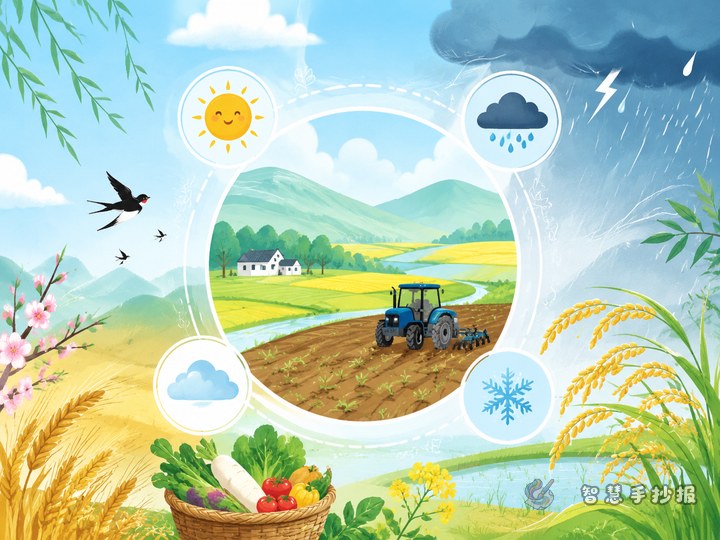
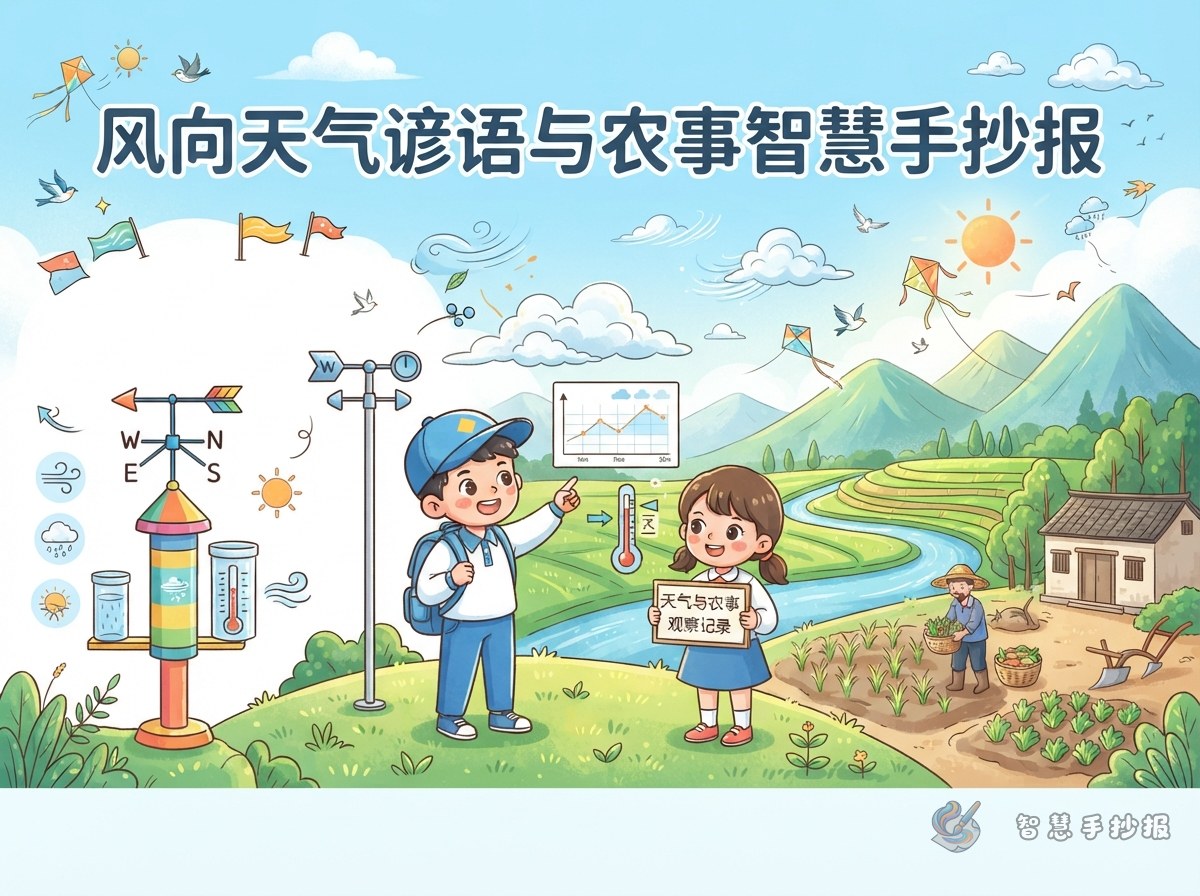
Use wind as the visual thread of the poster. A compass, a simple weather vane, bending wheat, and drifting leaves can show how wind moves across farmland. Label the four directions clearly so readers can connect each proverb with an observable weather sign.
Proverbs to Explain, Not Just Copy
Weather proverbs grew from repeated local observations. They can be useful clues, but they vary by place, season, and landscape. Choose a few short sayings and add a plain-language note beside each one.
- South winds feel warm; north winds bring cold: A change in wind direction may accompany a change in air temperature.
- Spring winds blow and grasses grow: Warmer spring conditions support new growth, although planting decisions also depend on soil and local forecasts.
- Different winds carry different moisture: In some regions, wind direction can offer clues about humid or dry weather.
- Strong winds call for field checks: Farmers may inspect young plants, supports, covers, and drying crops when wind increases.
Add a small “local observation” label to make it clear that a proverb is not a guaranteed forecast.
Create a Mini Wind Journal
A hands-on observation box makes the poster more interesting and scientific.
- Watch a flag, leaves, or a weather vane to estimate wind direction.
- Record temperature, cloud cover, and rainfall for the day.
- Compare the result with one selected proverb.
- Mark whether the saying matched the observation and note possible local influences.
Connect Wind with Farm Work
Before Planting
Wind strength can affect sowing, covering seeds, and soil moisture. Farmers consider current conditions and forecasts before scheduling fieldwork.
While Crops Grow
Gentle airflow may improve field conditions, while strong winds can damage leaves or flatten young plants. Supports and protective covers may need checking.
At Harvest
Stable, dry weather is often preferred for harvesting and drying crops. A proverb may prompt observation, but official forecasts and local agricultural guidance should inform decisions.
A Clear Layout with Movement
Place the title and compass in the upper left, arrange three or four proverb boxes through the center, and put the wind journal on the right. Reserve the lower band for farming tips. Sky blue, leaf green, and wheat yellow create a bright palette. Keep wind lines away from the text so every section remains easy to read.
After organizing the material, students and parents can continue in the Smart Handwritten Newspaper WeChat Mini Program to choose a layout, adjust sections, and prepare a poster for printing or hand copying.