Build the page around a simple chain
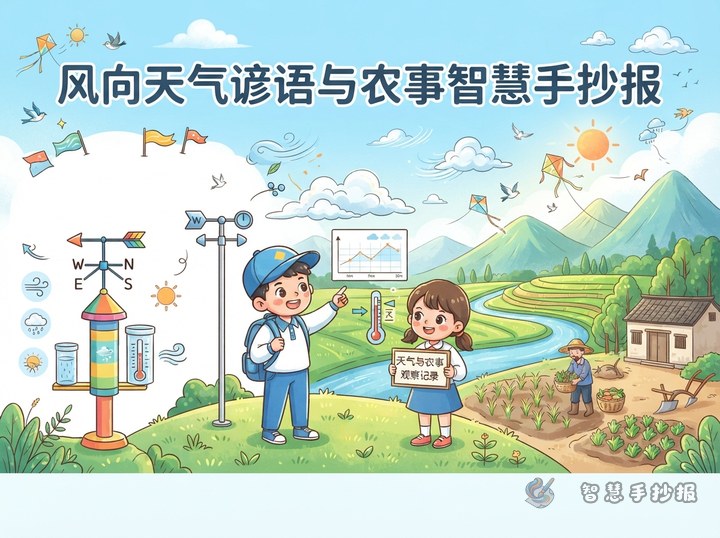
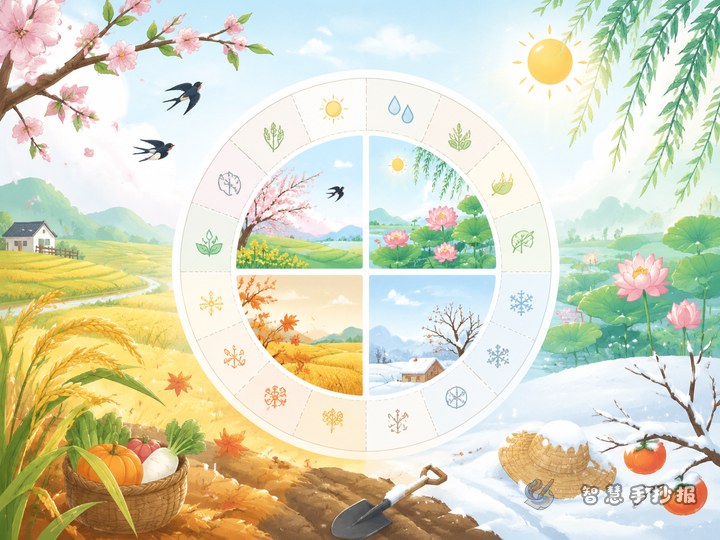
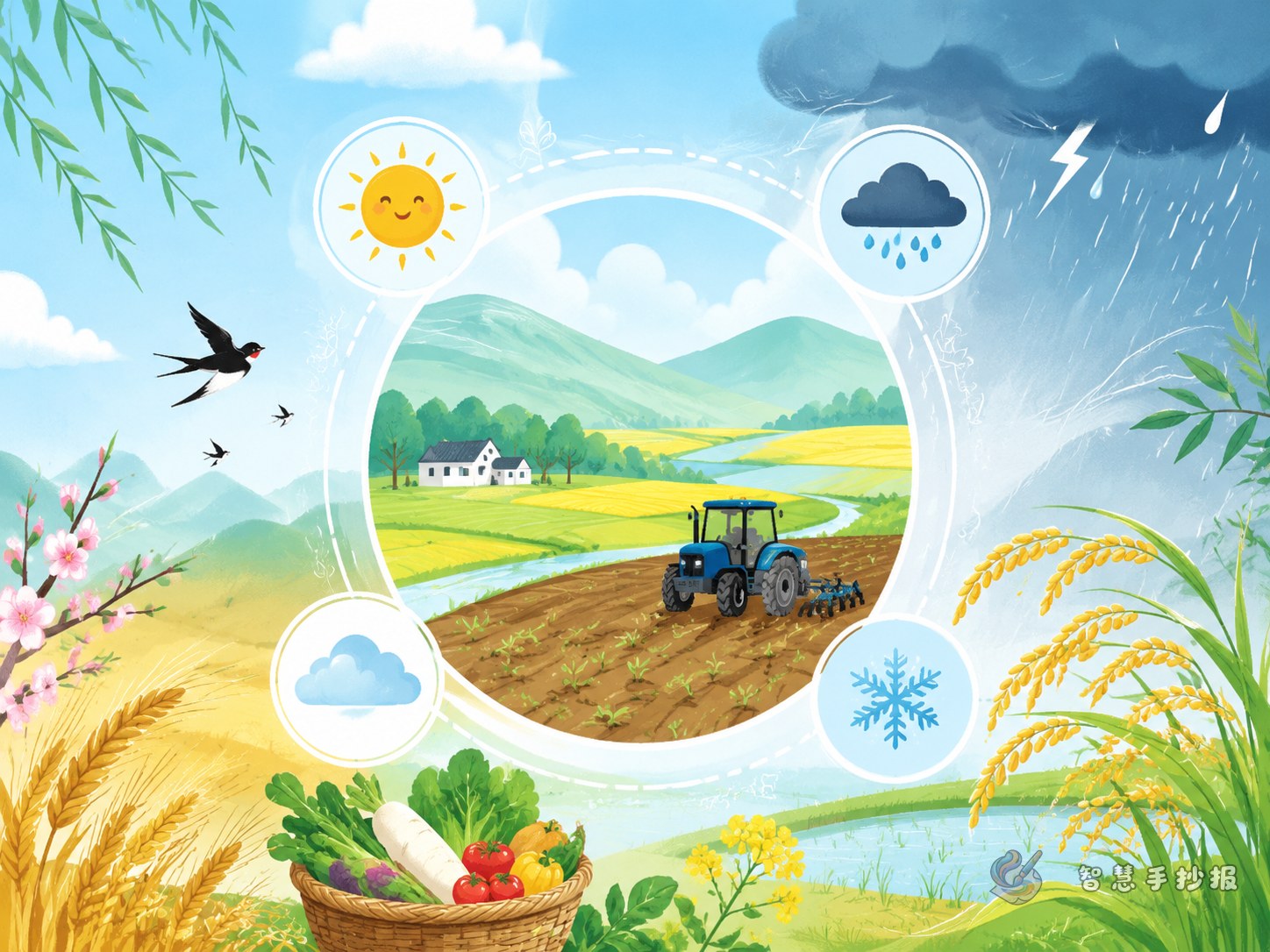
Instead of listing weather proverbs one after another, organize the handwritten newspaper around one question: what did people observe in the sky, and how did that observation affect farm work? Draw a circular “farm planning wheel” in the center and divide it into three parts: observing the weather, understanding the sign, and choosing an action. Connect several proverb cards around it.
- Observe: include easy-to-draw signs such as dawn glow, evening glow, sun halos, and moon halos.
- Explain: write a related traditional proverb and label it as folk experience.
- Act: connect the sign with simple tasks such as drying crops, checking drainage, weeding, or observing plants.
Turn each proverb into a farm-action card
Card one: glow in the sky
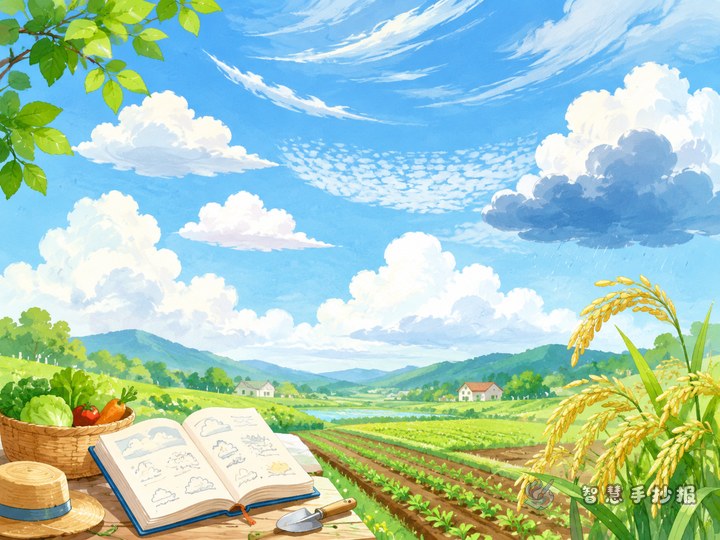
Use the proverb “A red sky in the morning is a sailor’s warning; a red sky at night is a sailor’s delight.” Draw the sun, clouds, and a field beside it. Explain in simple language that people traditionally watched the color of the sky when thinking about weather changes. The farm-work note can say: check the forecast before going out, arrange drying on a clear day, and organize tools early when rain may be coming.
Card two: rings around the sun or moon
Another suitable line is “A halo around the sun brings rain, a halo around the moon brings wind.” Draw a glowing ring around the sun and moon. Add a small note saying that this is an observation-based tradition rather than a guaranteed forecast, and that local weather information should also be consulted.
Card three: connect signs with preparation
Use small icons to show the actions: clear weather for drying seeds and grain, possible rain for checking ditches and preparing covers, and stable weather for sowing, weeding, and checking crops. Young students do not need complicated agricultural facts. The key idea is “observe first, then prepare.”
Short text ideas for the newspaper
Opening paragraph: Weather changes from day to day, so farmers arrange their work by watching the sky, rain, and moisture. Weather proverbs are records of observation collected through everyday labor. They remind us to notice nature and prepare before taking action.
- Wisdom line: Watch the sky, plan ahead, and work with the weather.
- Observation corner: Dawn glow, halos, and clouds can all become clues in a weather journal.
- Farm-work corner: Dry crops in suitable weather, check drainage before rain, and use calm weather for sowing, weeding, and field observation.
- Reminder: Proverbs are traditional experience, not a replacement for an accurate local forecast.
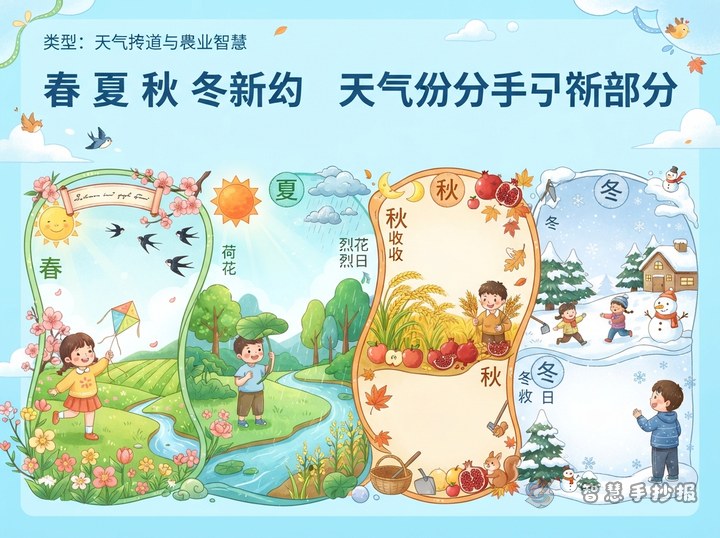
Make the layout look like a field-planning map
- Write the title at the top and decorate it with a sun, fields, tools, and a simple cloud border.
- Place the three-step flow “weather sign—proverb—farm action” in the center and connect the steps with arrows.
- Put two or three action cards on both sides. Each card should contain only one proverb and one related action.
- Add a “My Weather Notes” section at the bottom with several date boxes for recording observations.
Sky blue, field green, and sunlight yellow make a fresh color scheme, while a little orange can highlight the proverb headings. Sketch the wheel and cards in pencil first, then copy the text, outline the drawings, and add color. After the draft is ready, you can use the WeChat mini program “智慧手抄报” to further organize the layout and make the sections work together.
A final reminder for accurate expression
Weather proverbs may vary from one region to another, and the same saying may be used differently in different places. The focus of the newspaper should therefore be on observing nature, respecting experience, and preparing sensibly—not on claiming that every proverb is always correct. Keep sentences short and let the illustrations support the sections so the traditional wisdom remains clear and easy to read.