Why Tea Seating Etiquette Deserves Its Own Column
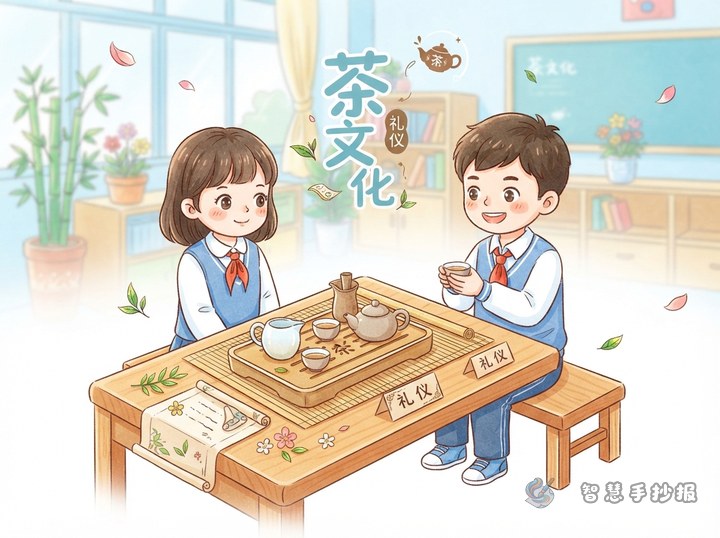
Most tea culture posters list tea types, tea tools and brewing steps, but the question of where everyone sits is usually left out. Seating is actually the easiest part of tea etiquette to draw: one round table seen from above, a few small cups and a single arrow can show who sits where and who is served first. It works as a stand-alone column and fits the theme of etiquette perfectly.
Seating is also about respect. Once that idea is on the page, the whole poster has a centre instead of being a list of names.
Drawing a Bird's-Eye View of the Round Table
Keep it simple: a circle, a few seats and numbers. Use this order.
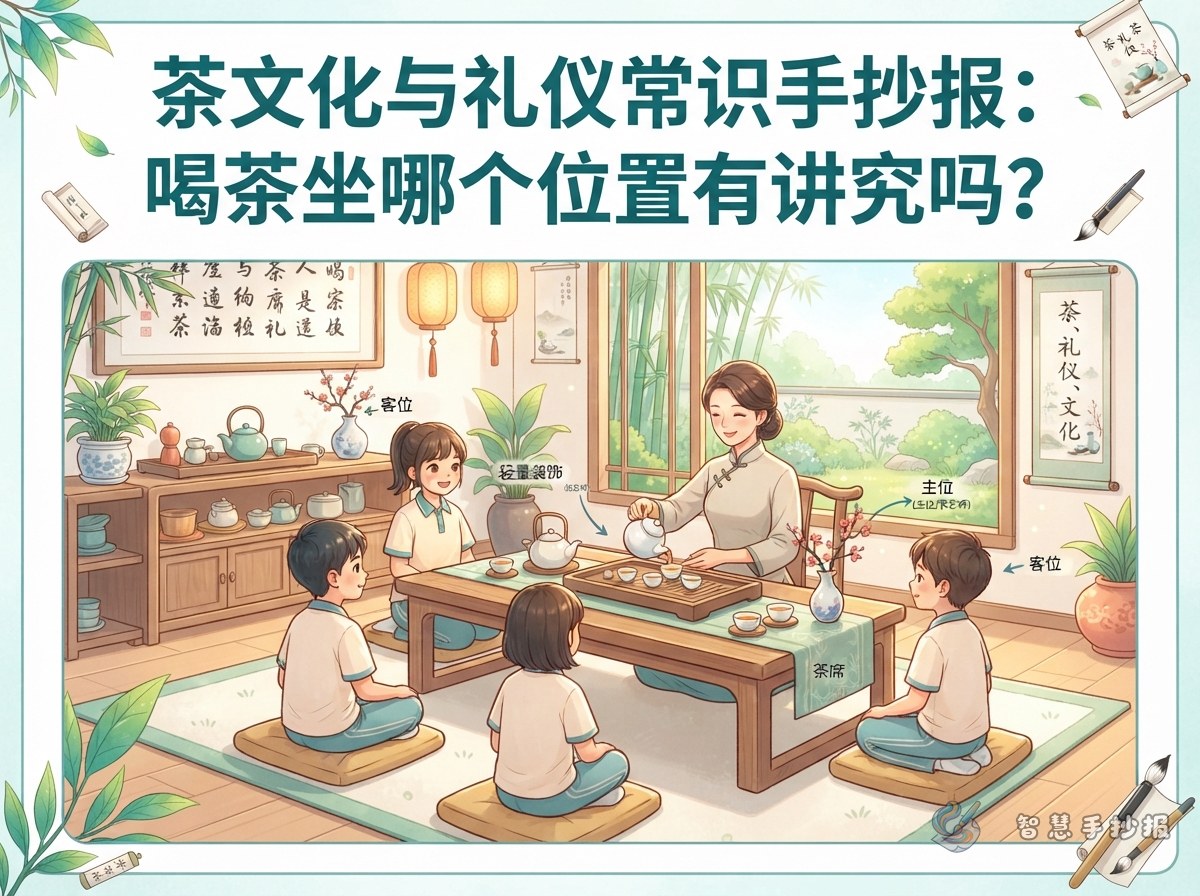
The seat for the guest of honour
The seat on the host's right, facing the door, or with the best view is normally kept for the oldest or most honoured guest. Label it clearly on the poster.
The host's seat
The host sits near the kettle or on the inner side of the table, so that pouring tea does not disturb anyone.
The other seats
Everyone else sits in order of age or closeness, with younger family members nearer the door so that they can pass things easily. Number the seats 1, 2, 3 and the drawing explains itself.
Short Lines Ready to Copy
- Offer the best seat first.
- Serve the guest of honour first; refill for guests before yourself.
- Younger people sit after the elders.
- The host sits near the water, so no one is disturbed.
- A cup of tea also measures good manners.
Keep each line short and even. Short sentences look better than a long paragraph, and the blank space helps the layout breathe.
Balancing the Columns and the Layout
- Put the seating diagram on the left, about one third of the page.
- Write “Seating Tips” at the top right and leave a small box for “Polite Lines” at the bottom right.
- Add small teapots, leaves and cups around the edges, but never over the text.
- Use a cream background with tea green and ochre as the only two accent colours.
Give the columns interesting names such as “A Seat of Courtesy” or “The First Seat Goes to the Guest” instead of a plain “Seating Etiquette”.
Details That Are Easy to Get Wrong
- The host's seat is not the most honoured one; the host is there to serve.
- Do not draw seats without a direction arrow; the arrow shows the order of pouring.
- Avoid words like “must” and “never”. Tea etiquette is about respect and consideration, not rigid rules.
If you want the layout to come together faster, open the WeChat mini program “Smart Handwritten Newspaper” (智慧手抄报), pick a tea culture template, and drop the seating diagram and short lines into it.