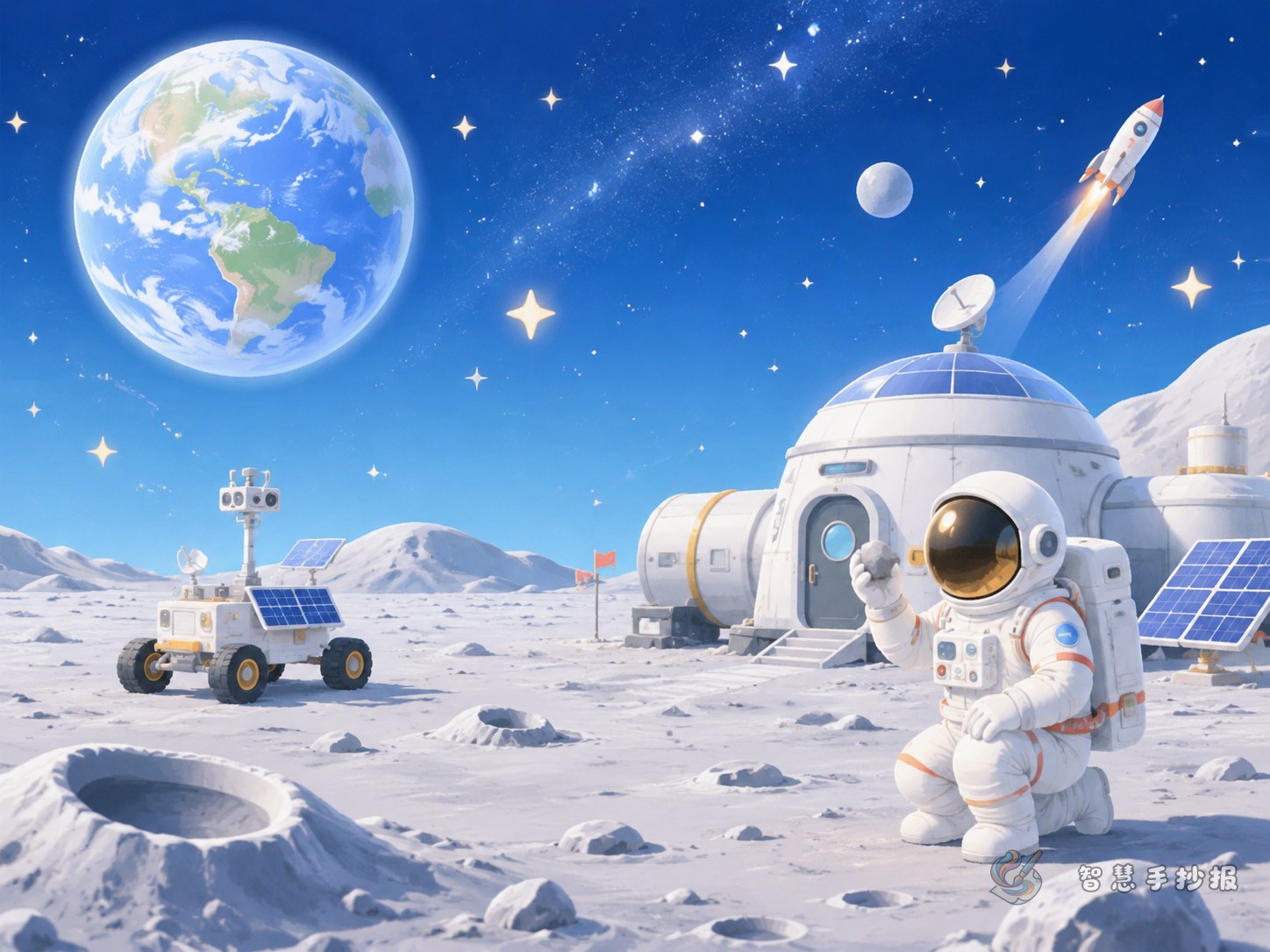
Start with the big question
This topic works best when the title itself asks something children already wonder about. You can begin with one clear sentence: People cannot live on the moon like they live on Earth yet, but future lunar research bases may be possible. That gives a direct answer and leads naturally into the rest of the page.
Main facts to include on the page
- Moon conditions: no breathable air, huge temperature differences, and a surface covered with dust and rocks.
- Survival challenges: no ready food supply, little available water, and no natural protection from radiation.
- Astronaut support: spacesuits, oxygen, water, food, communication tools, and safe shelters are all necessary.
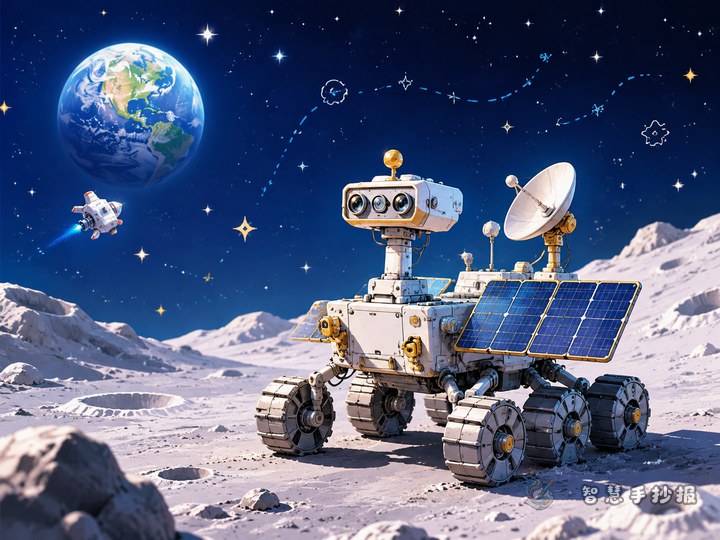
- Future possibilities: scientists may build lunar bases for research, observation, and technology testing.
These points are perfect for short fact boxes because they are easy for elementary students to copy and understand.
Short writing materials students can use
Opening paragraph
The moon is one of the closest celestial bodies to Earth. Humans have already landed there, but living on the moon for a long time is still very difficult. Scientists must solve problems such as air, water, temperature, and safety before that dream can come true.
Quick fact lines
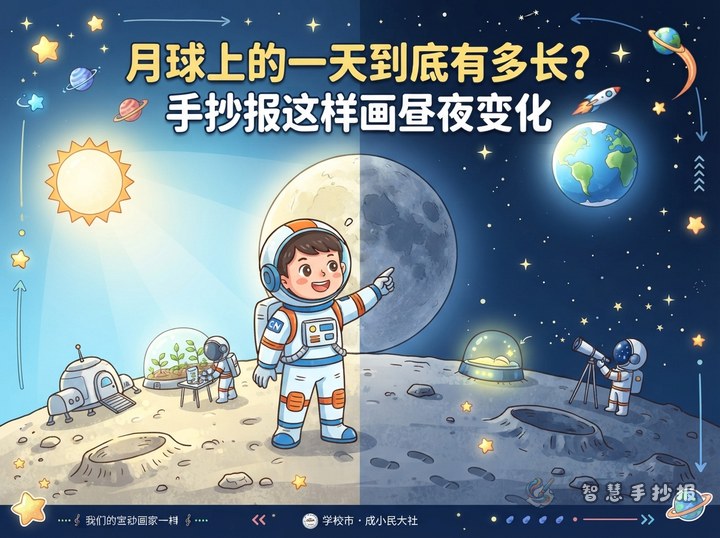
- A day and a night on the moon are both very long.
- The moon has weaker gravity than Earth.
- Astronauts must wear spacesuits when working outside.
- Future moon bases may work like scientific laboratories.
Ending sentence
Exploring the moon shows human courage and scientific progress. Learning about the moon today may inspire the explorers of tomorrow.
Try a question-led layout
Instead of dividing the page into equal boxes, arrange the content like a journey from question to answer. Put the main title at the top, then place “What is the moon like?” on the left, “How do astronauts survive?” on the right, and “What might future moon bases look like?” at the bottom. This gives the page a clear reading flow.
- Title area: draw the moon, stars, or a rocket with bold lettering.
- Section one: explain the moon environment in short paragraphs.
- Section two: introduce astronaut gear with small icons.
- Section three: imagine a future lunar base with a creative border.
- Corner notes: add a “Did you know?” box for fun facts.
Colors and small illustrations
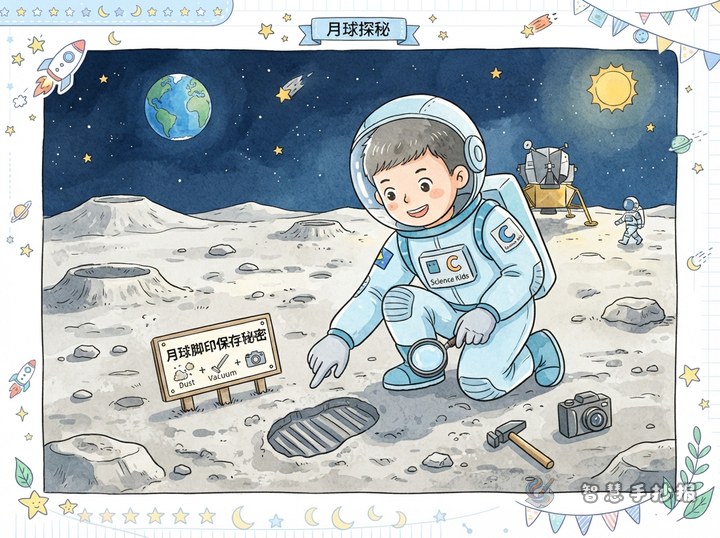
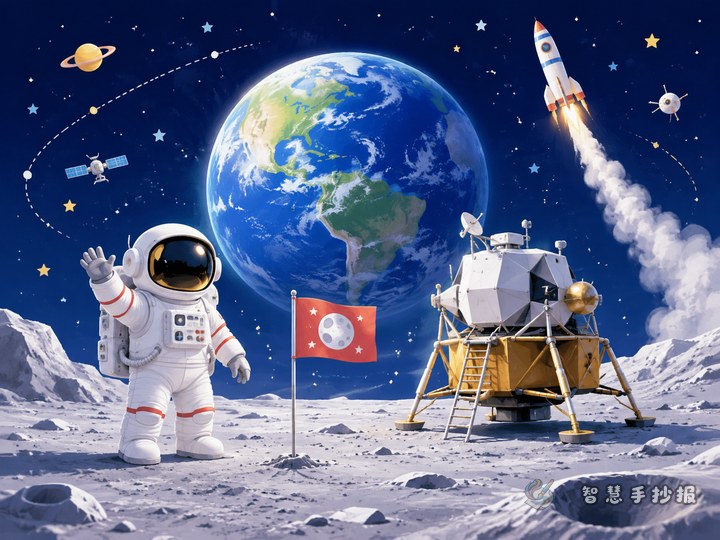
Use dark blue, silver gray, white, and pale yellow to match the feeling of space. Simple drawings are enough: a full moon, footprints, an astronaut, a flag, or a moon habitat. A border of stars or orbit lines can make the whole page feel connected.
If the page still feels empty
- If I went to the moon: write one or two imaginative sentences.
- A day in an astronaut's life: include eating, experiments, walking, and resting.
- Questions I still have: for example, “Can plants grow on the moon?” or “Does the moon have weather?”
If you want to keep improving the layout or quickly turn these ideas into a cleaner handwritten newspaper, you can continue in the Zhihui Handwritten Newspaper WeChat mini program.