Choose a warm theme instead of a harsh one
If the whole poster only says “fight bullying,” it may feel too serious. A better school display idea is to center the message on kindness, respect, and peaceful communication, then naturally include anti-bullying guidance. Titles such as “Kindness Starts With Us,” “A Friendly Classroom,” or “Speak Nicely, Get Along Happily” feel more welcoming.
You can decorate the title area with smiling faces, handshakes, hearts, books, or rainbow elements to create a positive look that fits classroom walls and campus boards.
Four sections are enough to make the poster complete
Section 1: Our kindness promises
- Say hello and speak politely.
- Do not give hurtful nicknames.
- Do not laugh at others or spread mean words.
- Offer help when classmates need it.
- Handle misunderstandings calmly.
Section 2: Polite phrases to use every day
- “Can I help you?”
- “I’m sorry. I should have been more patient.”
- “Thank you for reminding me.”
- “Let’s finish it together.”
- “Don’t worry. I’ll go to the teacher with you.”
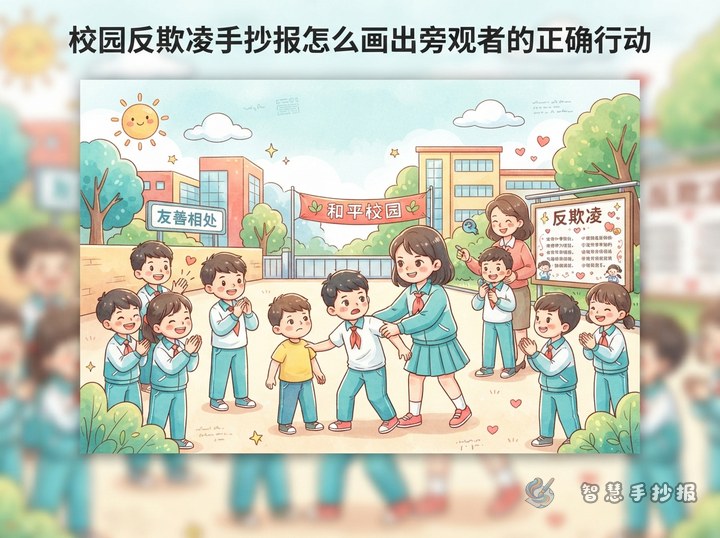
Section 3: What to do when you see bullying
- Protect yourself first and stay calm.
- Comfort the classmate who is being hurt.
- Tell a teacher or parent as soon as possible.
- Do not watch, cheer, or spread the situation.
Section 4: A short story about kindness
Write a few sentences about lending stationery, helping a new student, or cheering up a sad classmate. A short real-life scene makes the poster feel sincere and memorable.
Ready-to-use writing materials
Theme words: kindness, respect, inclusion, caring, peaceful campus.
Short lines: One kind word can warm a heart. A small act of help can make a big difference. A happier campus begins with respectful speech and caring actions.
Reminder: If a student feels afraid, sad, or targeted, they should not keep it to themselves. Asking teachers or parents for help is a smart and brave way to protect themselves.
Layout ideas that are neat and easy to read
For a horizontal page, place the title at the top center, with “kindness promises” on the left and “polite phrases” on the right. Put “what to do about bullying” and the “kindness story” at the bottom. This creates a natural reading order.
For a vertical page, use a large center title with four content boxes around it. Soft colors like light blue, green, yellow, and pink can separate each section without making the page look messy. Keep enough blank space so the key points stand out.
Small details that improve the final result
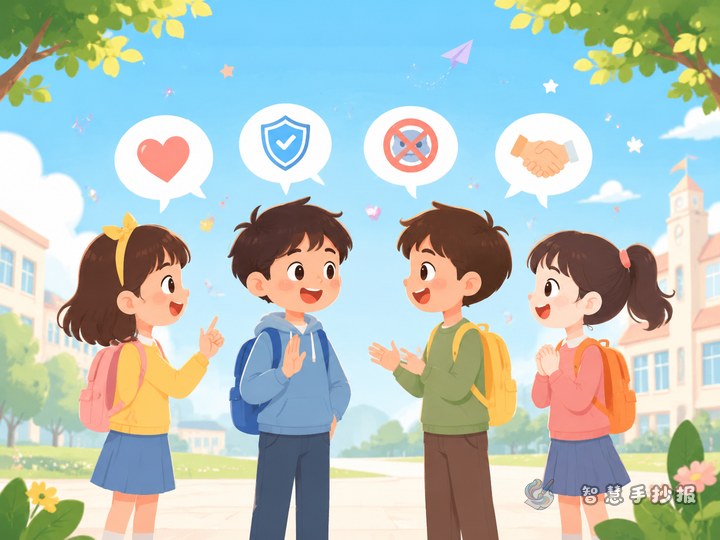
- Use simple borders such as stars, flowers, speech bubbles, or children holding hands.
- Make the main title larger and the section text neat and balanced.
- Highlight words like “respect,” “no teasing,” and “ask for help.”
- Choose bright and gentle colors instead of dark or crowded combinations.
After drafting the content, you can continue polishing the layout, color blocks, and text arrangement in the Smart Handwritten Newspaper WeChat mini program to make the poster more display-ready.