Why myths work so well for this poster
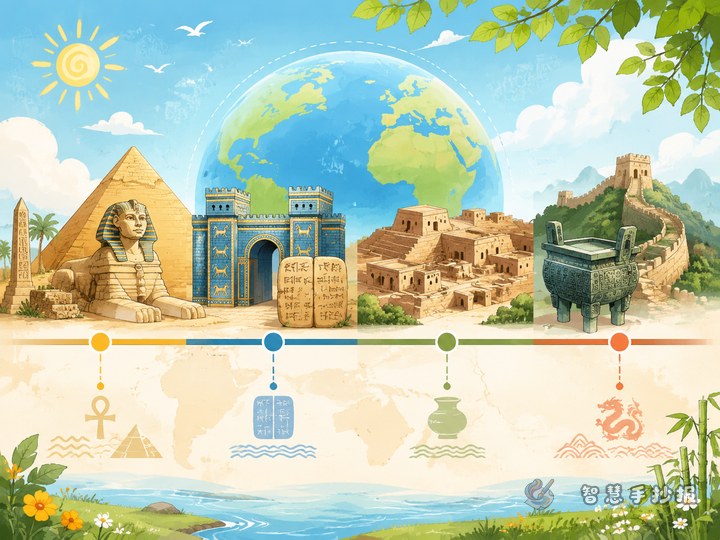
Ancient history is full of dates and dynasties, and a poster built only from those turns into a list. Myths give you characters, action and pictures. A child can retell a myth after one reading and can draw it without much help. Myths also reveal what each civilization cared about: Egypt looked to the sun and the afterlife, Mesopotamia told stories of floods and heroes, India imagined the beginning of the world, and China told tales of mending the sky and taming rivers. One story can carry one civilization.
One reliable story from each civilization
The test for choosing is simple: the child understands it, and it can be drawn.
Egypt: Ra and Osiris
The sun god Ra sails across the sky by day and travels the underworld by night before rising again. Write: “Egyptians pictured the sun dying and returning each day, so they painted sun discs on tomb walls.”
Mesopotamia: Gilgamesh
Gilgamesh is the king of Uruk, and his story survives on clay tablets. Write: “This tale was pressed into clay with wedge-shaped marks, showing that long stories were written down very early here.”
India: the churning of the ocean and Ganesha
Gods and demons churn the ocean to bring up treasures, while Ganesha with his elephant head stands for wisdom and clearing obstacles. Write: “Elephants were seen as lucky animals, so the god of wisdom was given an elephant head.”
China: Nuwa and Yu the Great
Nuwa melts stones to repair the sky, and Yu channels floodwater to the sea. Write: “Many Chinese myths are about water, because early communities lived beside rivers and faced floods.”
Turning a story into three short lines
- Plot: who did what, in one sentence, with no extra detail.
- Background: which civilization told it, how it was recorded, and how it connects to daily life there.
- Takeaway: what a reader today can take from it, such as courage, cleverness or respect for nature.
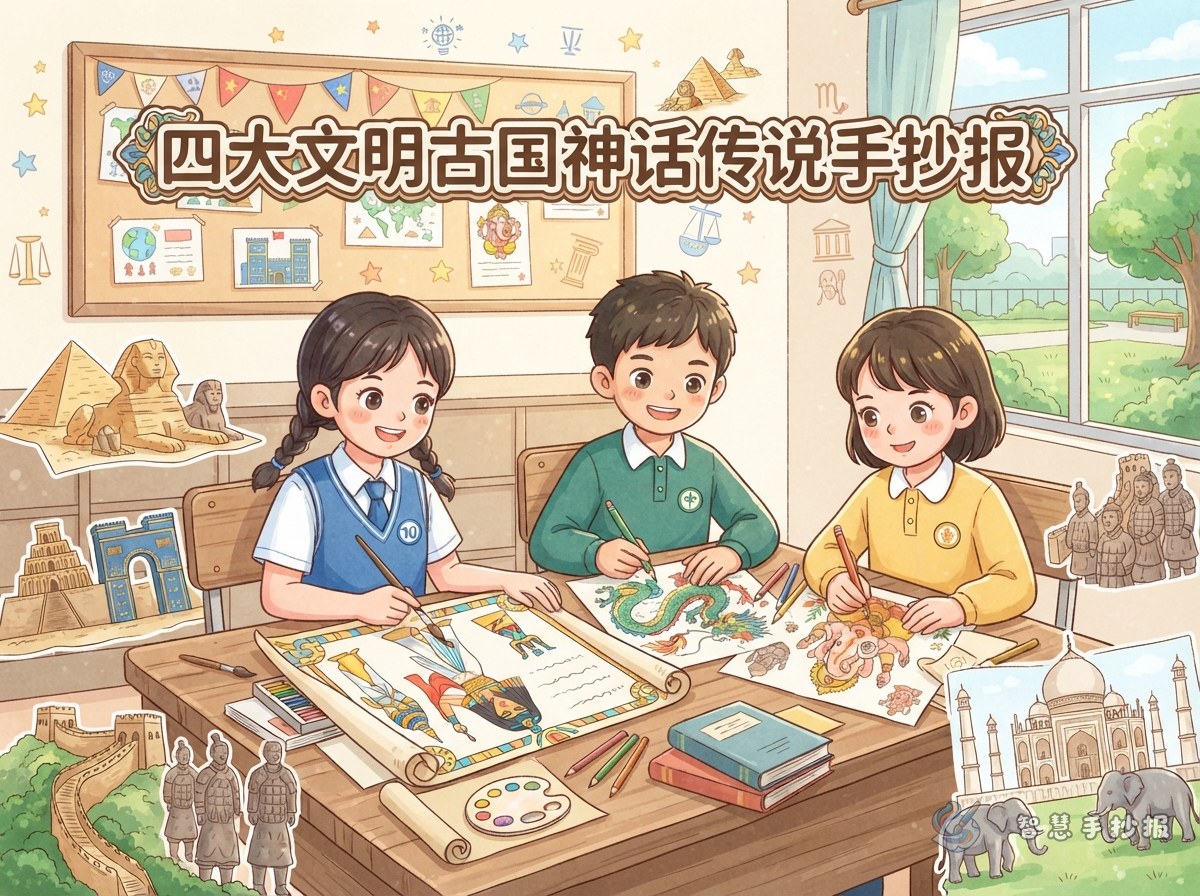
Three lines total about sixty to eighty characters, so four stories carry the main text and still leave space for a title and drawings.
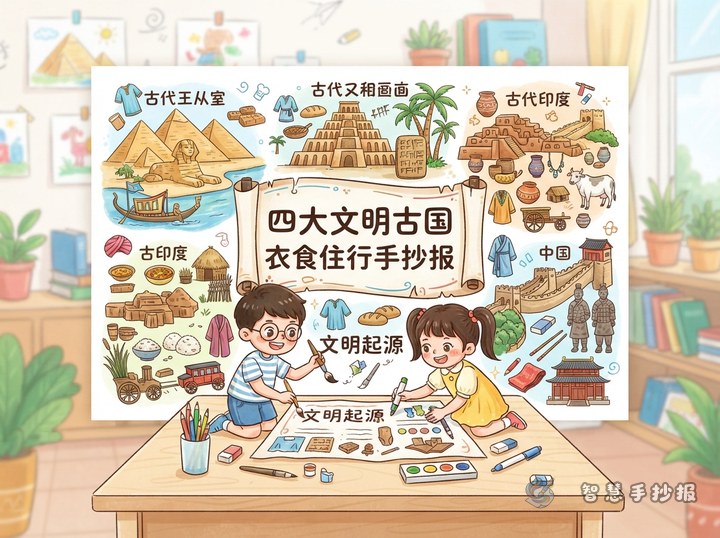
A layout that holds together: center image, four corner cards
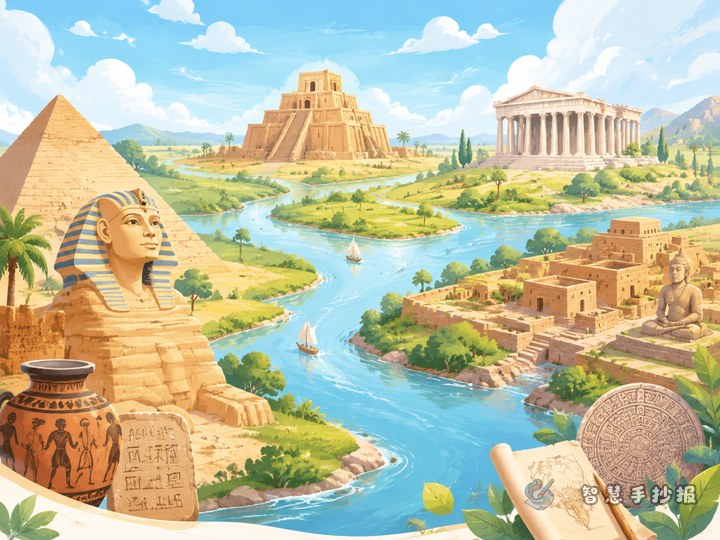
- Center: a river or a simplified map marking where the four civilizations were.
- Four corners: one story card each, with three lines of text and one small symbol.
- Top: a large title and a subtitle such as “Knowing four old civilizations through their myths.”
- Bottom box: a short note like “Myth is not history” or “The story I want to know more about.”
If vertical columns suit the child better, divide the sheet into four strips, each with a symbol, a story name and three lines from top to bottom.
Colors, symbols and mistakes to avoid
Give each civilization one main color so the sheet stays calm: sand yellow and deep blue for Egypt, earth yellow and brick red for Mesopotamia, ochre and peacock green for India, ink black and vermilion for China. Use one outline weight for every drawing. Then watch for four common slips: treating myth as fact, squeezing three or four stories into one civilization, drawing pictures with no background text, and stating exact dates that are uncertain. Finish the draft, then open the Smart Handwritten Poster mini program in WeChat to arrange the boxes and copy the final text neatly.