Start with one clear focus
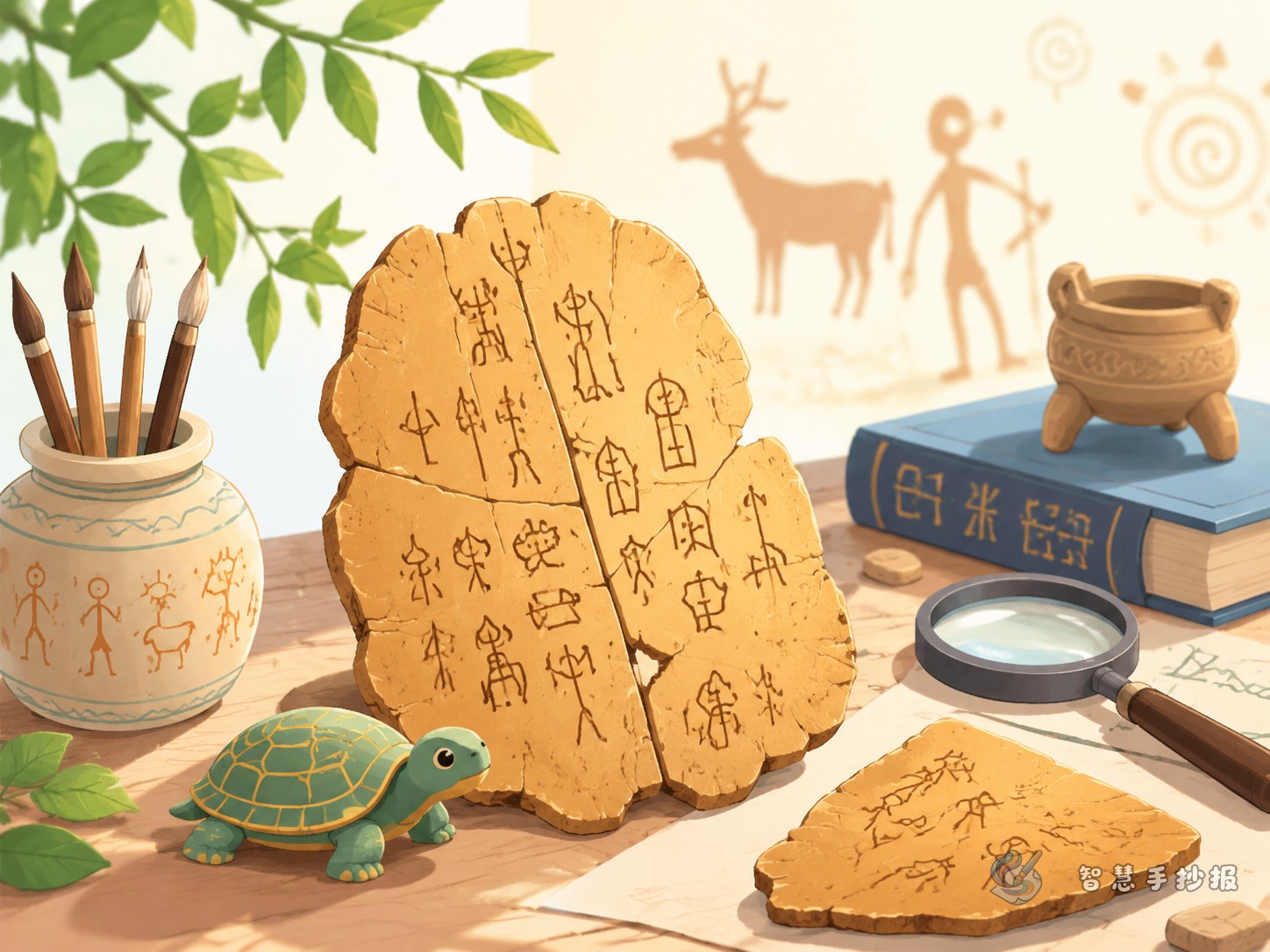
An oracle bone script handwritten newspaper becomes much easier when the theme is narrowed to one main idea: what the earliest Chinese characters looked like. Instead of trying to cover too much history, guide readers to understand what oracle bone script is, why it matters, and how some ancient forms connect to modern characters.
For younger students, a simple and organized page usually works better than a page filled with too many facts.
Good sections to include on the page
A short facts box
Write a brief explanation: oracle bone script is one of the earliest forms of Chinese writing and was carved on turtle shells and animal bones. Keep the wording short and easy to copy onto the page.
A character comparison area
This can be the highlight of the whole poster. Choose a few easy examples such as sun, moon, mountain, water, person, wood, and field. Show how the old form connects to the modern form and add one short note for each.
- Sun: an early shape that suggests the sun
- Moon: a form that resembles the moon
- Mountain: a shape like several peaks
- Water: lines suggesting flowing water
- Person: a simple human-like figure
A personal discovery section
This part can include student-friendly reflections such as “Many early characters look like pictures” or “Ancient people used simple lines to record the world around them.” It gives the project a more thoughtful ending.
Short text materials you can use
- Oracle bone script is an important source of Chinese character culture.
- Many early Chinese characters looked like drawings.
- Chinese characters changed over a long period of time.
- Learning oracle bone script helps us appreciate the beauty of Chinese characters.
- Chinese writing carries both meaning and culture.
These short lines are useful for side boxes, captions, or the closing section of the handwritten newspaper.
Try an ancient exhibit style for the layout
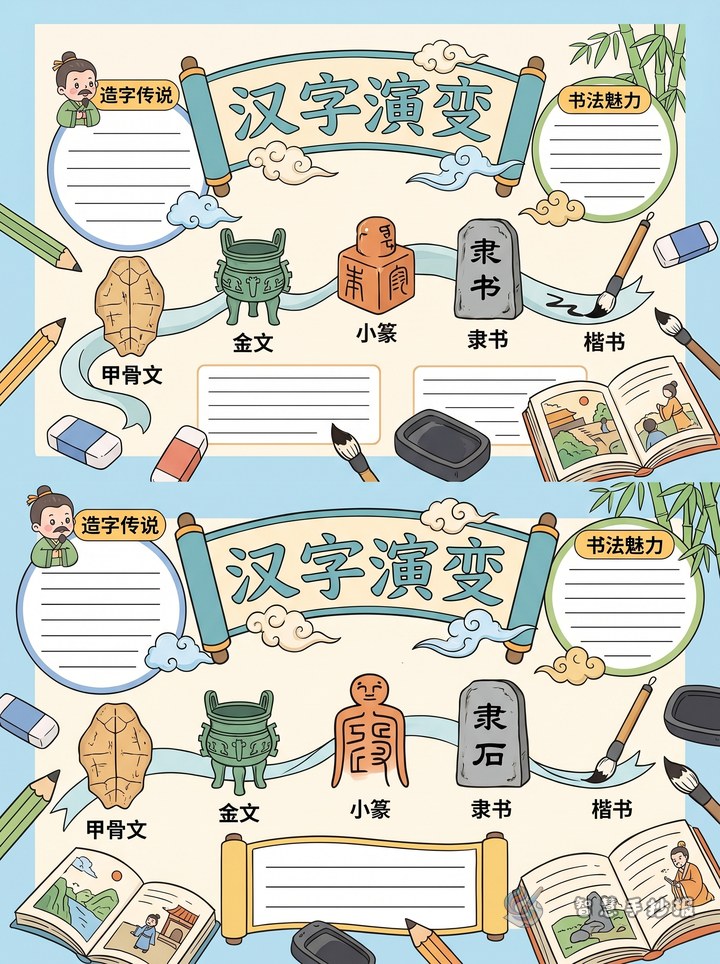
This theme looks great with a design inspired by old artifacts or museum display boards. Use a bold title at the top, place the character comparison area in the middle, and add smaller knowledge sections on the sides. The bottom can be used for reflections or a short summary.
- Top: title and one introductory line
- Center: oracle bone character display
- Side area: basic facts and explanations
- Bottom: what I learned or what I found interesting
Colors such as brown, yellow, black, and dark red can create a natural ancient feeling. Small decorative elements like shell patterns, carved marks, or scroll-style lines can also match the topic.
Practical tips for making it neat
Leave enough space for each character comparison so the shapes are easy to see. Make the title larger than the body text, and avoid packing too many words into one section. If time is limited, prepare four small sections first and then add two to four sentences to each one.
If you want more layout options and ready-made inspiration, you can continue your design in the Zhihui Shouchaobao WeChat mini program.