Turn the Poster into an Ancient Writing Detective File
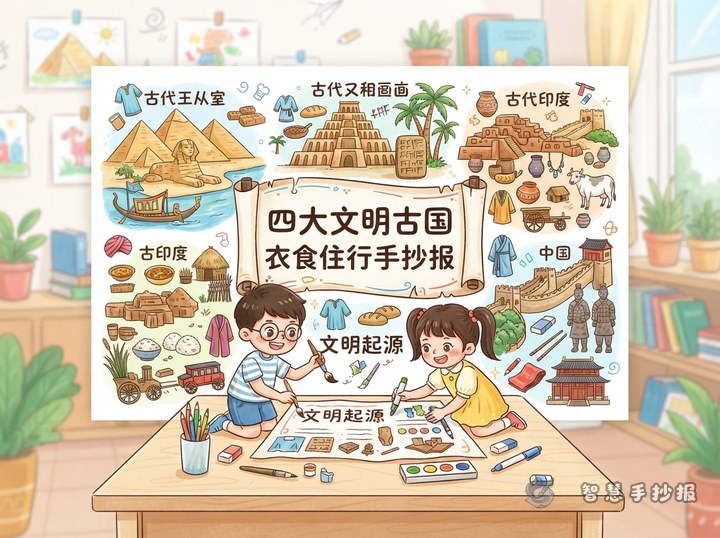
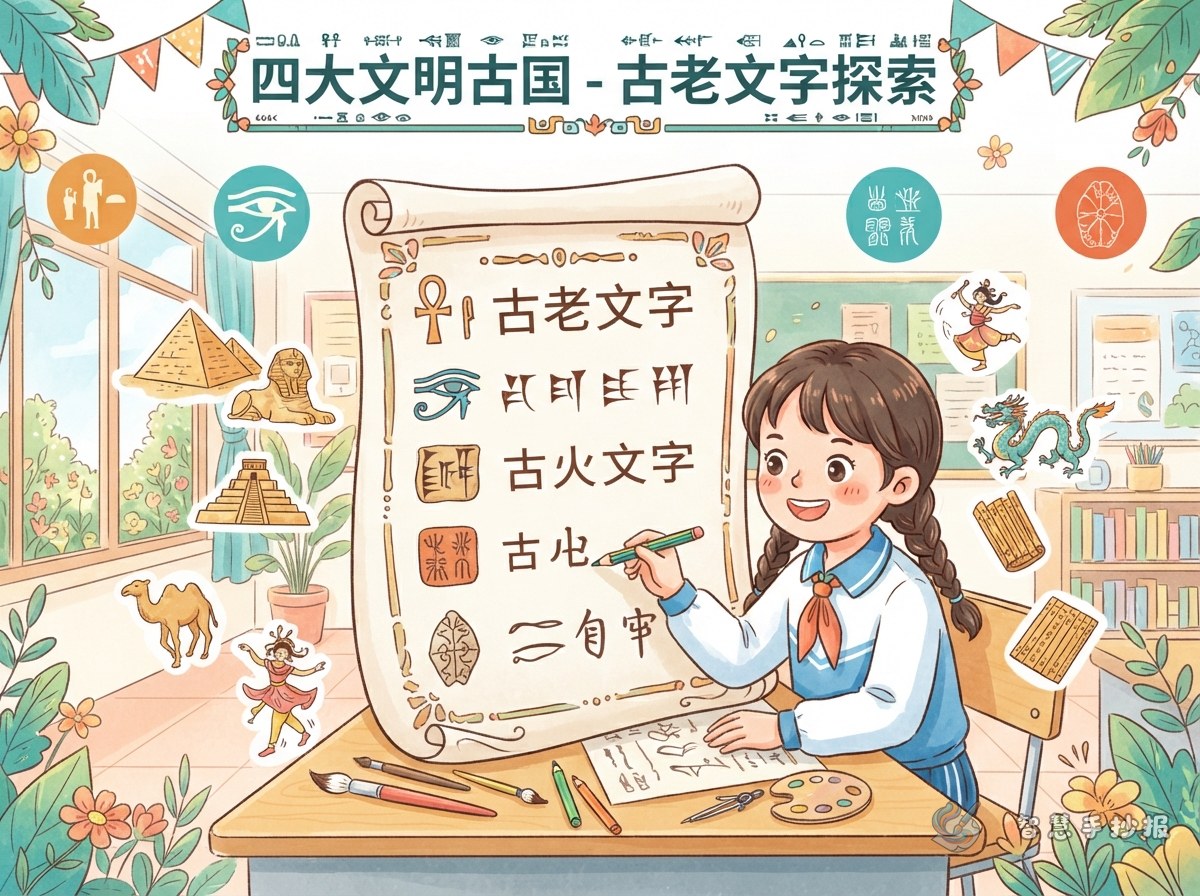
Instead of trying to summarize the entire history of four ancient civilizations, follow one clear question: how did people record their lives? Place the title at the top, build a comparison area in the center, and arrange four civilization cards around it. Small sections on writing materials and symbol guessing can make the handwritten poster feel like an investigation.
Prepare Four Civilization Evidence Cards
Ancient Egypt: Signs Carved and Painted
Egyptian hieroglyphs used recognizable forms such as people, animals, and objects. Explain that they were not merely pictures; signs could represent sounds as well as meanings. A papyrus scroll, reed pen, or stone inscription makes a suitable supporting illustration.
Mesopotamia: Wedge Marks on Clay
In Mesopotamia, scribes pressed a cut reed into wet clay to create wedge-shaped marks. Once dried, clay tablets could preserve records. Keep this card focused on the unusual writing method rather than copying a large set of difficult signs.
The Indus Civilization: Symbols That Remain Mysterious
Seals found at Indus sites often carry animal images and short sequences of symbols. These symbols have not been fully deciphered. Presenting that uncertainty accurately gives the poster an engaging unsolved-mystery element.
Ancient China: Early Characters on Oracle Bones
Oracle bone inscriptions from the Shang period were carved on turtle shells and animal bones. Some forms show a visible connection to the objects they represent. Students can copy a few recognizable examples, such as sun, moon, or mountain, and place the modern Chinese character beside each one.
Compare the Evidence with Three Questions
- What was written on? Compare stone, papyrus, clay tablets, seals, turtle shells, and animal bones.
- How were marks made? Point out carving, drawing, and pressing techniques.
- What was recorded? Mention uses connected with ritual, trade, administration, and everyday activities.
Limit each comparison to one or two sentences. The aim is to make similarities and differences easy to spot, not to crowd the page with dates and technical terms.
Lay Out the Page Like an Unrolled Document
A landscape page works well for this topic. Draw a scroll-shaped band through the center and label it “From Symbols to Records,” then place the four civilization cards around it. Sandy yellow, Nile blue, brick red, and bronze green can distinguish the areas. Borders inspired by clay cracks, papyrus leaves, or oracle-bone textures add atmosphere without covering the text.
- Mark the title, illustrations, and text boxes lightly in pencil.
- Keep all four civilization cards similar in length.
- Use only a few verified sample signs and label their civilizations.
- Check names, punctuation, spacing, and color balance before outlining.
Add a Symbol Challenge
Reserve a corner for a “What Does It Look Like?” activity. Show three or four simple signs and invite classmates to connect their shapes with the sun, a mountain, an animal, or another object. Add a short explanation beside the answers. This interactive feature breaks up dense text and keeps the focus on ancient writing.
After preparing the material, students and parents can continue in the WeChat Mini Program “智慧手抄报” to select a layout, reposition sections, and refine the color scheme for a clear classroom-ready poster.