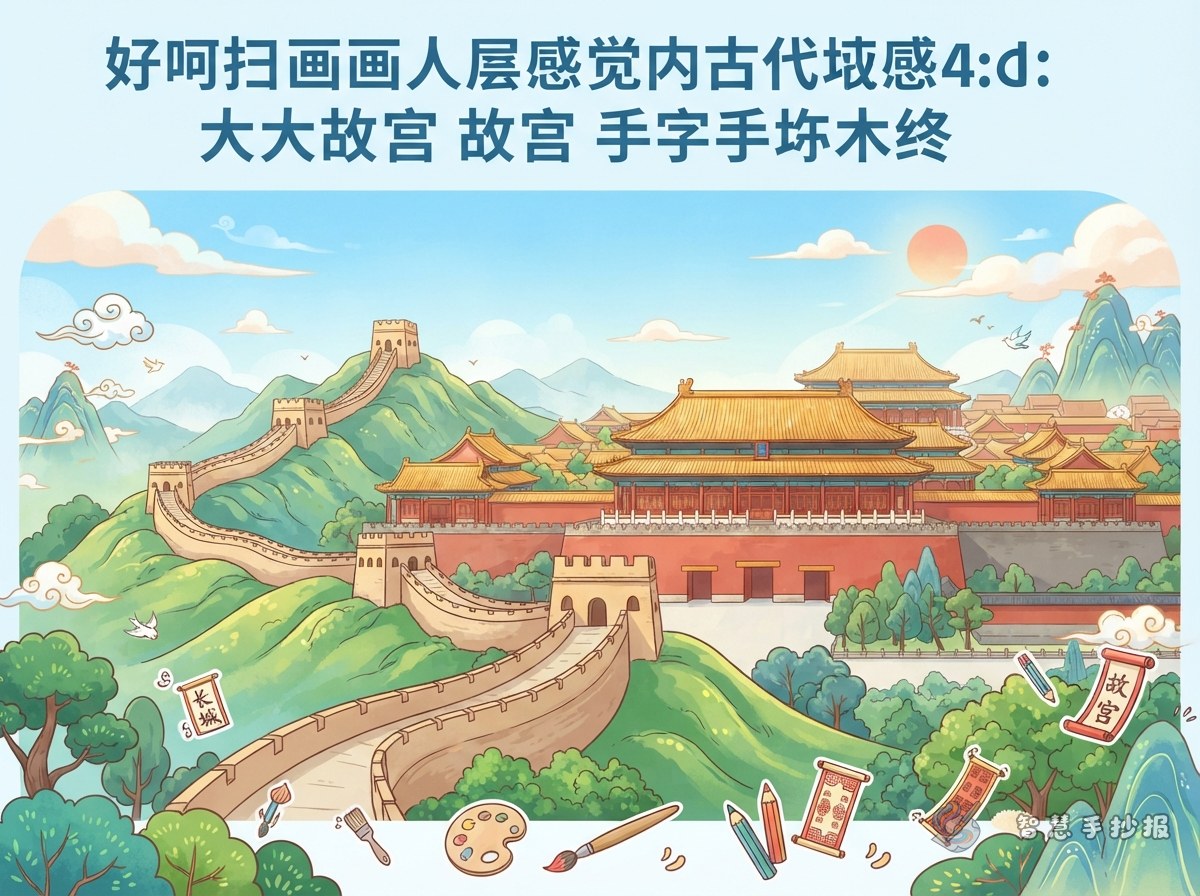
Choose a “Three-Camera” View of the Buildings
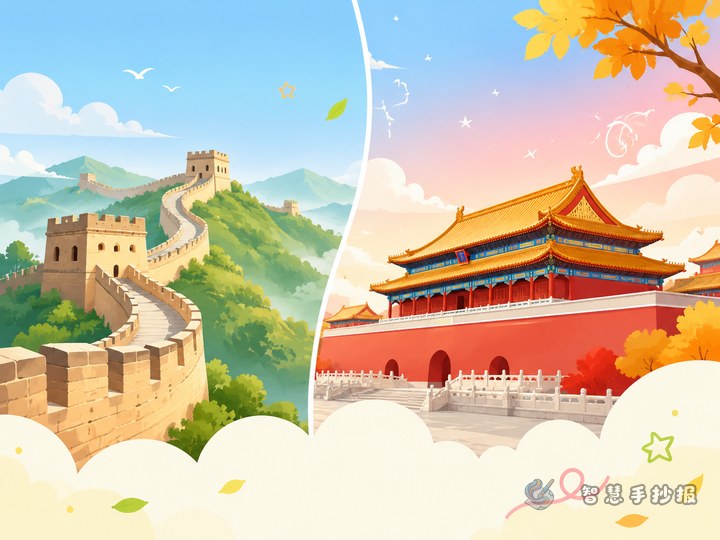
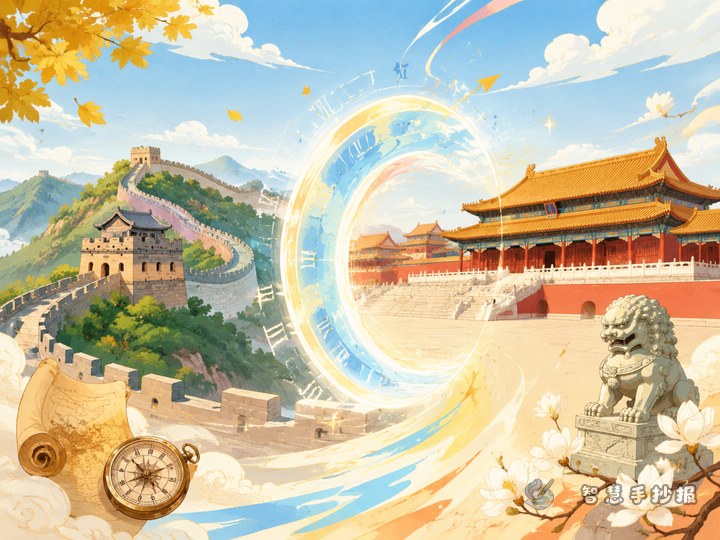
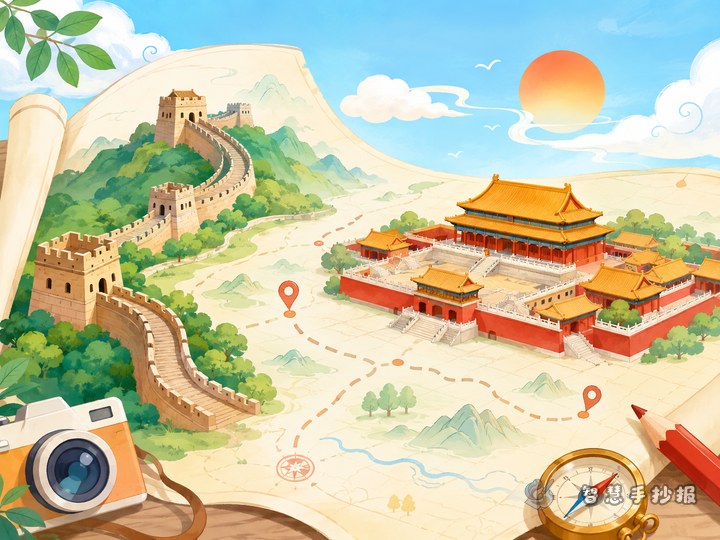
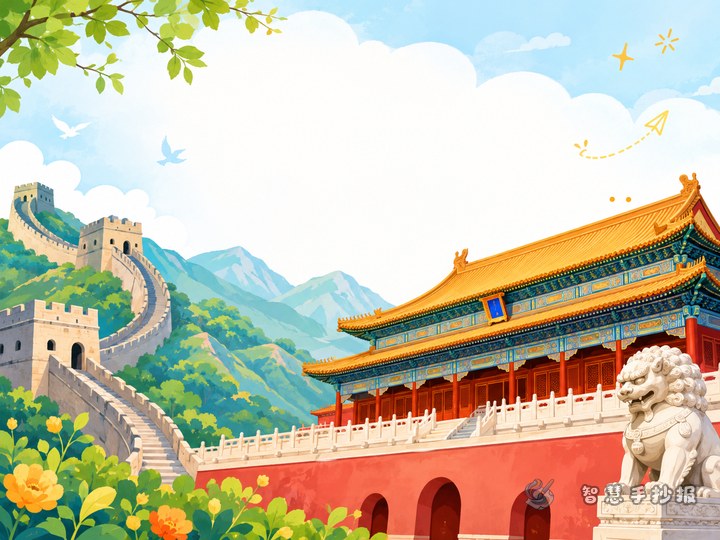
This handwritten newspaper does not need to place the Great Wall and the Forbidden City in a simple side-by-side comparison. Instead, present them as an architectural observation: show the mountains and walls in the distance, watchtowers, gates, and eaves in the middle ground, and enlarged details such as bricks, roof tiles, and door studs in the foreground. This creates a clear sense of depth.
- Background: Use pale mountains, sky, and a long line of walls to establish distance.
- Middle ground: Draw a watchtower or a palace gate as the main visual focus.
- Foreground: Add small boxes that enlarge brick patterns, glazed tiles, and door studs.
Arrange the Depth Across the Page
A vertical layout with the background at the top, the main buildings in the center, and detail boxes at the bottom works well. Place the title in the open sky area and give it a spacious letter style. Let a slightly curved section of the Great Wall lead the eye toward a Forbidden City gate. At the bottom, add three small observation boxes for the building name, its appearance, and one short fact.
On a landscape page, the Great Wall can begin at the lower left and stretch toward the distance, while the palace gate sits in the middle ground on the right. Do not draw every building at the same size. Use thin lines for distant walls and clearer outlines for the foreground gate. This difference is the key to showing space.
Building Observation Cards You Can Copy
Great Wall Observation Card
The Great Wall follows the shape of the mountains. Walls, watchtowers, and passes work together as parts of an ancient defensive structure. You can write: “The Great Wall looks like a winding dragon across the mountains. Its watchtowers add rhythm to the wall and make the picture feel deeper.”
Forbidden City Observation Card
Gates, courtyards, halls, and roof eaves create an orderly architectural scene in the Forbidden City. You can write: “Red walls, golden roofs, and broad eaves create a strong color impression. The arranged courtyards and central axis make the palace complex look solemn and spacious.” Keep this paragraph short and place it beside the gate drawing.
Add Interest with a “Detail Magnifier”
Leave some open space for three circular or square magnifying boxes. Give each box a keyword and one sentence. This makes the page more playful and prevents long paragraphs from becoming crowded.
- Watchtower: A key point along the Great Wall; show windows, battlements, and layered roofs.
- City gate: An entrance to an ancient building; emphasize the thick wall and arched opening.
- Glazed roof tiles: Use repeated curved lines to show the neat pattern of palace roofs.
- Door studs: Draw them as orderly round decorations on a palace gate.
Use Lines, Colors, and Lettering to Create an Ancient Atmosphere
First use a light pencil to place the mountains, wall, and gate. Then trace the main forms with a dark line. Keep distant scenery simple, add battlements and roof edges to the middle ground, and use brick or tile lines only in the foreground. Limit the palette: try ochre, brown, and blue-gray for the Great Wall; vermilion, gold, and dark gray for the Forbidden City. A pale blue or cream background will keep the page bright.
Possible titles include “Ancient Architectural Treasures,” “Observing the Great Wall and Forbidden City,” or “The Beauty of Historic Buildings on One Page.” Use a bold dark or deep red font for the main title. Small plaque- or seal-shaped decorations can highlight section headings, but they should not cover the writing. After checking that the three layers are clear, continue refining the layout and details in the Zhihui Shouchaobao WeChat mini program.