Turn the Poster into a Mini Bronze Exhibition
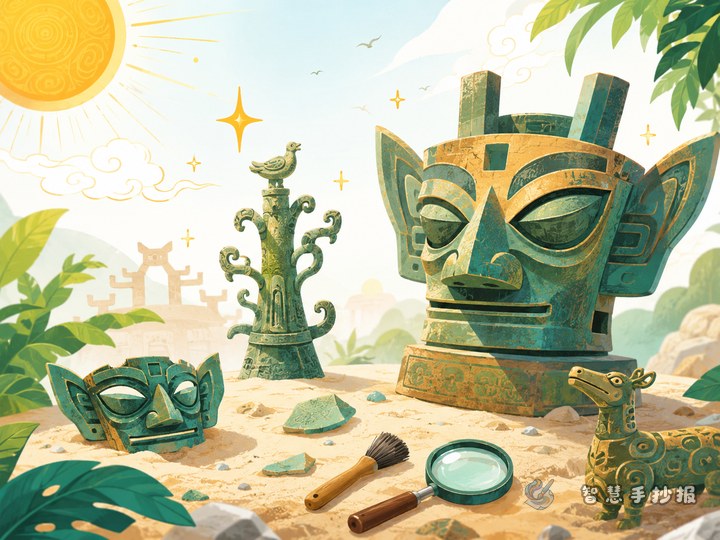
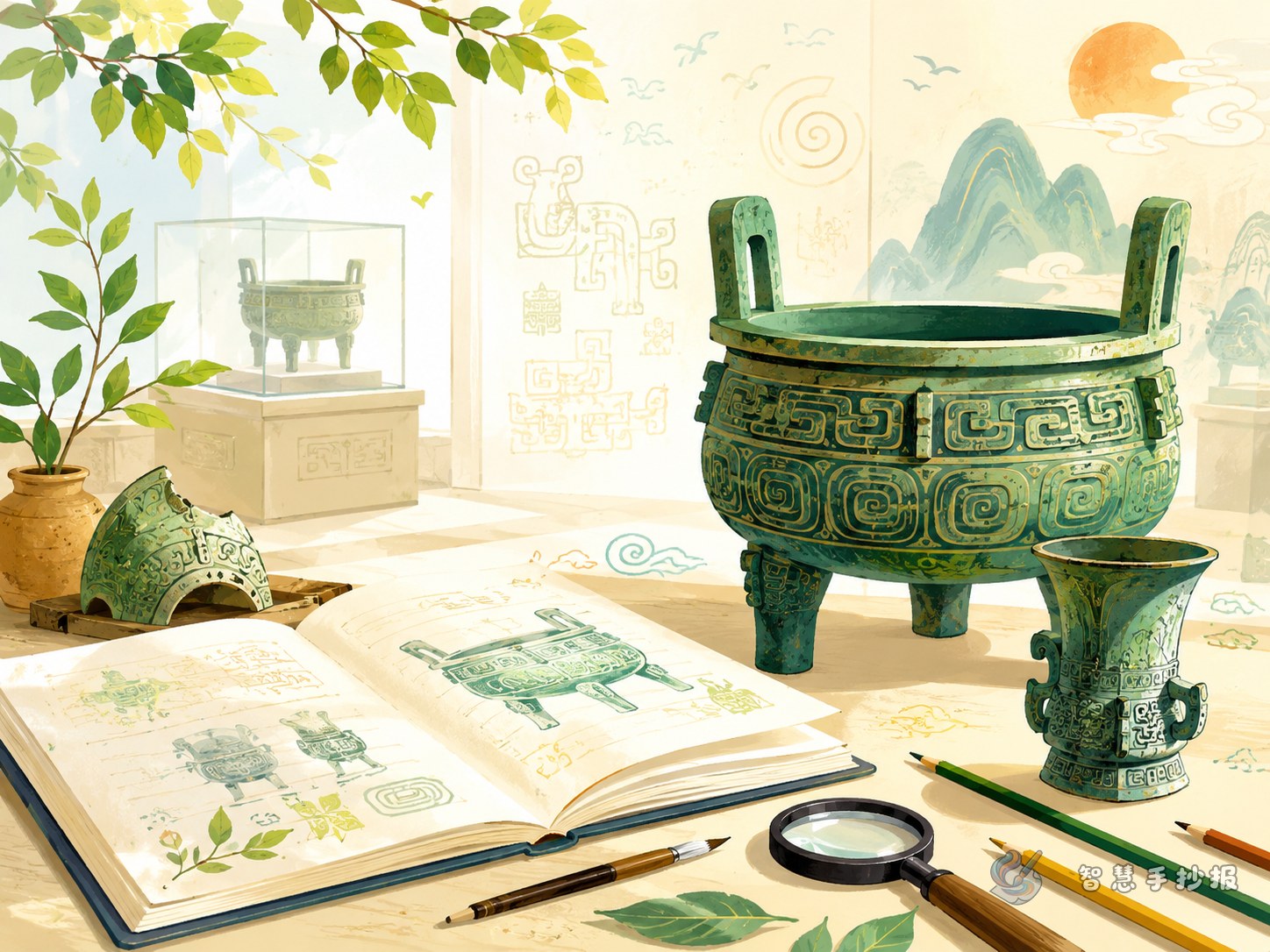
An ancient bronze ware theme works especially well when the page looks like a museum display. Instead of cramming in too many facts, choose one main visual object and build the rest of the page around it. A ding, zun, jue, or set of chime bells can become the centerpiece, while smaller text sections around it explain the details clearly.
Your title can sound vivid and inviting, such as “The Beauty of Ancient Bronze,” “A Close Look at Bronze Treasures,” or “Objects That Tell History.” If you want a stronger discovery angle, you can add a subtitle like “Stories Unearthed from the Earth.”
Four Practical Sections That Work Well
1. Artifact Profile
This section should include the most basic information: the artifact name, historical period, appearance, and purpose. Keep each object to just a few sentences so the reader can understand it quickly.
- Name: Simuwu Ding, Four-Goat Square Zun, chime bells, and more
- Period: Shang Dynasty, Zhou Dynasty, and so on
- Use: ritual vessel, musical instrument, wine vessel, food vessel
- Features: large size, detailed patterns, unusual shape
2. Pattern Secrets
Bronze decoration is one of the most eye-catching parts of the topic. You can make a special section for common patterns such as taotie masks, thunder patterns, or dragon-like motifs, and explain how these designs make bronze objects look powerful and mysterious.
3. What Was It Used For?
This is a great section for younger readers because it connects the object to real life in ancient times. A ding can be linked to ritual ceremonies, while chime bells can be connected with ancient music. A question-and-answer format works especially well here.
4. Discovery Story
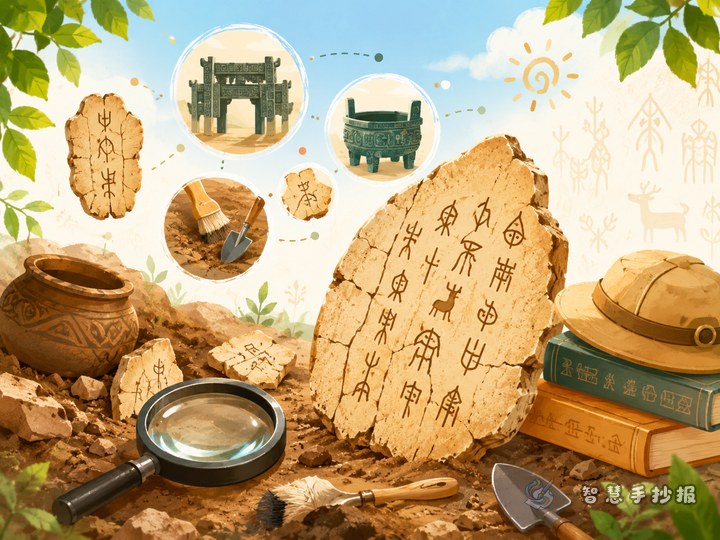
To give the poster a stronger sense of historical discovery, add a short paragraph about how the object was found, excavated, or preserved in a museum. Keep it brief. The goal is to show the journey from ancient times to the present.
Short Writing Materials You Can Use Directly
If you are not sure what to write, these short statements are easy to adapt for a poster:
- What is bronze ware? Bronze ware refers to ancient objects made mainly from copper-based metal mixtures and used in rituals, feasts, and music.
- Why is it important? These objects show the daily life, beliefs, artistic style, and metalworking skills of ancient people.
- What does it look like? Bronze artifacts often look heavy, dignified, and richly decorated with detailed patterns.
- Why do museums display them? Seeing bronze ware in a museum feels like standing face to face with history from thousands of years ago.
If space is limited, you can shorten each idea into keywords plus one simple sentence.
How to Make the Layout Feel Like a Museum Display
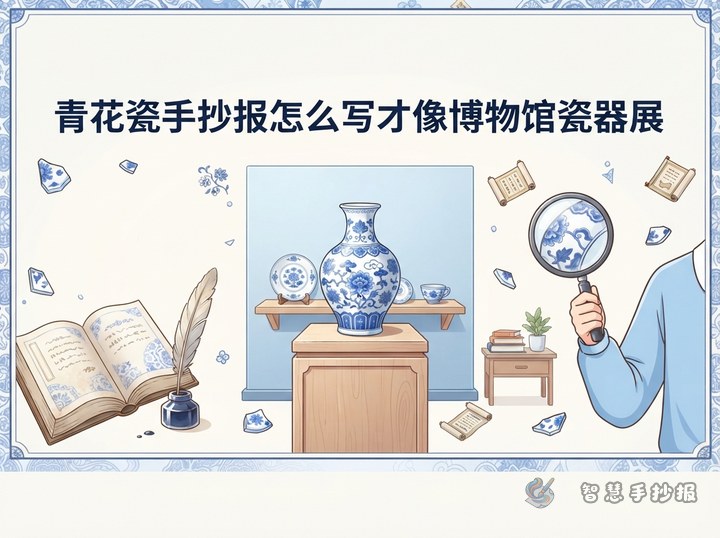
A museum-style page should look steady and organized rather than overly busy. You can use a center-image layout with text around it, or place the title at the top and divide the lower half into three clean sections. Small heading boxes can look like museum labels and help structure the page.
- Use a larger title in bronze, dark green, or brown.
- Choose cream or pale yellow backgrounds for a display-board feeling.
- Add borders inspired by simple ancient patterns.
- Highlight key words with bold text, such as “ritual,” “pattern,” and “discovery.”
- Leave some blank space so the page does not feel crowded.
If you want to keep polishing the title, border style, and layout, you can continue editing the design in the Smart Handwritten Newspaper WeChat mini program.
Easy Tips for Elementary Students
The best way to handle this topic is to turn difficult history into short, clear information. You do not need to include every type of bronze artifact. Choosing just one to three good examples often creates a stronger final result. For drawings, start with a simple outline first, then add patterns little by little.
You can also add small creative touches to make the poster more lively:
- A speech bubble called “The artifact I most want to learn about”
- A small note labeled “Museum guide says”
- A short timeline with Shang and Zhou periods
- Mini boxes marked “Highlight 1,” “Highlight 2,” and “Highlight 3”
These details keep the history theme clear while making the poster friendly for classroom display.