Build the poster around a discovery story
If you want the poster to feel more exciting than a simple artifact introduction, shape it like a historical investigation. Oracle bone inscriptions are perfect for this because they connect writing, archaeology, and museum learning in one topic.
A title with a question works especially well, such as what secrets are hidden in oracle bones or how carved bones can tell history. This gives the whole page a stronger sense of exploration.
Core sections to include
What oracle bone inscriptions are
Explain briefly that they are very early Chinese characters carved on turtle shells and animal bones. They are valuable not only as artifacts, but also as written historical evidence.
How they were noticed and studied
This section brings out the discovery angle. You can say that people realized the carved marks were not random scratches, but meaningful symbols and writing, which later became important clues for studying the past.
What was written on them
Students can mention themes such as weather, farming, rituals, and warfare. This helps readers understand that the inscriptions recorded real parts of ancient life.
Characters I can recognize
This is a fun student-friendly section. Choose simple examples like sun, moon, mountain, or water, and compare older forms with modern Chinese characters.
Short text materials for the poster
Text sample 1: Oracle bone inscriptions are like keys to ancient history. Even though they were carved long ago, they still help us understand the lives and thoughts of people from the past.
Text sample 2: In a museum, oracle bone inscriptions may look quiet and small, but the marks on them preserve important historical messages.
Text sample 3: Oracle bone inscriptions are not only precious artifacts. They are also important witnesses to the development of Chinese writing.
Try an exhibit-board layout
This topic looks great in a museum-style layout. Put the main title in the center, place the discovery story on one side, the writing decoding area on the other, and leave the bottom for historical value and personal thoughts.
- Design the title like an ancient seal or carved sign
- Use small subtitle boxes like museum labels
- Leave some blank space so the page does not feel crowded
- Highlight key words in bold for easy reading
Details that strengthen the artifact theme
- Use borders inspired by cracks, stone, or old shell patterns.
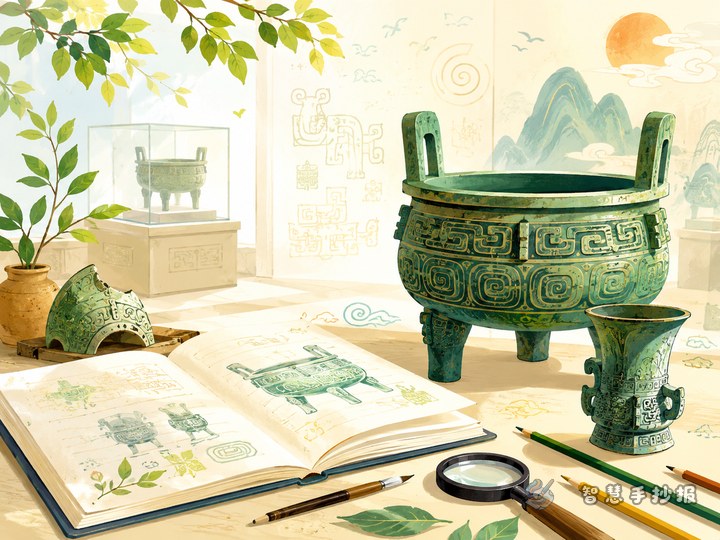
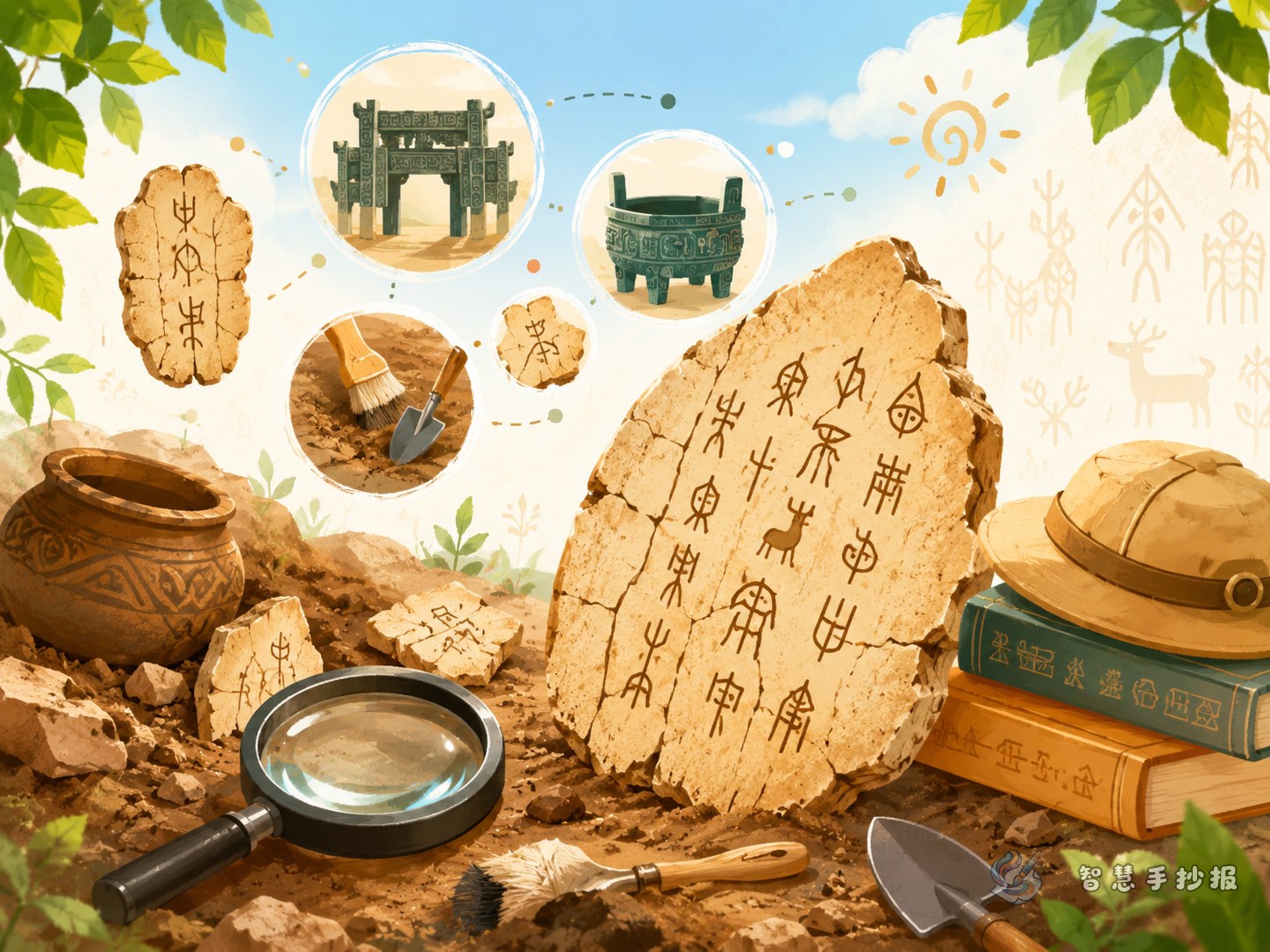
- Add drawings of bones, brushes, magnifiers, and display labels.
- Keep the color palette simple with brown, beige, ivory, and black.
- Create a small “museum guide note” corner for your own observation.
These details help the poster feel more like a real museum discovery page instead of a plain school assignment.
A strong ending for the page
Instead of a long conclusion, write one sincere sentence about what you learned. For example, you might say that oracle bone inscriptions show how writing has changed over time and how modern characters are connected to the ancient past.
If you want to keep improving the layout, section arrangement, and color matching, you can continue your design in the Zhihui Shouchaobao WeChat mini program.