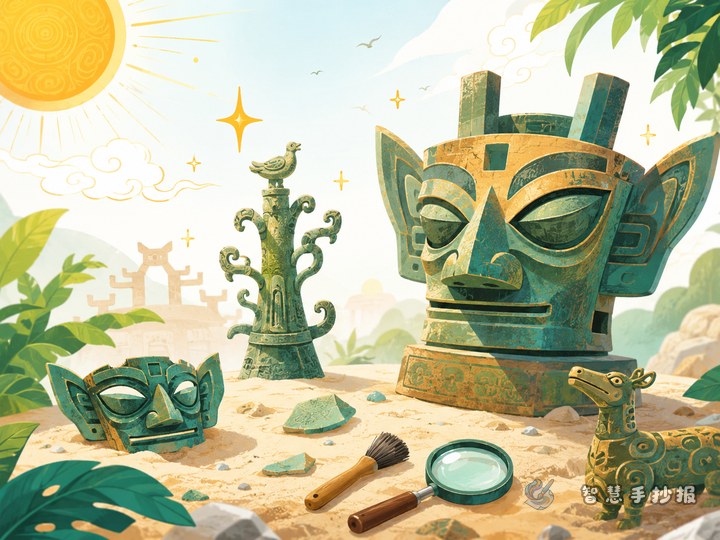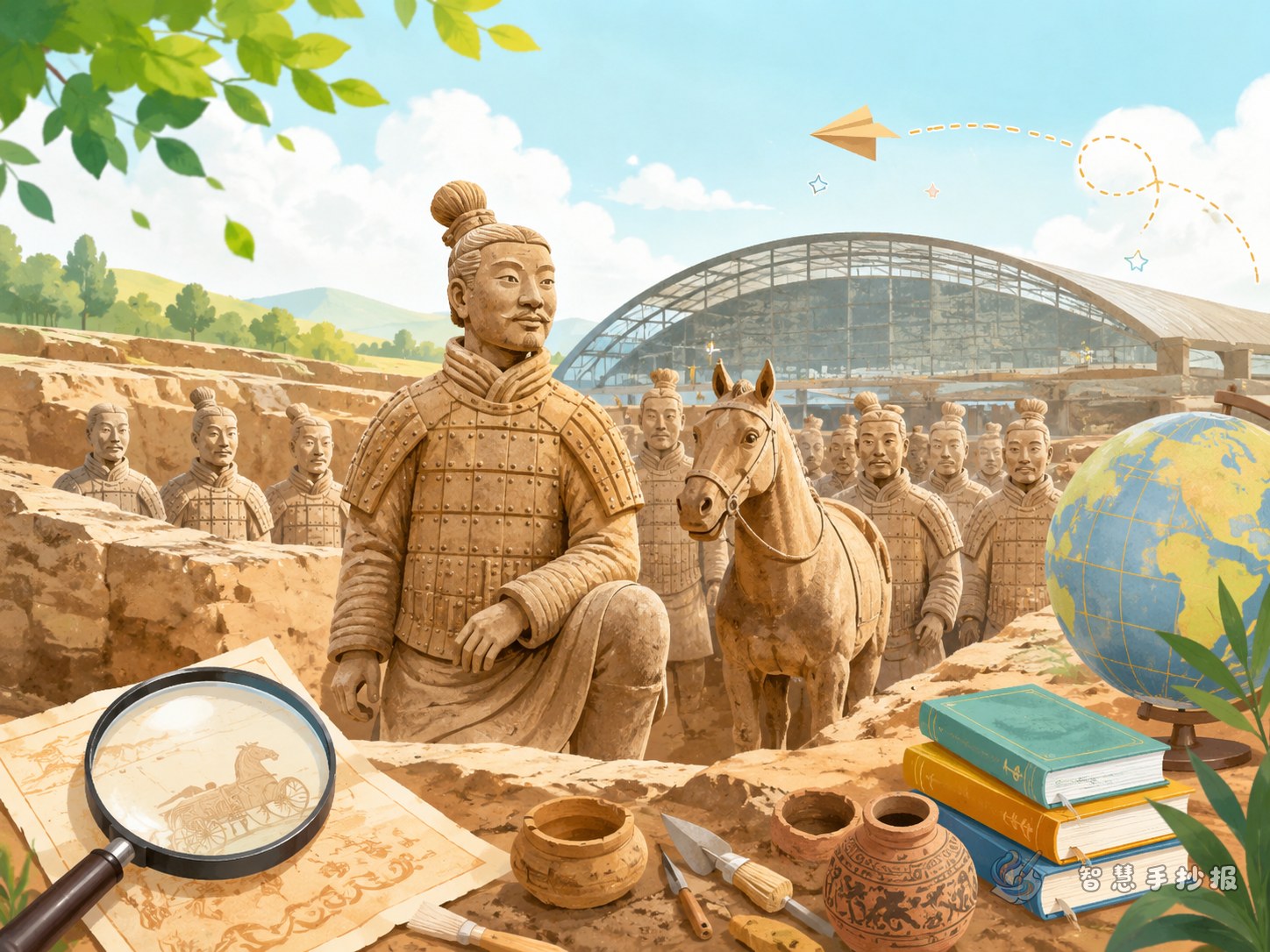
Turn the Theme into an Underground History Journey
A Terracotta Warriors poster becomes much more interesting when it feels like an exploration of a hidden ancient world. Instead of giving the page a plain title, you can choose something like My Journey into the Terracotta Warriors Museum or The Secrets of the Underground Army. This gives the whole poster a stronger museum and discovery tone.
Under the title, add a short opening paragraph explaining that the Terracotta Warriors are important ancient relics that help us understand history, craftsmanship, and life in the Qin dynasty.
Section Ideas You Can Use Directly
Meet the Terracotta Warriors
This part can explain what the Terracotta Warriors are, which historical period they belong to, and why they are so famous. Keep it short and easy to read.
How They Were Discovered
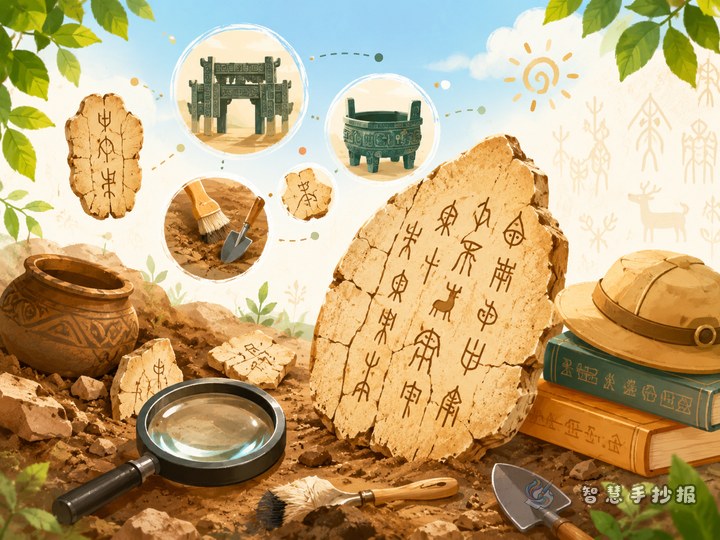
This is the best section for the “historical discovery” angle. Explain that the figures were found underground and brought an ancient story back into the light. This makes the poster feel more like an archaeological adventure.
What Makes Them Special
- Different faces and expressions
- Different hairstyles and clothing details
- Orderly formation like a real army
- Excellent clay craftsmanship
What They Tell Us About History
You can explain that the Terracotta Warriors help us learn about ancient soldiers, weapons, military order, and the development of society in the Qin dynasty.
Short Writing Materials for the Page
If your poster still looks empty, add a few short lines in side boxes or corners.
- Theme line: Row after row of warriors seem to walk out from deep history.
- Discovery meaning: Their discovery brought a hidden ancient civilization back into view.
- Relic value: They are not only clay figures, but also keys that open the door to history.
- My thought: When I see the Terracotta Warriors, I feel the power of history and the importance of protecting relics.
How to Arrange the Poster Like a Museum Display
This topic looks great with a display-style layout. Put a large title in the middle, then place smaller sections around it like museum information cards. You can also divide the page into three parts: discovery, observation, and reflection.
- Use a bold dark title for a heavier historical feeling.
- Draw borders with warrior outlines, ancient wall patterns, or scroll lines.
- Keep subtitle styles consistent.
- Leave some blank space so the page does not feel crowded.
You can also add small labels such as “Archaeological Discovery,” “Relic Details,” and “Protect History” to make the poster look more organized and exhibition-like.
End with a Thought About Protecting Relics
A strong museum-themed poster should not end with facts alone. Add a closing message about respecting relics, visiting museums politely, and learning from history.
You may end with a simple sentence like Relics do not speak, but they quietly tell us the story of the past. If you want to keep improving the layout, titles, and visual balance, you can continue creating in the Smart Handwritten Newspaper WeChat mini program.