Choose one featured relic first
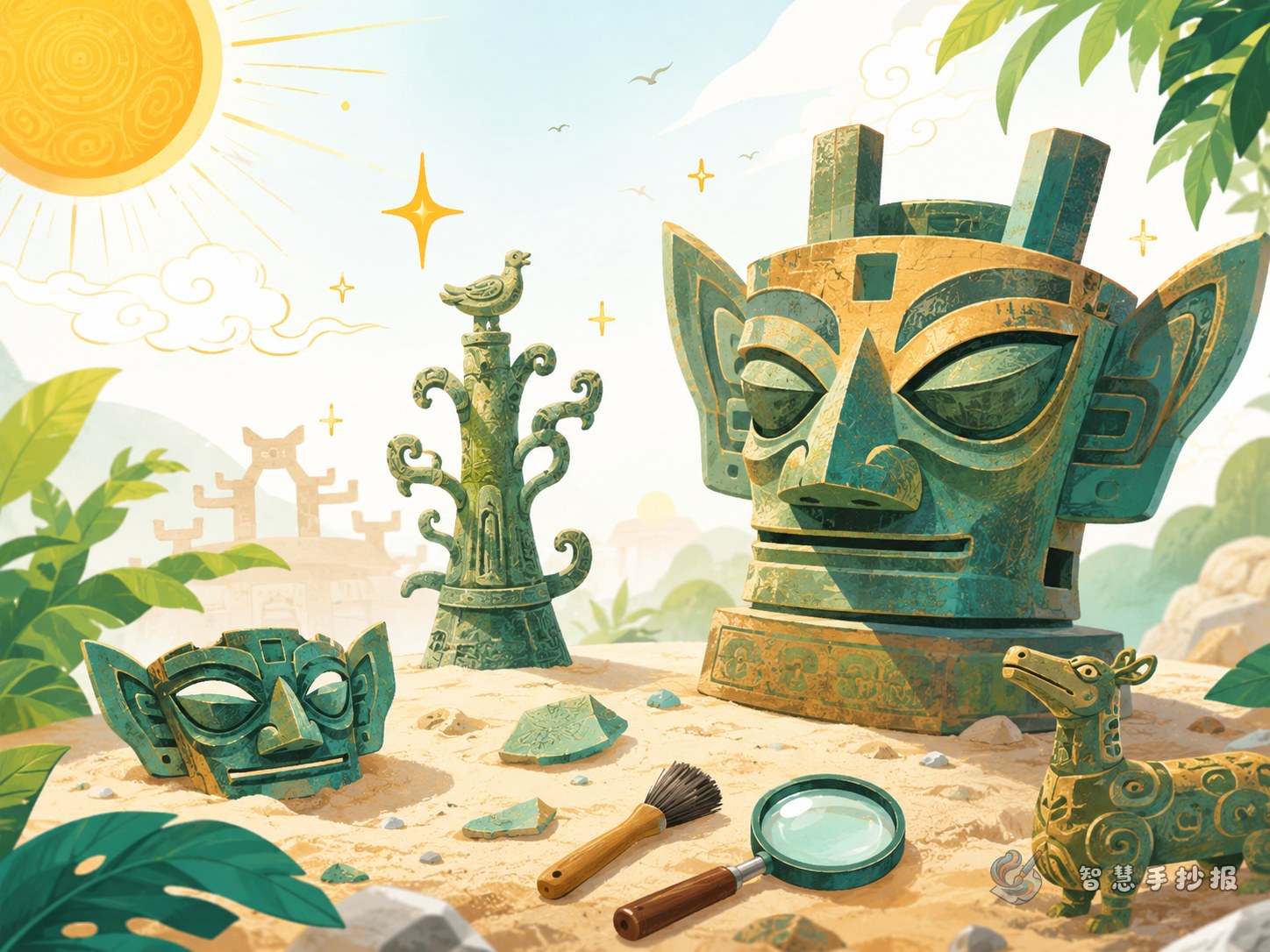
When making a Sanxingdui artifact poster, do not try to include everything at once. It is easier to create a strong page if you begin with one eye-catching relic, such as a bronze mask, bronze sacred tree, gold mask, or bronze standing figure. Place it in the center or near the top so it becomes the visual focus.
Your title can also follow that choice, such as “Discovering the Bronze Mask of Sanxingdui” or “The Mysterious World of Sanxingdui Relics.” A focused title makes the poster clearer and more memorable.
Build the page with a few smart sections
You do not need too many sections. A few clear blocks are enough to make the poster interesting and easy to write.
- Artifact Profile: name, material, appearance, and possible use.
- Discovery Timeline: a short story of how the relics were found.
- Mysteries of Sanxingdui: unusual shapes, large eyes, symbols, and questions people still discuss.
- What I Think: your own feelings or observations after learning about the relic.
- Museum Manners: simple notes about protecting relics and visiting museums politely.
If your page is small, even three well-planned sections can still look excellent.
Pick short and useful writing material
The text on a handwritten poster should be short, accurate, and easy for children to understand. For this topic, you can write along these lines:
- Sanxingdui is an important window into the ancient Shu civilization.
- Its relics have unique shapes that show creativity and imagination from long ago.
- Archaeological discoveries help us understand the past more clearly.
- Each artifact is like a key that opens a door to history.
Try to use short sentences instead of long textbook-style paragraphs. Breaking information into smaller lines makes the whole page look cleaner.
Create a museum display feeling on the page
If you want the design to feel special, make each section look like a museum label or display card. Use neat title boxes, straight borders, and simple decorative patterns to build a calm exhibition style.
- Put the featured relic title or drawing in the middle.
- Use the left side for the discovery story or a short timeline.
- Use the right side for artifact features and mysteries.
- Add your reflection or a cultural heritage message at the bottom.
You can decorate with simple bronze patterns, clouds, or geometric shapes, but keep enough blank space so the poster stays tidy.
Use colors that match ancient relics
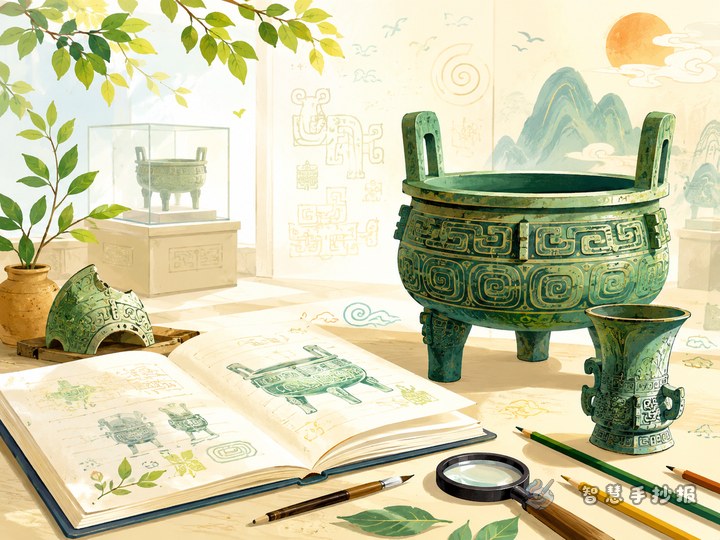
Bright candy colors usually do not fit this topic. A better choice is bronze green, earthy yellow, dark brown, and gray-black, with a little gold or orange to highlight the main title. These tones feel closer to real museum displays and ancient objects.
When writing, make key words stand out, such as “bronze mask,” “ancient Shu civilization,” “archaeological discovery,” and “cultural heritage.” If the layout feels difficult, lightly sketch the sections in pencil first. To keep improving your design, title styles, or color matching, you can also continue in the Zhihui Shouchaobao WeChat mini program.