Start with One Bridge as the Main Theme
Instead of trying to include every feature of an ancient town, choose one old bridge as the center of the handwritten newspaper. Once the bridge is there, the feeling of the water town naturally appears. Titles such as “Bridge in the Ancient Town,” “Water Town Bridge Culture,” or “The Old Bridge I Remember” are easy to understand and easy to develop.
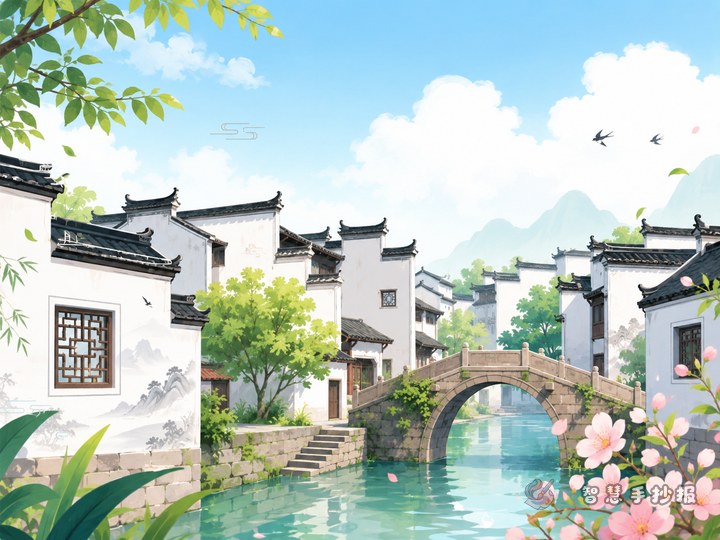
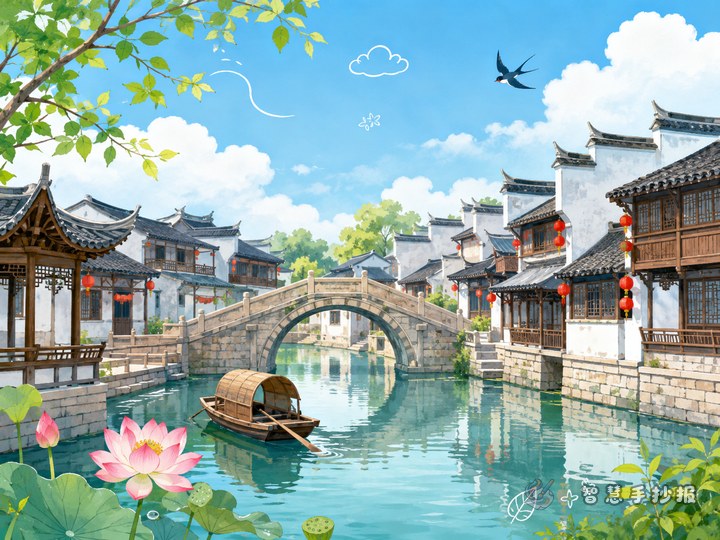
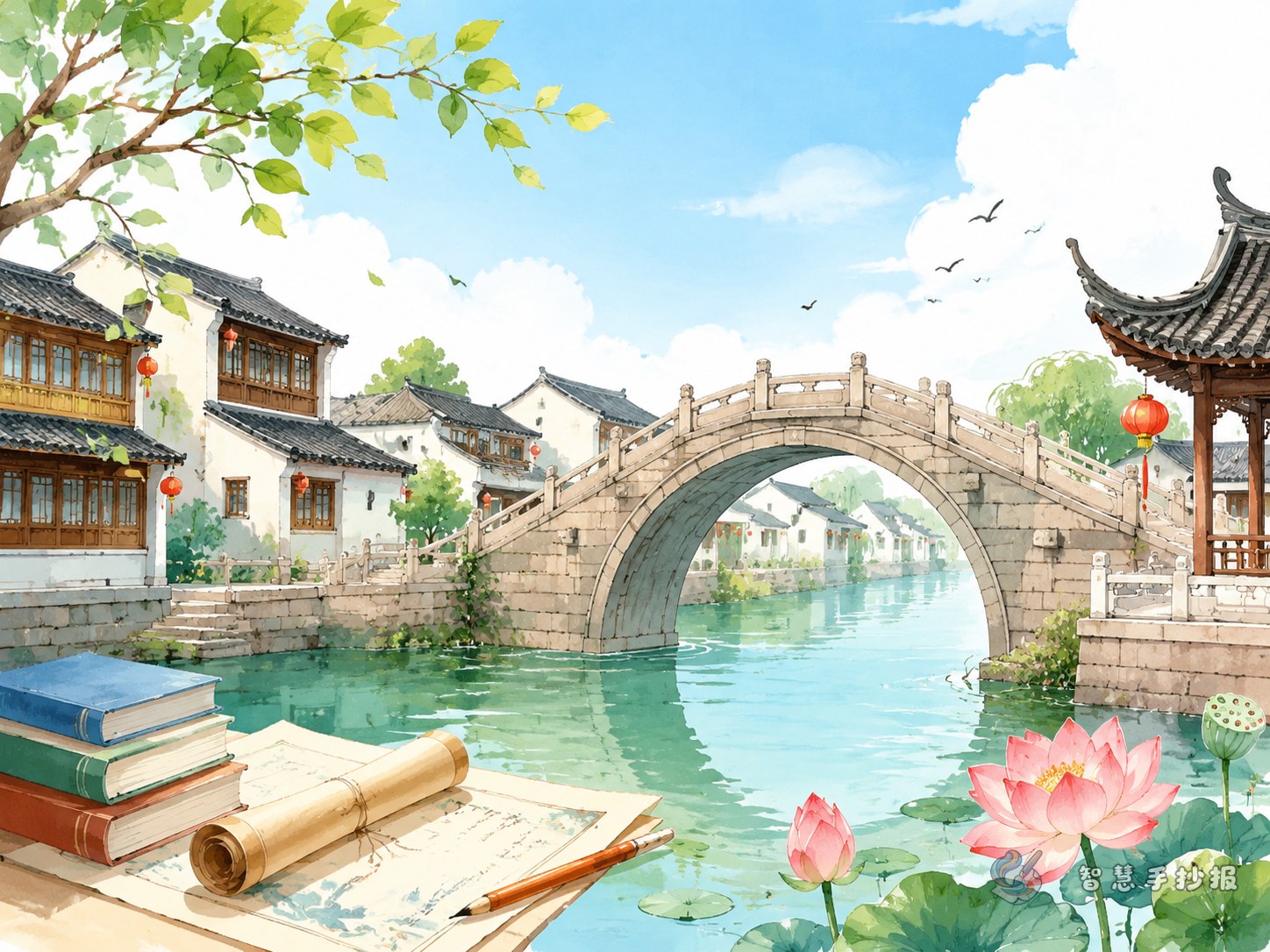
For the drawing, you can place an arch bridge, a stone bridge, or a covered bridge in the center. Add water, reflections, a small boat, white walls, dark roof tiles, willow branches, or a stone path around it to complete the scene.
Useful Sections for the Page
- Bridge Profile: Introduce the bridge shape, steps, railings, and bridge opening.
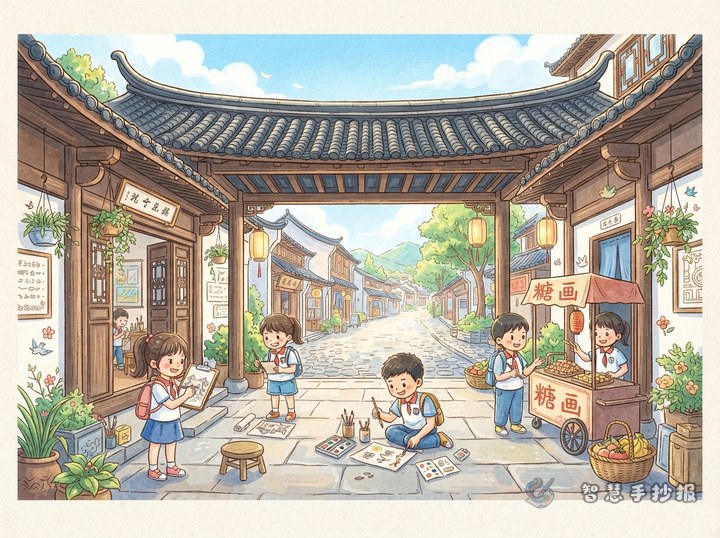
- Life by the Bridge: Describe houses near the river, shops by the street, and the quiet rhythm of old town life.
- The Bridge and Travel: Explain how the bridge connects both sides and serves daily movement.
- Views from the Bridge: Write about rain, lantern light, ripples, boats, and reflections.
- Stories of the Bridge: Add a short legend, a local custom, or a simple imagined story.
You do not need to use all of these. Three or four sections are enough for a clean and student-friendly result.
Ready-to-Use Text Ideas
Short Descriptive Lines
An old bridge is like a curved key that opens the memory of the town. Water flows slowly under the bridge, while people pass quietly above it. The bridge connects not only two riverbanks, but also the past and the present.
Informative Writing
Bridges in ancient towns often stand beside narrow rivers and old houses. Common forms include stone bridges, arch bridges, and covered bridges. Their structures are practical, but also beautiful. Some bridges form a round reflection in the water, while others blend naturally with the tiled roofs and riverside homes around them.
Personal Reflection
I like old town bridges because they are calm and full of history. Standing on a bridge, I can see water, boats, roofs, and lights. It feels like looking into a slow and peaceful painting.
Let the Layout Follow the Shape of the Bridge
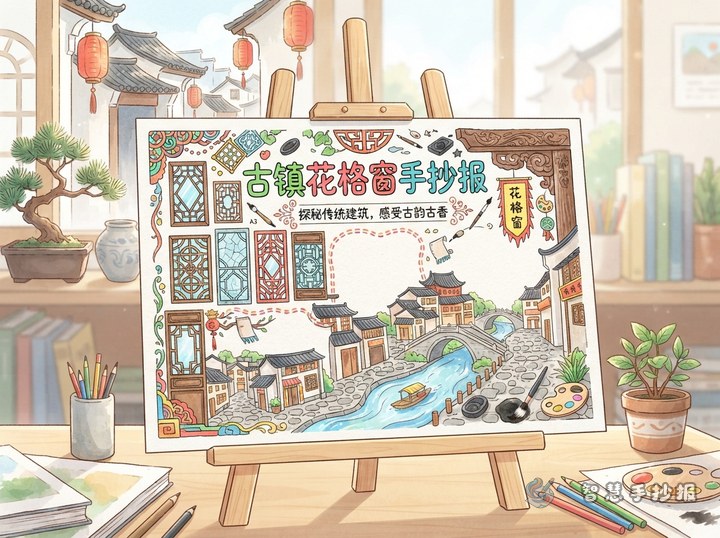
This topic looks best with a flowing layout. Put the title at the top, place the main bridge drawing in the middle, and arrange two or three text boxes around it. A small box at the bottom can be used for “My Thoughts” or “What I Learned.”
- Write the title in large hand-drawn letters with wave or tile-like decoration.
- Use text boxes shaped like windows, plaques, or fans to match the traditional style.
- Add small icons such as boats, lotus leaves, lanterns, or brick patterns without overcrowding the page.
- Keep each section between 50 and 100 Chinese characters or a short English paragraph if needed.
Color Choices That Feel Like an Ancient Town
You do not need strong colors. Soft tones often work better for this theme. Try gray, pale blue, beige, and light green as the main palette, with a small amount of red for lanterns or seal-style labels. Use gray-brown for the bridge, blue-green for the water, and dark gray for tiled roofs.
If the page still feels plain, add a few small details such as stone textures, roof lines, wooden windows, riverside signs, or shadows of boat poles. These small touches can greatly strengthen the old-town atmosphere.
How to End the Page Well
In the final part, return to the connection between the bridge and local culture. A simple closing line works well, such as: old bridges show the beauty of traditional architecture and the warmth of life in the ancient town.
After deciding on your theme, sections, and colors, you can also continue organizing your design ideas in the Zhihui Shouchaobao WeChat mini program to make the poster easier to finish.