Start with visible features instead of broad history
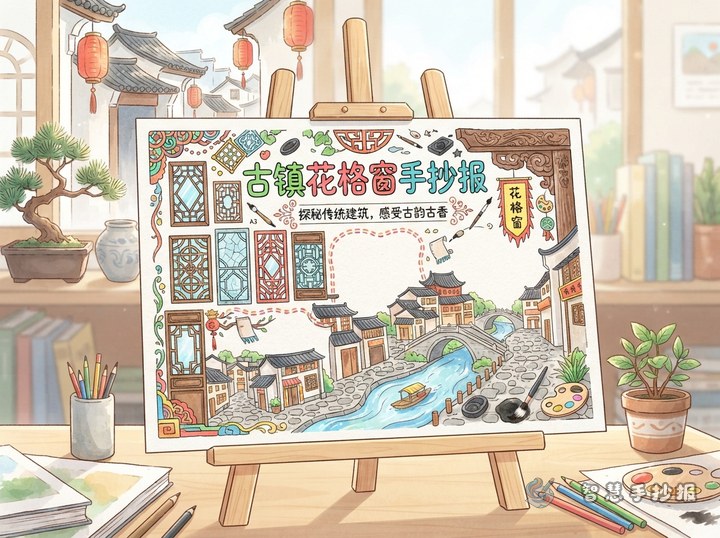
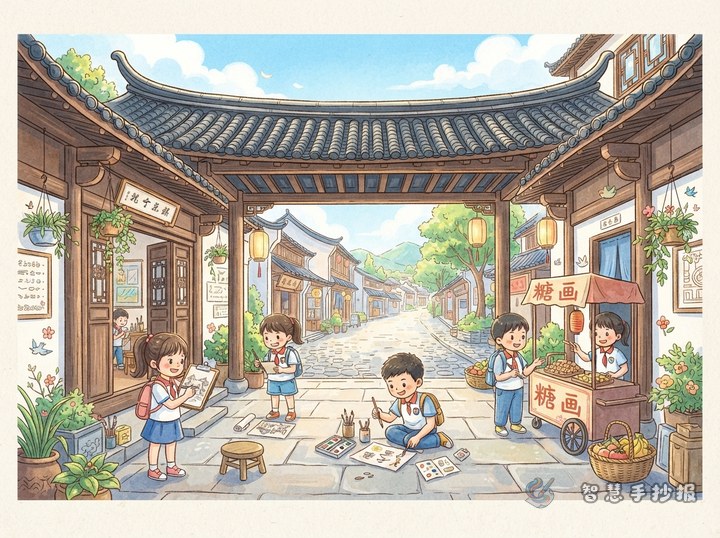
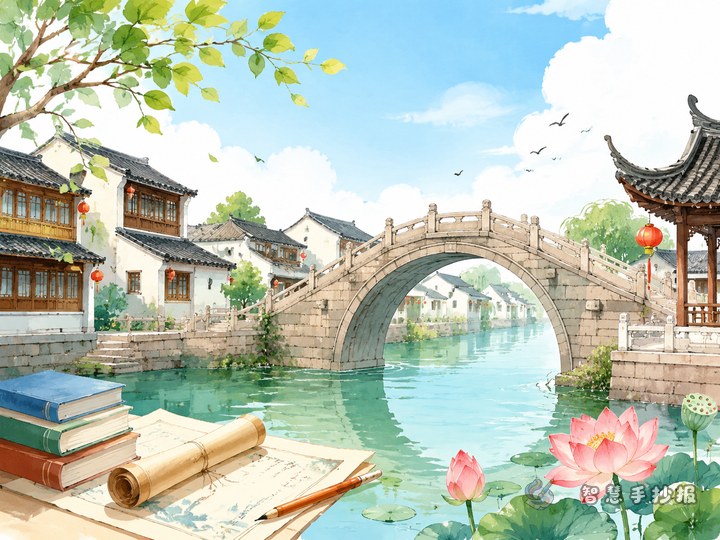
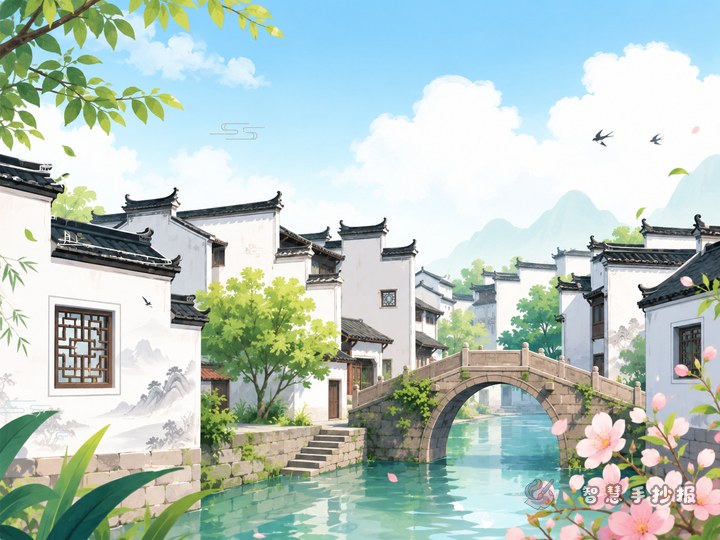
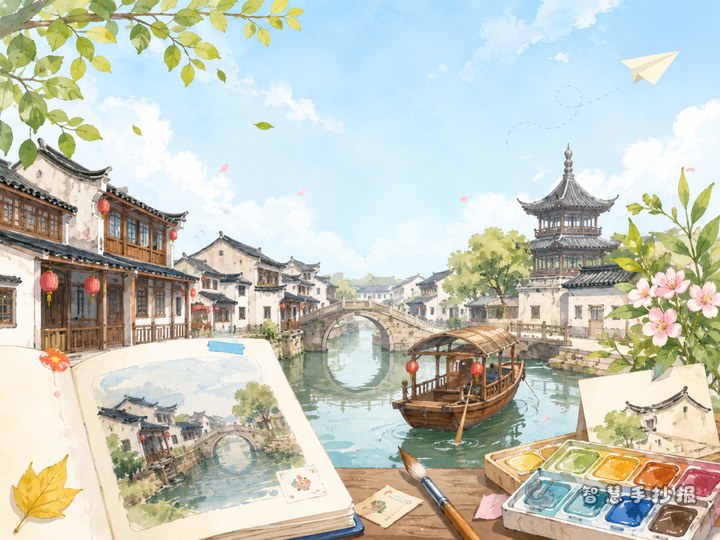
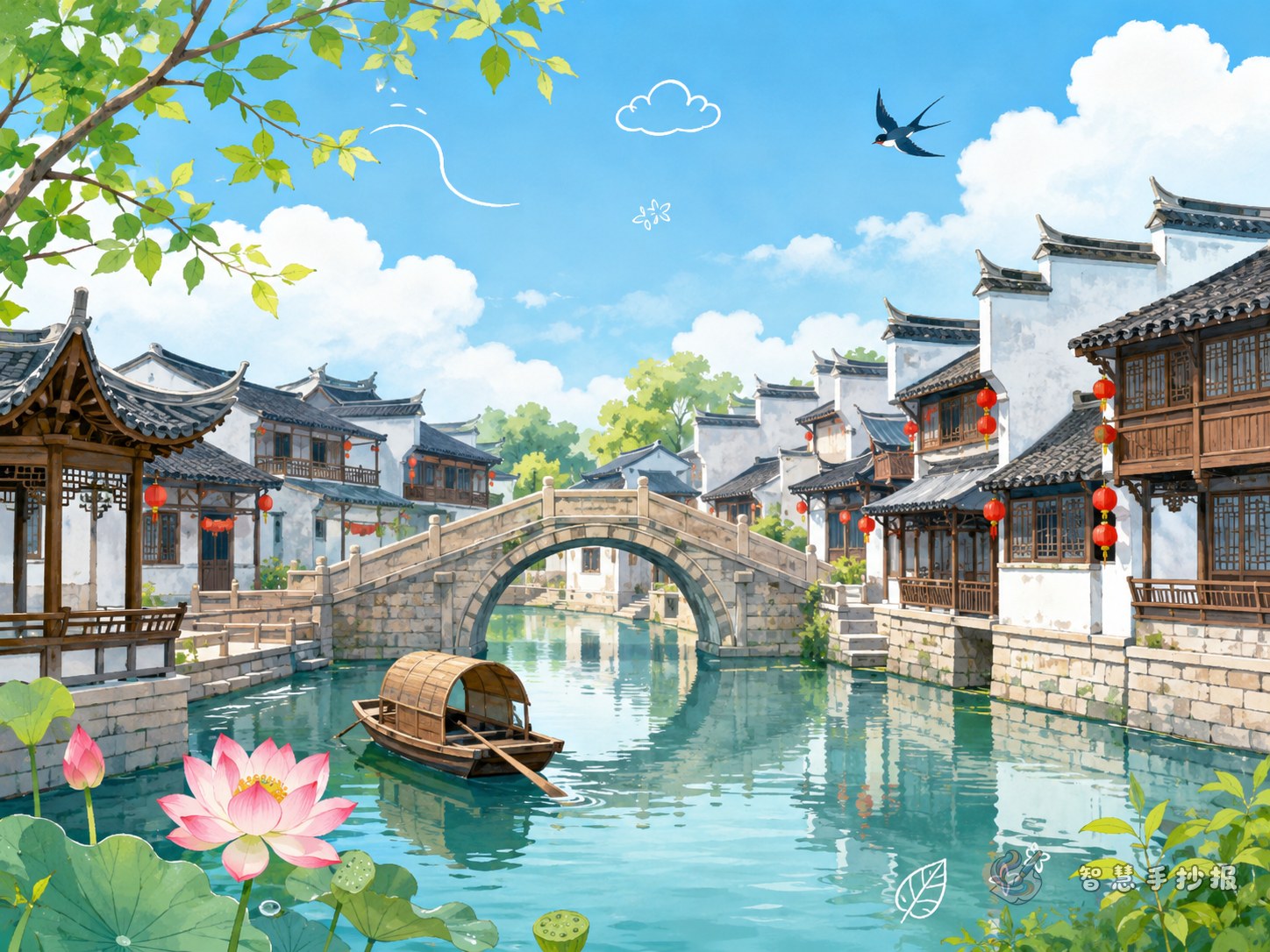
If you want an ancient-town poster that feels clear and attractive, focus on what people can actually see in traditional buildings. Rather than writing a general introduction, build your poster around white walls, dark tiles, wooden doors and windows, stone-paved streets, arched bridges, narrow lanes, and curved eaves. This makes the topic easier for children to understand and easier to illustrate.
You may choose a title like “What Makes Ancient Town Buildings Special” or “From Roofs to Stone Bridges: Ancient Town Culture.” A concrete topic usually leads to a better poster.
A layered layout works especially well
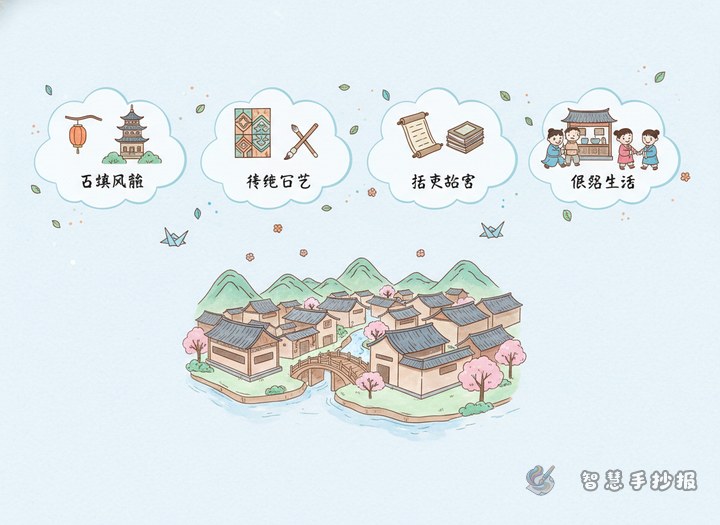
This topic fits a top-to-bottom layout. Put roofs, clouds, or lanterns near the top. Place houses, windows, and streets in the middle. At the bottom, draw a bridge, water, or stone road. The whole page can look like a small ancient-town scene.
- Title area: add eaves, tiles, or lantern decorations
- Main area: divide it into “Building Features,” “Street Impressions,” and “Culture Notes”
- Corner decorations: use window patterns, brick lines, or tile shapes
- Bottom area: write a short conclusion or a reminder to protect old buildings
Good color choices include gray, blue-green, brown, and light blue, with a little red as an accent.
Short writing materials for students
Features of ancient-town buildings
- Many houses are built with wood, brick, and roof tiles, giving them a simple and classic look.
- Sloping roofs help drain rainwater and create beautiful layered lines.
- Wooden doors and windows often have fine patterns that show traditional craftsmanship.
- Stone-paved streets make the town feel old, calm, and full of stories.
The cultural feeling of an ancient town
- An ancient town is not only about old houses, but also about a slow and peaceful lifestyle.
- Bridges, rivers, streets, and lanes are connected to form a special living space.
- Traditional buildings keep the wisdom and beauty of the past.
How to protect old buildings
- Do not draw or write on walls.
- Do not climb on old bridges or buildings.
- Learn about traditional culture and respect historical places.
Add an observation box to make it more vivid
To make the poster feel more personal, add a small section called My Building Observation. In this part, students can write what they notice about the town.
For example: “The roofs stretch out like little umbrellas.” “The stone road looks smooth after many years of footsteps.” “The wooden windows are simple but beautiful.” These short lines make the poster more lively and visual.
Keep the drawings simple and repeated
You do not need to draw too many complex buildings. Choose three to five classic elements and repeat them across the page so the poster stays neat.
- Roofs and tiles: great for title borders
- Bridges and water: useful for connecting sections
- Wooden window patterns: perfect for text boxes
- Lanterns and signs: nice for small empty spaces
- Stone-road textures: good for bottom decoration
If you already have a topic but want help arranging sections and finishing the page faster, you can continue designing in the Smart Handwritten Newspaper WeChat mini program.