Start with a clear focus: what gives an ancient town its charm?
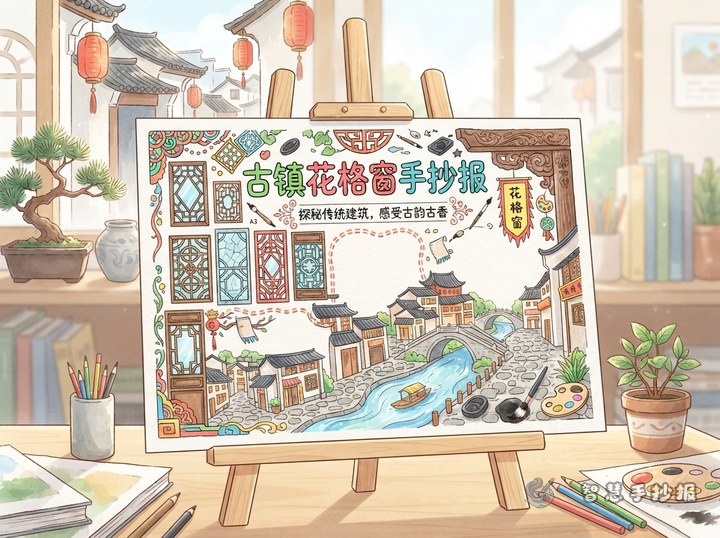
This kind of handwritten newspaper works best when traditional architecture and old-town life are presented together. Instead of describing buildings only, students can explore the beauty, atmosphere, and cultural meaning of an ancient town. Good title ideas include themes like the beauty of ancient towns, traditional architecture around us, or discovering old-town culture.
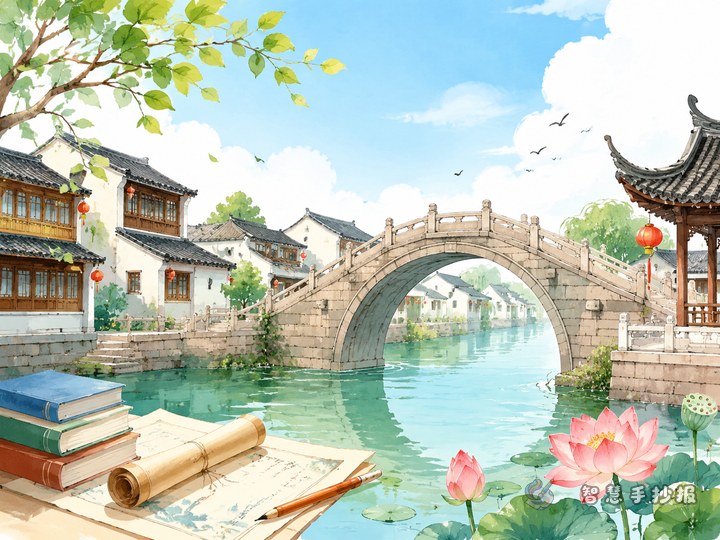
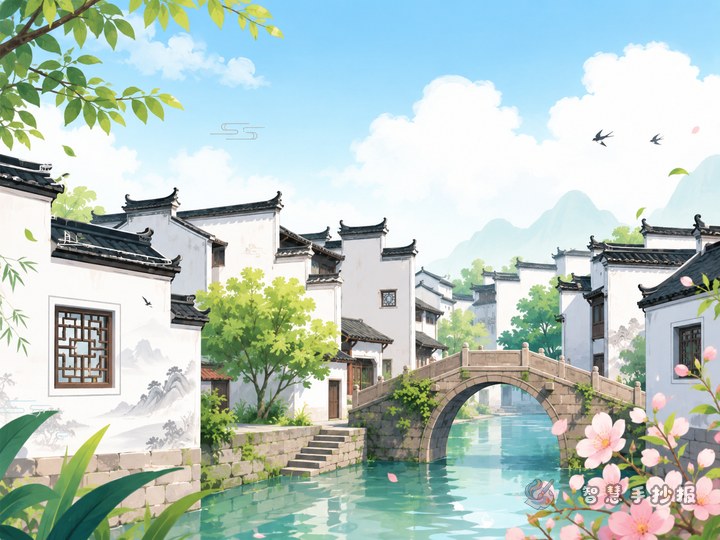
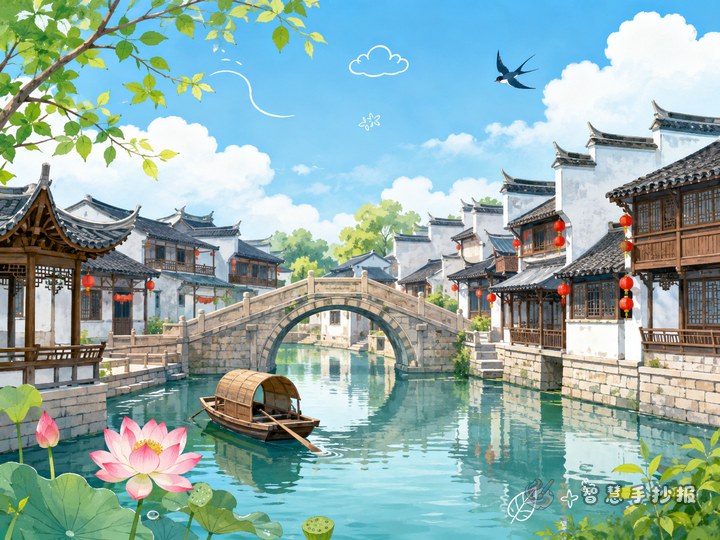
An opening paragraph can explain that ancient towns are living spaces shaped by history. Stone paths, white walls, dark tiles, wooden doors, bridges, and waterways together create a special scene. Traditional buildings are not only beautiful, but also carry local customs and the wisdom of earlier generations.
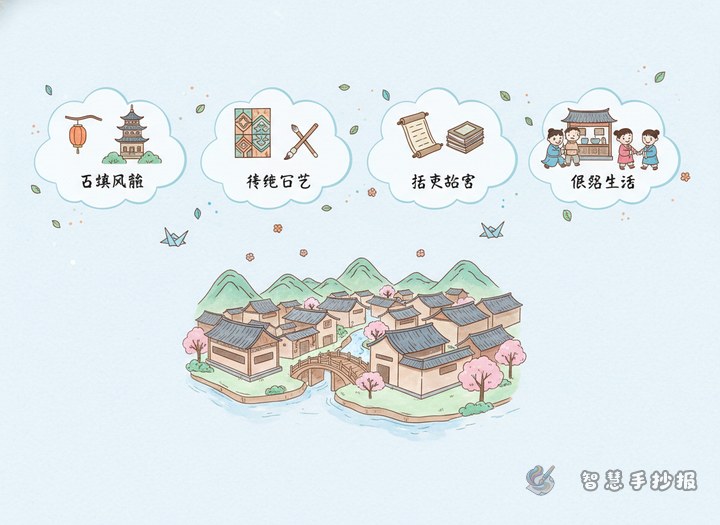
Divide the page into four useful sections
- First impressions of the ancient town: describe streets, bridges, rivers, houses, and shops.
- Architectural details: introduce roofs, gates, windows, eaves, carved wood, or walls.
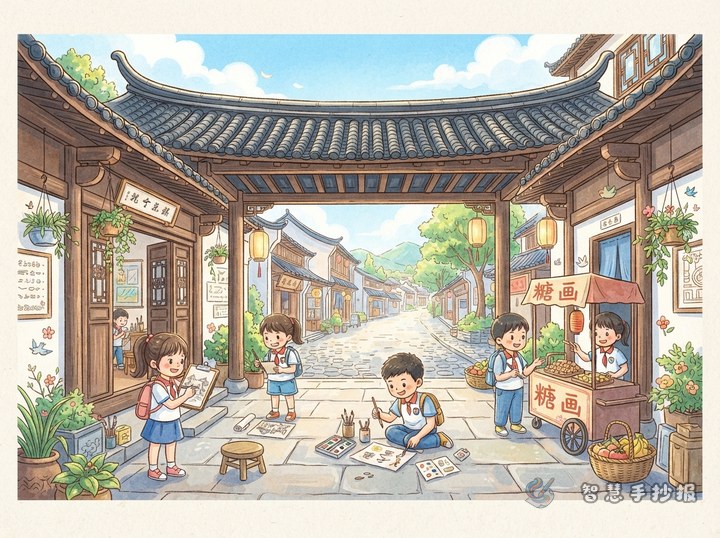
- Life and culture: write about tea houses, handicrafts, festivals, daily life, and neighborhood warmth.
- How to protect old buildings: include simple ideas such as respecting historic sites and keeping the area clean.
If there is extra space, students can add a small section called “My favorite corner of the ancient town” to make the work more personal and lively.
Ready-to-use writing material
Short paragraph about ancient towns
An ancient town is like an old book opened before us. Its streets and buildings tell stories of the past. White walls, dark roof tiles, wooden windows, and stone bridges create a peaceful and memorable scene. Every lane and doorway holds a piece of cultural memory.
Short paragraph about traditional architecture
Traditional architecture is often designed to match local climate and materials. In southern areas, houses may stand near water with white walls and dark tiles. In other regions, homes may look more solid and enclosed. These buildings show not only how people lived, but also how they understood family, order, and nature.
Protection message
Ancient towns and old buildings are valuable parts of cultural heritage. When we visit them, we should walk carefully, speak softly, avoid drawing on walls, and never damage the structures. Protecting old architecture means protecting history itself.
Visual elements that create a traditional mood
Choose soft colors such as off-white, gray-blue, muted green, and light brown to build a calm and classic feeling. Borders can use tile patterns, window lattice shapes, or simple geometric lines inspired by traditional design. Decorative touches like lanterns, waves, or brick textures can make the page feel richer.
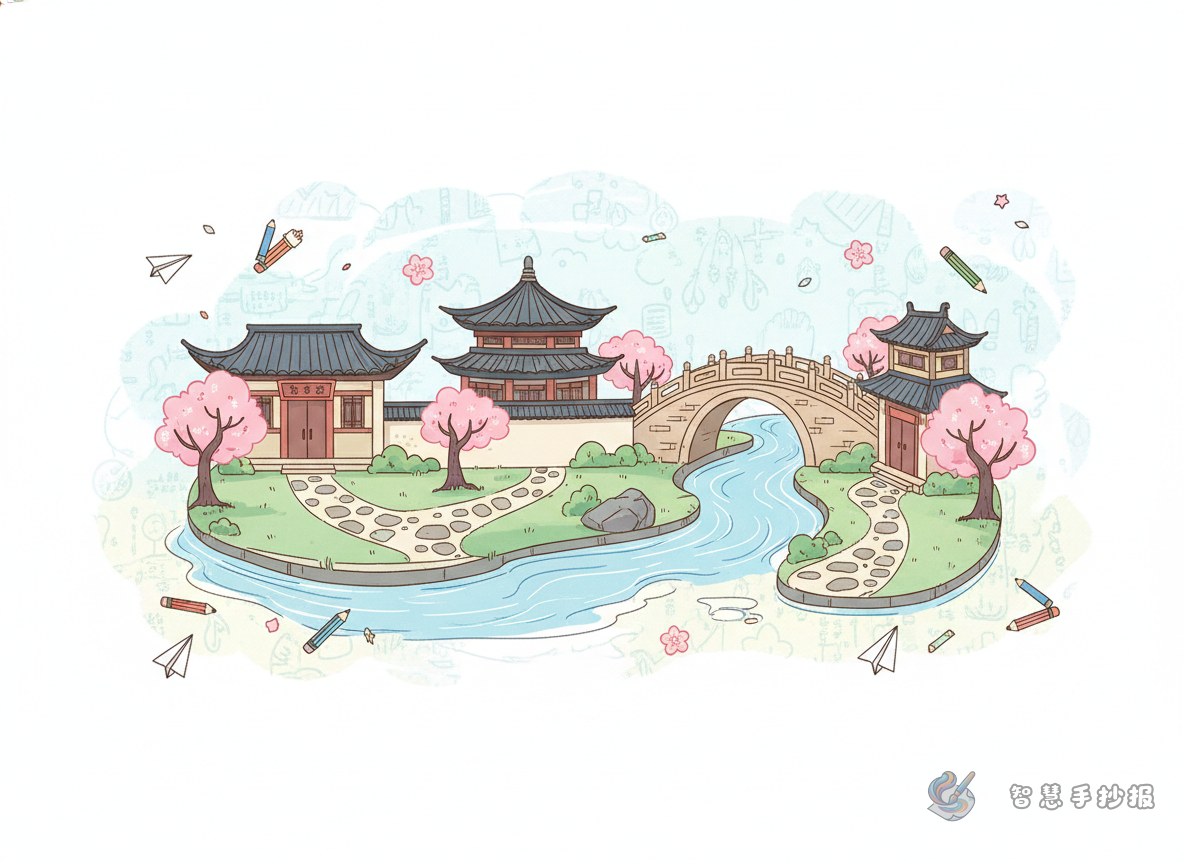
The illustrations do not need to be difficult. A small bridge, a row of old houses, a carved window, or a lantern can already show the theme clearly. Leave enough blank space so the page looks neat rather than crowded.
A simple making order for students
- Choose the title and draw a central image, such as a bridge with old houses beside it.
- Divide the page into four balanced sections.
- Write the short text first, then add longer explanations if needed.
- Finish with matching colors so the title, border, and decorations feel unified.
If you want to turn ideas into a cleaner layout more quickly, you can also organize your title, sections, and text first, then continue making the handwritten newspaper in the Smart Handwritten Paper WeChat Mini Program.